
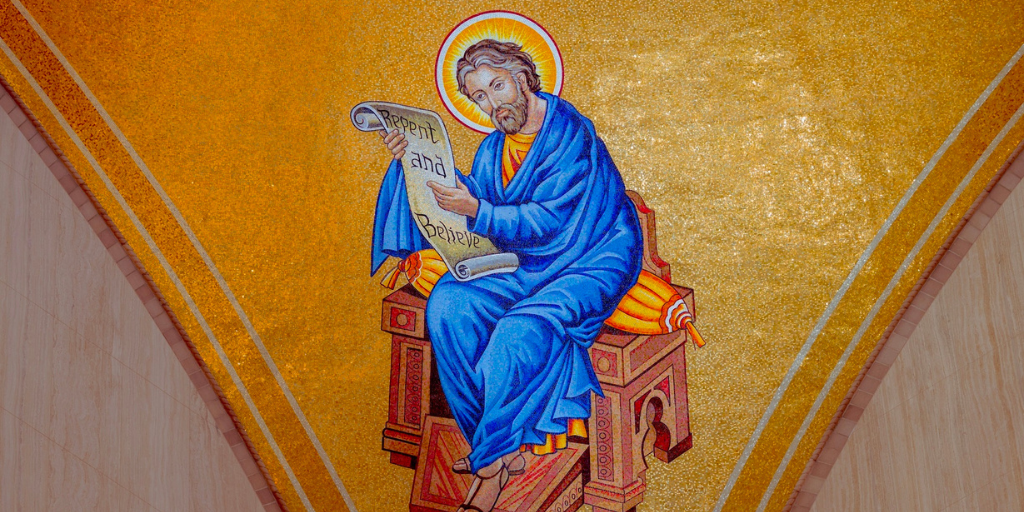
Every April, the Church celebrates many saints with feast days and memorials, honoring their unique contributions to the faith and reflecting on their examples of service. From the Father of Scholasticism to Mark the Evangelist, they each have something to teach us. Read about three saints celebrated in April and why you should know their stories.
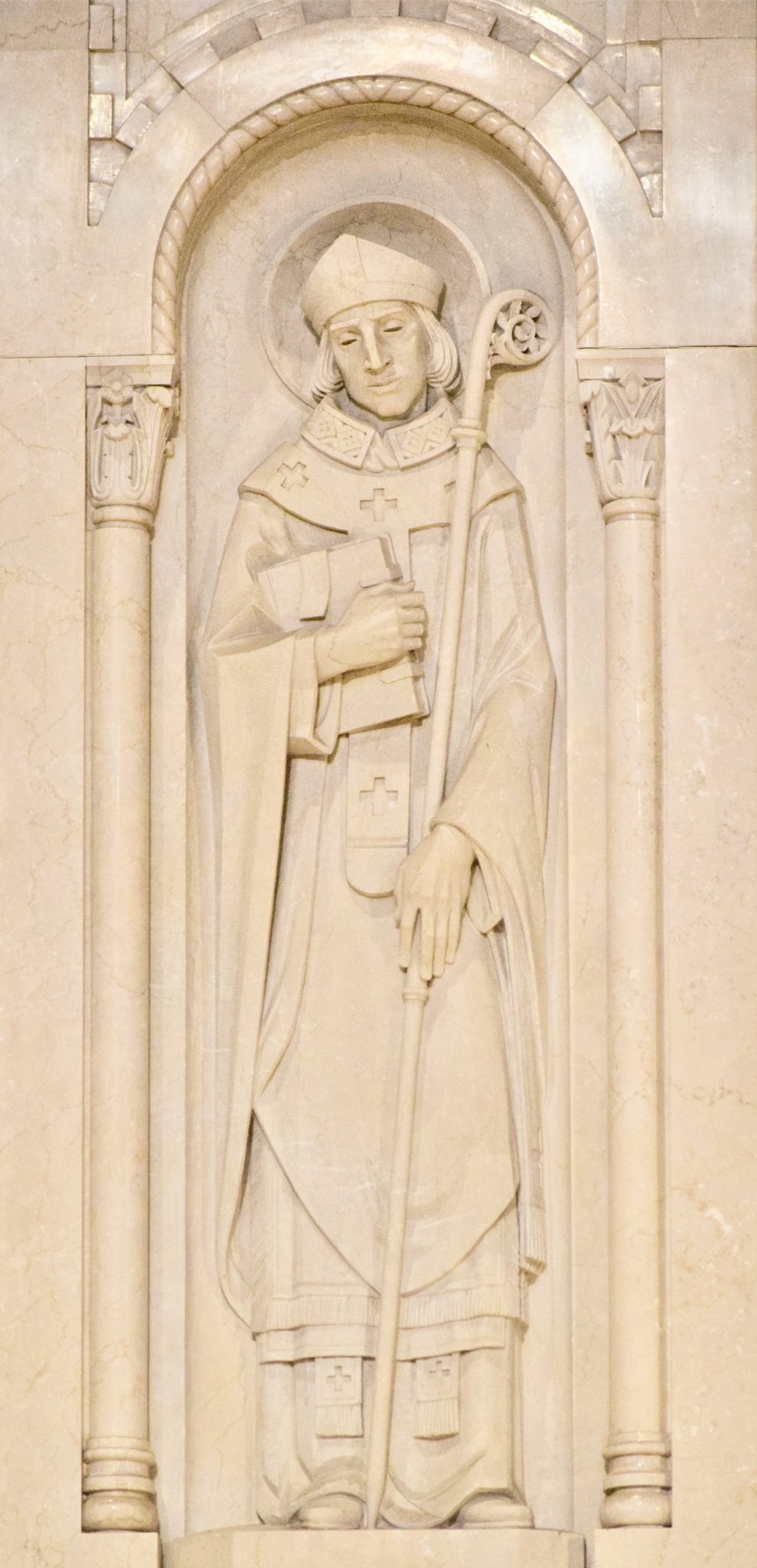
April 21 – St. Anselm of Canterbury
Called the “Father of Scholasticism,” St. Anselm was a prolific theologian who was deeply committed to the harmony of faith and reason. Born in Aosta in 1033, he demonstrated intellectual promise from a young age. Though he decided to pursue monastic life at age 15, his father prevented him from doing so until nearly a decade later, when he joined the Benedictine Abbey of Bec in Normandy.
At age 59, Anselm was appointed Archbishop of Canterbury by the ailing King Rufus, who created the office while at death’s door. When King Rufus unexpectedly recovered, he thought better of the move, and decided to take the office’s revenues for himself, limiting Anselm’s ability to operate. And though Rufus’ successor seemed more accommodating at first, he became more hostile to Anselm as the years went by, ultimately sending him into exile from 1103 to 1106.
During his exile, Anselm made strides in winning public support and effecting political change. He became one of the first high-ranking individuals in Europe to denounce slavery, and is credited with the Westminster Council’s passage of a resolution renouncing the slave trade. Today, he is perhaps best known for making the first ontological argument for God’s existence, and for his theory of divine atonement and resurrection in Why God Became Man.
April 23 – St. Adalbert
A child of European nobles, St. Adalbert was born in Bohemia in approximately 956 A.D. During his youth, he was overcome with a life-threatening illness, and his parents pleaded with the Lord to restore his health, promising to commit him to the priesthood if he lived. When he miraculously recovered, his parents sent him to Magdeburg to be tutored by a Benedictine missionary.
Following his education, Adalbert returned to Bohemia, was ordained, and became Bishop of Prague. Despite facing untold animosity and persecution in his hometown, Adalbert remained vigilant in his efforts to share the gospel. He worked tirelessly to improve the local church, preaching multiple times a week, visiting the poor and imprisoned, and even establishing a new budget. Unfortunately, the diocese there proved resistant to much of his guidance, prompting him to transfer to other locations over the course of his ministry, including Rome, Hungary, and a region near the Baltic Sea. Over the course of his missions work, he led many to Christ, including King Stephen I of Hungary.
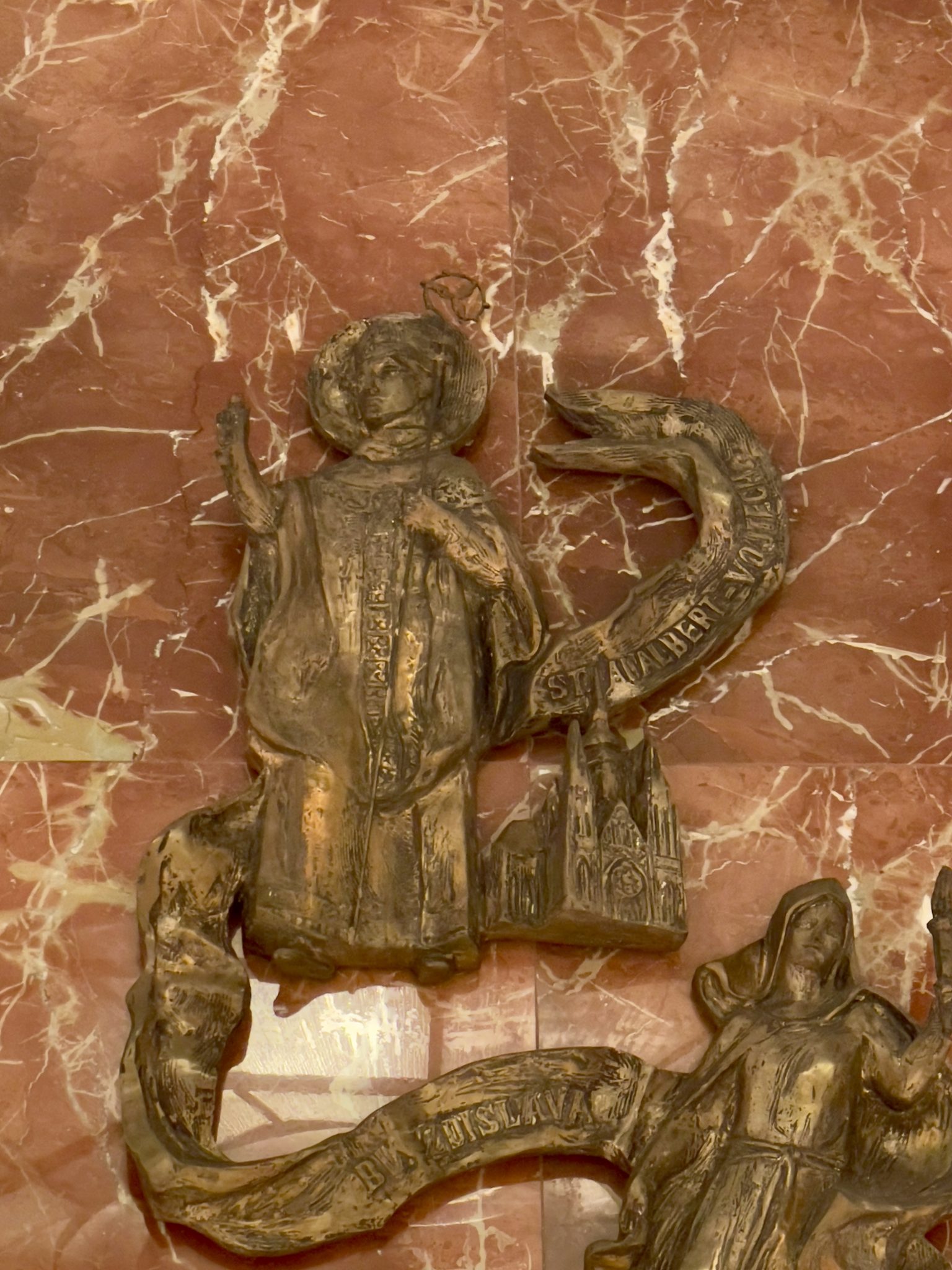
Even outside Bohemia, Adalbert met resistance. In his missions work near the Baltic Sea, his opposition to pagan practices incited the ire of the local tribes, and in 997, a pagan priest abducted Adalbert in his sleep and murdered him. Adalbert’s body was recovered by a Polish prince in exchange for Adalbert’s “weight in gold,” and he was buried at the church in Gniezno. In the Basilica, you can find Adalbert portrayed in a bronze sculpture in the Our Lady of Hostýn Chapel.
April 25 – St. Mark
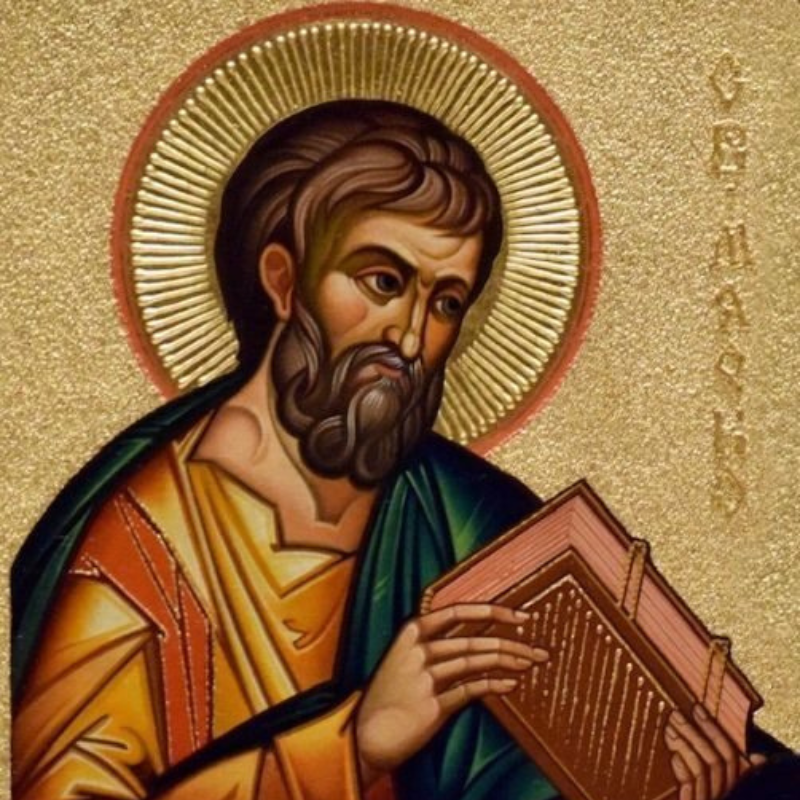
Although he was not a direct disciple of Jesus, St. Mark played a vital role as a missionary in the early church, and is the author of a Gospel account. First introduced in Acts 12, he worked alongside Paul and Barnabas to spread the Gospel across the nations. Though they had their disagreements, Paul refers to Mark with a degree of warmth and familiarity, calling him “useful” in his ministry and a “comfort” to him (2 Timothy 4:11 and Colossians 4:10-11).
Mark’s Gospel has a number of distinctive features that set it apart as a unique account. First, Mark especially emphasizes the timeliness of Christ’s actions. The Greek word eutheos – translated as “straightaway” or “immediately” – appears over 40 times throughout his account, evoking Christ’s unhesitating commitment to his earthly mission. Second, reading Mark, you will notice that he starts many of the chapters with the word “and.” Though this may seem insignificant, this stylistic distinctive links each chapter to the section preceding it, indicating the completeness and perfection of Christ’s earthly ministry. There is no break in his ministry; it is a continuous series of acts of faith and service – in other words, a perfect life of devotion. Finally, Mark also mentions the word “Gospel” more times than any of the other Gospel account authors; in fact, his eight mentions of the Gospel double the total of four mentions from all Matthew, Luke, and John put together!
Source:
Butler’s Lives of Saints, edited by Bernard Bangley.
“Saint Adalbert of Prague,” Franciscan Media.
“St. Adalbert of Prague,” Catholic.org.
“St. Adalbert of Prague,” EWTN.
The Way of Saints, Dr. Tom Cowan.