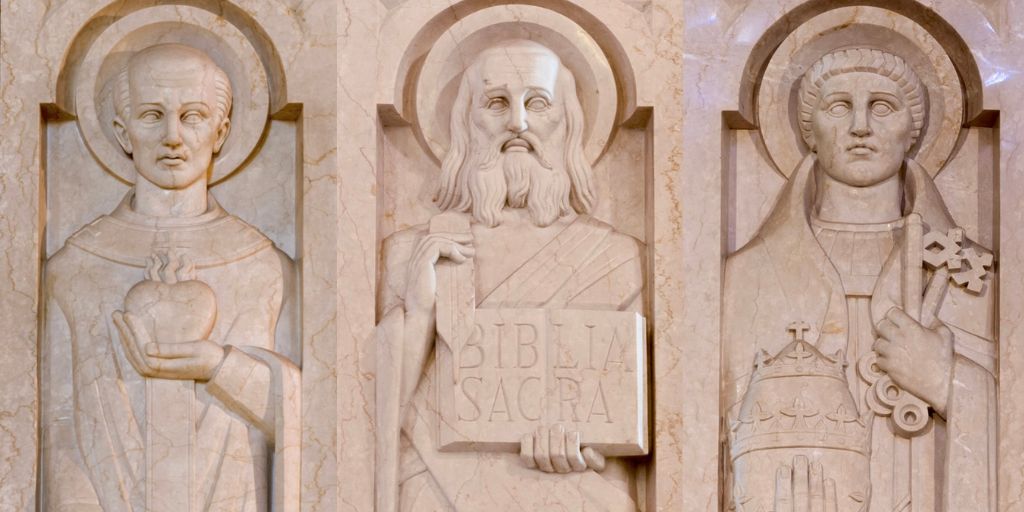
Standing over 40 feet above the Immaculate Conception Altar, the sanctuary baldachin is hard to miss. But what some visitors might not know is that each of its corners depict different Church Fathers in relief sculpture. These saints played a key role in shaping doctrine in the Early Church, whether they were battling heresy, translating the Scriptures, or providing much-needed leadership.
In this second post in our Saints of the Baldachin series, we invite you to discover the stories of the four Western Church Fathers portrayed on the west side of the baldachin and learn about the symbolism of their depictions.
This post is Part II in a series. View Part I.
1. St. Ambrose
Born around the year 340, Ambrose was the son of a high-ranking government official in Rome. Though his career began on a political trajectory, with a tenure as governor of northern Italy, the most pivotal moment in Ambrose’s life happened after the death of the bishop of Milan. The region was fraught with unrest as they argued over who should be the next bishop. Amidst the chaos, Ambrose urged the people to be peaceful and judicious in their selection. His sensibility gained him support, and within a week, he was baptized and consecrated bishop of Milan, even though he didn’t want the position!
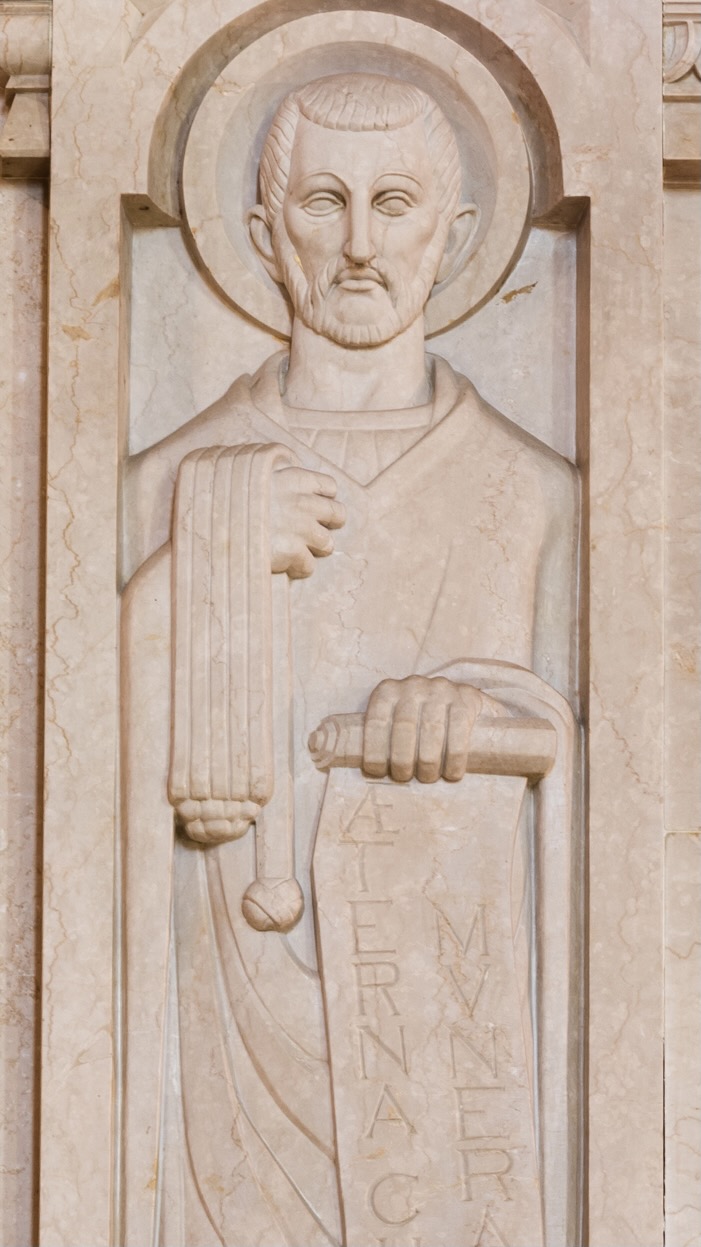
Though he had previously lived a secular life, Ambrose poured himself into religious life following his appointment, studying Scripture and theology and praying daily. As he shepherded the Church through a tumultuous era, he shaped key areas of Christian doctrine and fearlessly stood against secular excesses in authority. Over the course of his life, Ambrose penned many essays on asceticism, theology, spirituality, and contemporary issues of the era. In the baldachin, he is depicted holding a whip, representing discipline, and an unfurled scroll featuring Latin words from his Paschal hymn, translated to: “The eternal gifts of Christ the King.”
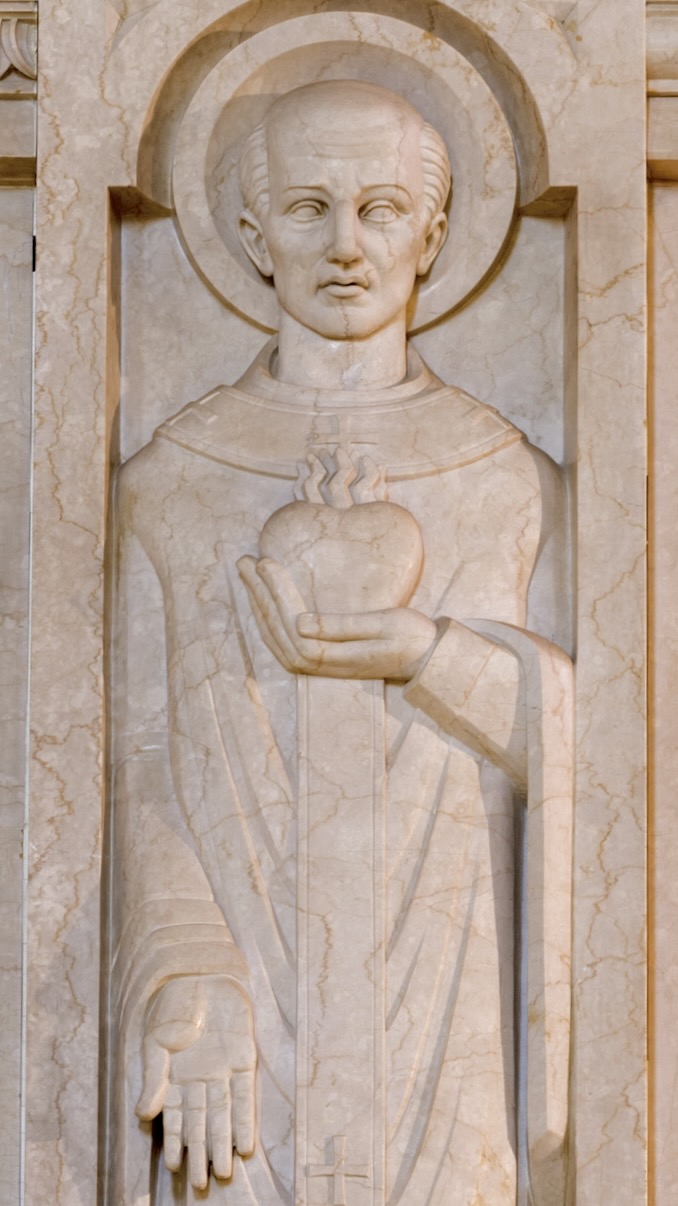
2. St. Augustine of Hippo
Augustine was born in northern Africa in 354. Despite being raised by a devoted Christian mother, he was a difficult child, and grew to be an atheist. A highly intelligent scholar who had received the finest education, he founded a school of rhetoric in Rome in 383. However, dissatisfied with the city, he moved to Milan in a year’s time, where he met the bishop Ambrose, who was a convincing orator with a formidable command of rhetoric. The integrity of St. Ambrose had a particular impression on Augustine and was instrumental in his conversion in 387.
Following the passing of his mother, Augustine returned to North Africa, and founded a religious order in Tagaste. He was later ordained, and in 395, became the bishop of Hippo. Not only did Augustine have a significant impact on Christianity, but on Western culture and philosophy more broadly. By some accounts, his Confessions is considered the first autobiography of the West, and is perhaps the “most widely read book of Christian antiquity.” In the baldachin, he is shown holding a flaming heart, while one hand is open in a gesture of humility.
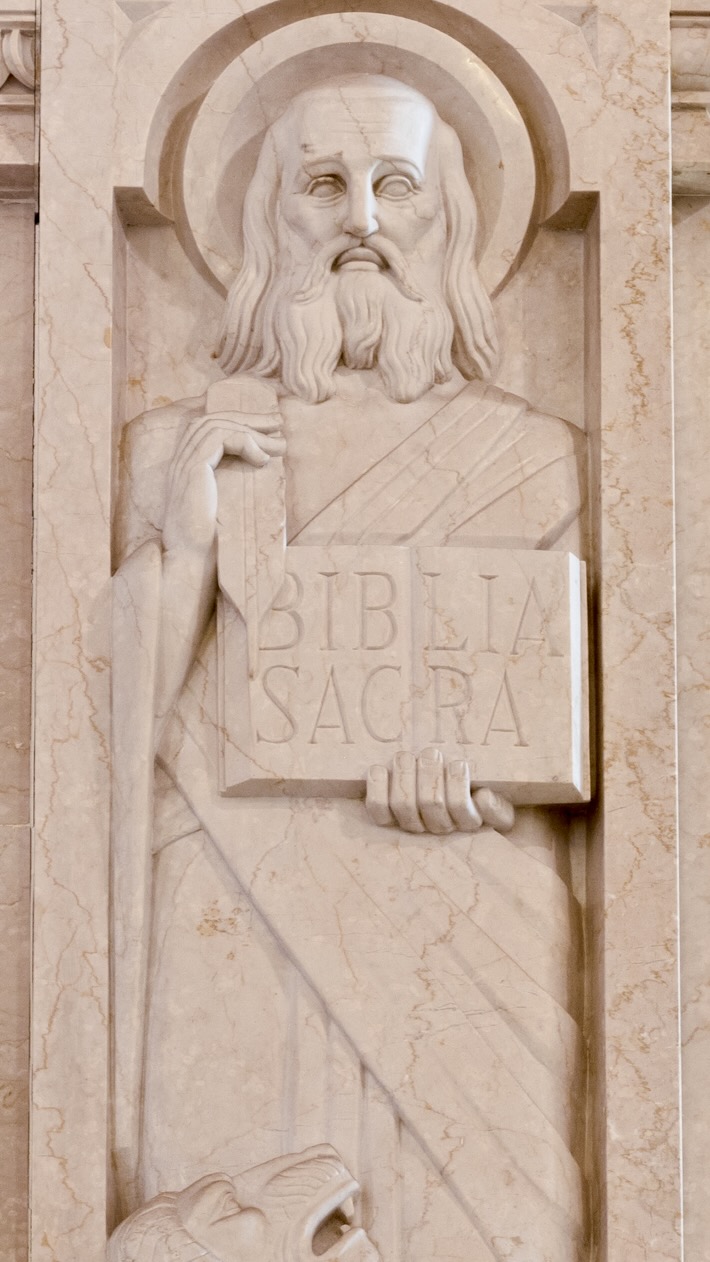
3. St. Jerome
One of the greatest scholars of the Church, Jerome was born in the 4th century in northern Italy. When he reached his thirties, he relocated to Syria, living as a recluse and learning Hebrew, Aramaic, and Greek. He used his extensive linguistic knowledge to create a translation of the Bible called the Vulgate. Using the “vulgar” (everyday) Latin, the translation made the Bible more accessible to common people. The Vulgate became the standard version of the Bible for the Catholic Church and was used for over a millennium.
When he learned of the destruction of Rome in 410, Jerome halted his beloved studies to oversee assistance to refugees who were fleeing to Palestine. As the Roman Empire continued to crumble, he became troubled by the destruction, and saddened by the capture of various monasteries. However, he continued to make valuable contributions to biblical scholarship for the remainder of his life. At the time of his death in 420, he was writing a commentary on the book of Jeremiah. In the baldachin, he is portrayed holding a writing quill and an open book with the Latin words “Biblia Sacra,” meaning “Sacred Bible.”
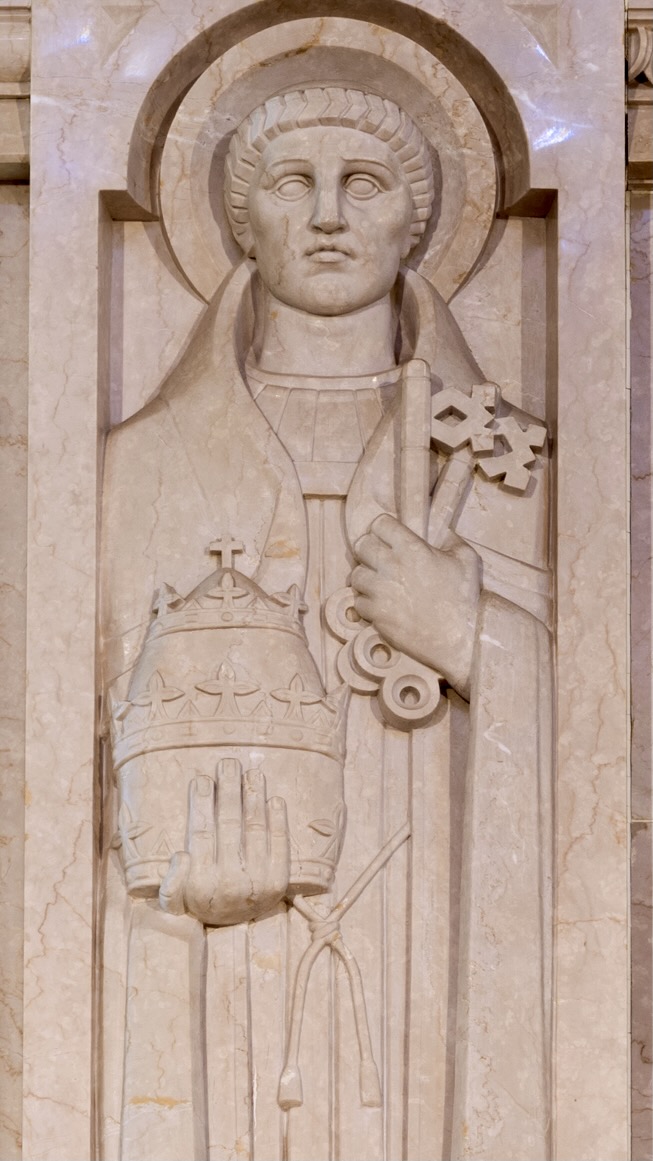
4. St. Gregory “the Great”
Born into a wealthy, well-connected family in the year 540, Gregory used his gifts of leadership, eloquence, and integrity to ascend into the highest echelons of Roman politics. But when his father died in 575, he abandoned his coveted government position for a life of servitude, turning his parents’ estate into a monastery and becoming a monk himself.
15 years later, Gregory became pope. Throughout threats of starvation, plague, and invasion, he guided the Church with wisdom, all while writing prolifically and caring for the vulnerable. Over the course of his lifetime, he wrote over 800 letters, a number of religious works, and many songs and hymns. During his tenure as pope, he provided food and clothing for the impoverished, defended the religious freedom of the Jewish people, and advocated for missions to England. Because of the leadership and direction Gregory provided for both the Church and Rome, he was canonized immediately after his death in 604. In the baldachin, he is portrayed holding a papal tiara and a set of keys.