
Since 1946, 11 Americans have been canonized as saints.
This year, as we celebrate the 250th birthday of the United States of America, we invite you to explore the stories of American saints honored in the Basilica. In this fourth installment, you can read about St. Kateri Tekakwitha, St. Teresa of Calcutta, and St. Damien de Veuster of Molokai.
This post is Part IV in a series. Read Part I, Part II, and Part III.
St. Kateri Tekakwitha
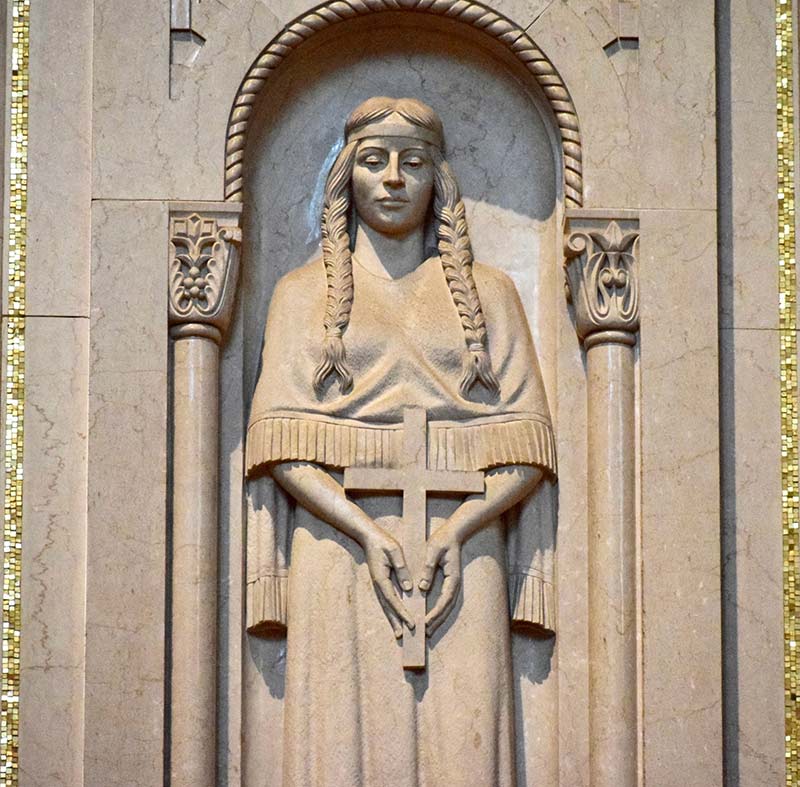
St. Kateri Tekakwitha was the first Native American to be canonized as a saint. Born to a Mohawk chief in 1656, Kateri was left an orphan at age four after an epidemic of smallpox took both her parents and her brother. She was raised by her uncle in a Mohawk tribe community, and in 1676, Kateri was baptized by Father Jacques de Lamberville, a Jesuit missionary. Kateri became a devoted Christian and took a vow of chastity. While her exemplary piety served as an inspiration to some of those around her, others harassed her because of her faith.
Seeking a less hostile environment, she moved to the settlement of the Mission of St. Frances Xavier, a community of Christian Indigenous people living near what is now Montreal. There, she grew in faith and holiness, spurred on by an unquenchable zeal for Christ, living in prayer and penitence. Only a few years later, however, she was called home by the Lord, passing away at the young age of 24 on April 17, 1680. Her last words were: “Jesus, I love you.” Today, she is recognized as the patroness of ecology and the environment.
St. Mother Teresa of Calcutta
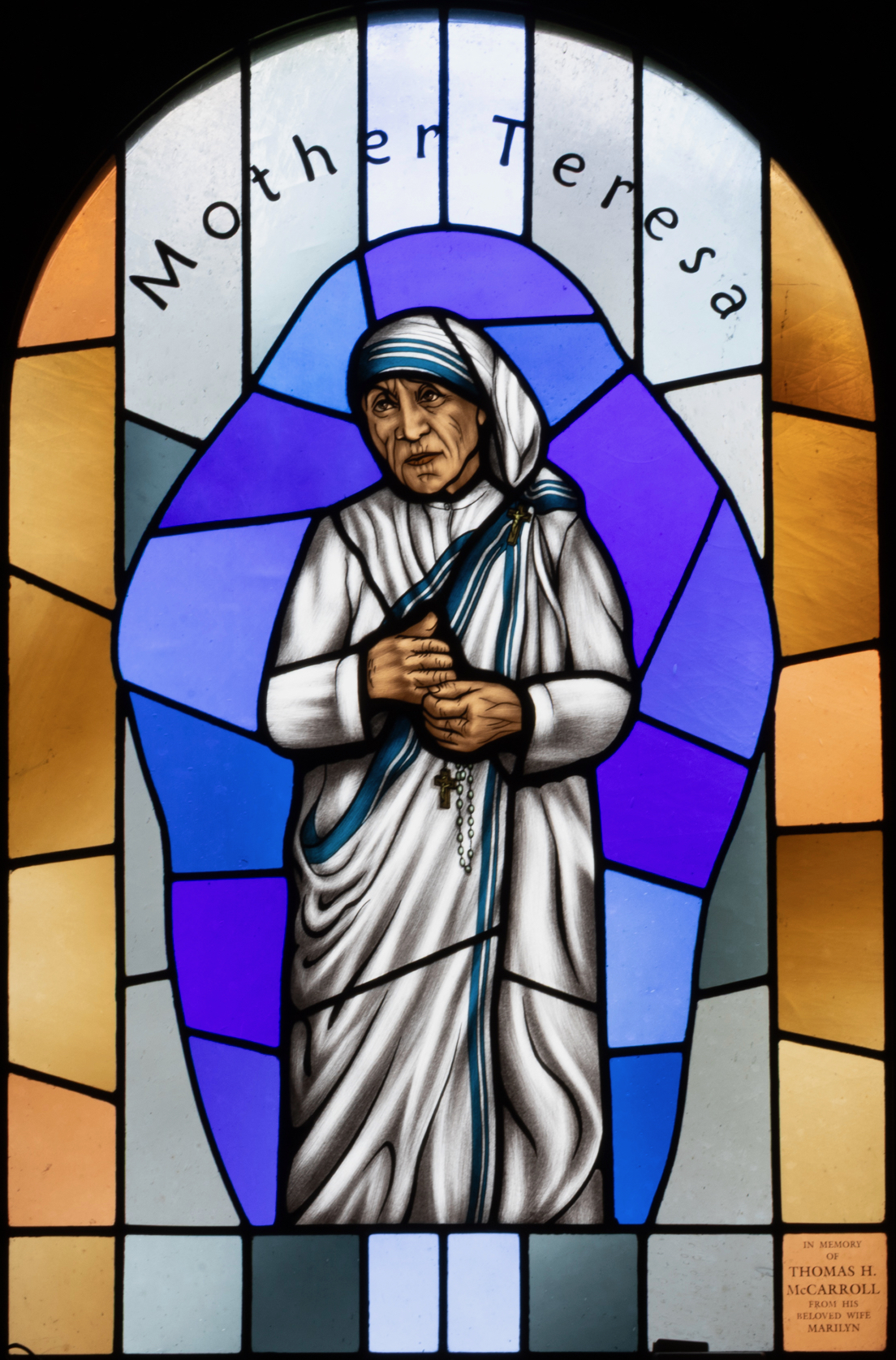
Known popularly as “Mother Teresa,” Gonxha Agnes Bojaxhiu was born in Macedonia in 1910. At the age of 18, she joined the Institute of the Blessed Virgin Mary in Ireland, and later journeyed to Calcutta, India, where she taught at St. Mary’s School for Girls. After taking her final Profession of Vows in 1937, she became known as Mother Teresa, and eventually became the principal of the school.
Though her time at Calcutta was filled with joy, purpose, and selfless care for others, God had something even greater in store for her. In 1946, when Teresa took a train from Calcutta to Darjeeling for a retreat, she had a profound experience which she would later refer to as a “call within a call.” It was the first of a series of visions and promptings from Christ that continued over the months that followed, giving her a strong sense that God wished for her to dedicate her life to caring for the poor. In answer to that call, she founded the Missionaries of Charity, dedicated to helping those in poverty. In the years that followed, she expanded the work of the Missionaries of Charity across the globe, founding a number of associated organizations as well.
Her outstanding service soon caught the world’s attention, and several awards were presented to her in recognition of her efforts for the impoverished – most famously, the Nobel Peace Prize in 1979. Despite her renown, she remained grounded in her commitment to humility and holiness – a goal she believed every person of faith could strive for. Throughout her lifetime, she visited the National Shrine multiple times, and was beatified six years after her death, due to the significant impact of her ministry. Today, The Missionaries of Charity Sisters carry on her legacy with over 4,500 members in 133 countries.
St. Damien of Molokai (Jozef Damien De Veuster)
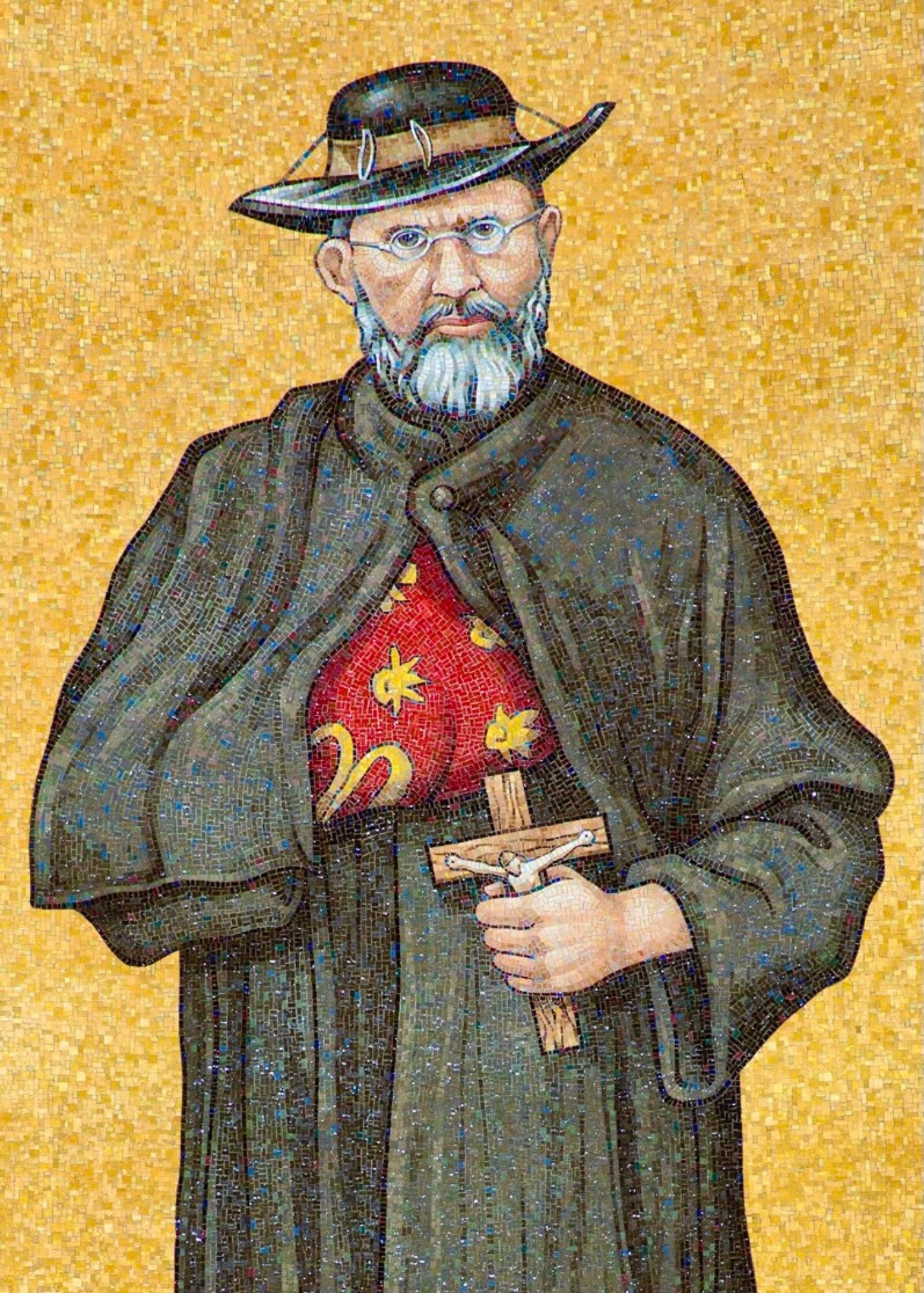
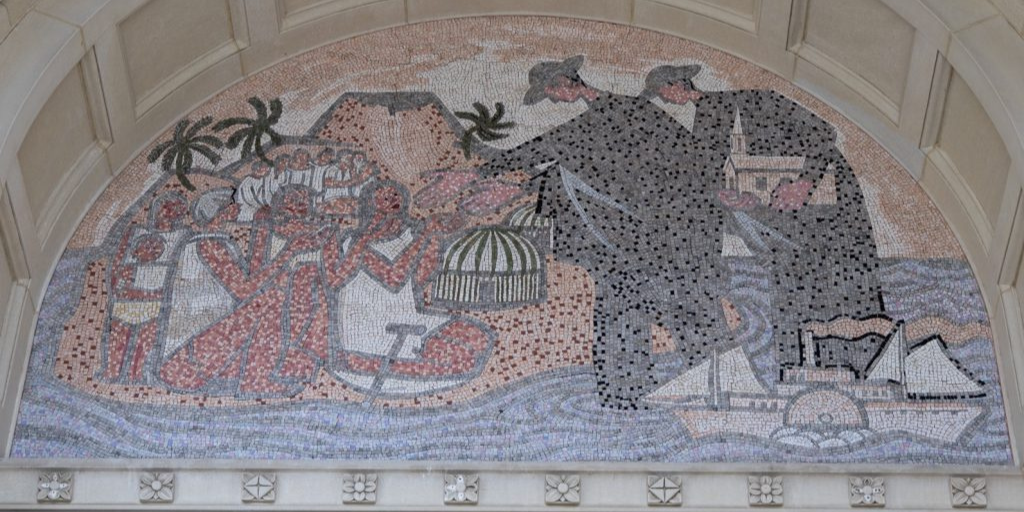
St. Damien of Molokai (Jozef Damien De Veuster) was born in Tremelo, Belgium, on January 3, 1840. At age 23, young Damien set sail for the Hawaiian Islands eager to share the Gospel and arrived over a year and a half later. During his time there, an influx of British and American merchants brought new difficulties to the native Hawaiians, including European diseases which slashed the population from 300,000 to about 50,000. When an epidemic of leprosy broke out, government leaders on the island sent the infected to live in quarantine on the island of Molokai, using armed officers to forcibly remove those who would not cooperate. Damien pleaded with local authorities, but to no avail. Heartbroken by how the tragedy had ripped families apart, Damien decided to go to Molokai to care for the lepers, understanding that he could never come back.
When Damien arrived in 1873, there were 800 lepers on the island and lawlessness was rampant. Damien brought order to the chaos, providing critical infrastructure and spiritual encouragement. He arranged funeral ceremonies and burials, encouraged the islanders to grow their own gardens for healthy nutrition, and built huts and a church. Damien even engineered his own irrigation system for the island. Unlike the doctors, who weren’t brave enough to come into contact with the afflicted, Damien cared for the sick himself.
In 1885, Damien began to develop leprosy. However, he remained steadfast and gracious throughout it all, continuing to serve until his death in 1889. Today, St. Damien’s selflessness and compassion for others continue to serve as an inspiration to the faithful around the world.
Sources:
Biography of St. Kateri from The Vatican.
Butler’s Lives of Saints, ed. Bernard Bangley.
“Mother Teresa of Calcutta,” The Vatican.
Rohling, Geraldine M., PhD, MAEd. The Basilica of the National Shrine of the Immaculate Conception: Guide and Tour Book. Washington, D.C.: Basilica of the National Shrine of the Immaculate Conception, 2018.
“Saint Kateri Tekakwitha,” Britannica.
“St. Damien of Molokai,” Britannica.
“St. Damien of Molokai,” Catholic Online.