
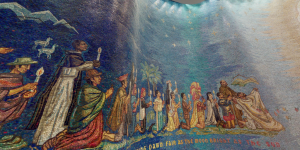
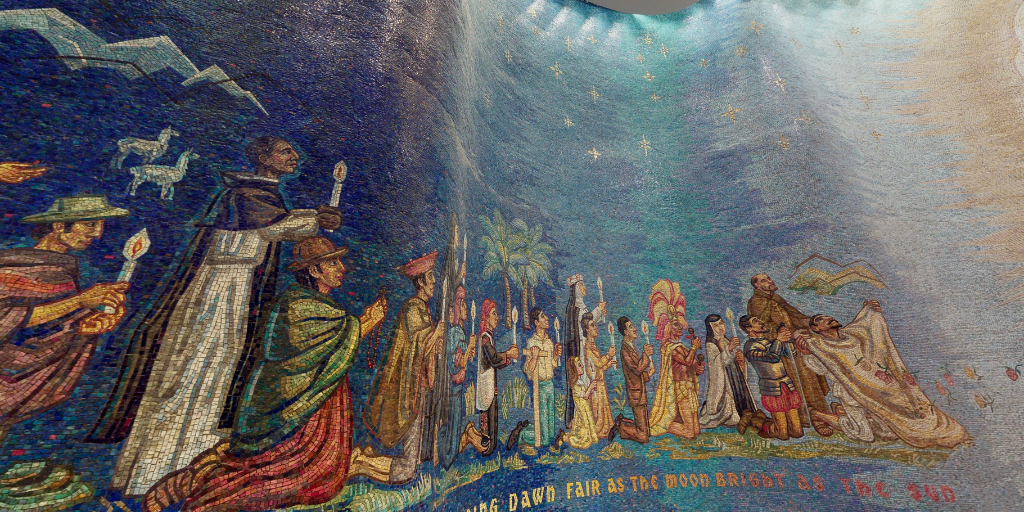
Among the many saints and figures depicted in the Basilica, you’ll find a variety of Latin American Catholics from history honored in glittering mosaics, sculpted stone, and more. From the first Ecuadorian saint to the beautiful patroness of South America, these faithful men and women set themselves apart with their thoughtfulness, love, and desire to glorify God in all they did.
This September, as we celebrate Hispanic Heritage Month, we invite you to discover the stories of three significant Latin American Catholic women from history and where you can find them portrayed in the Basilica.
1. St. Rose of Lima
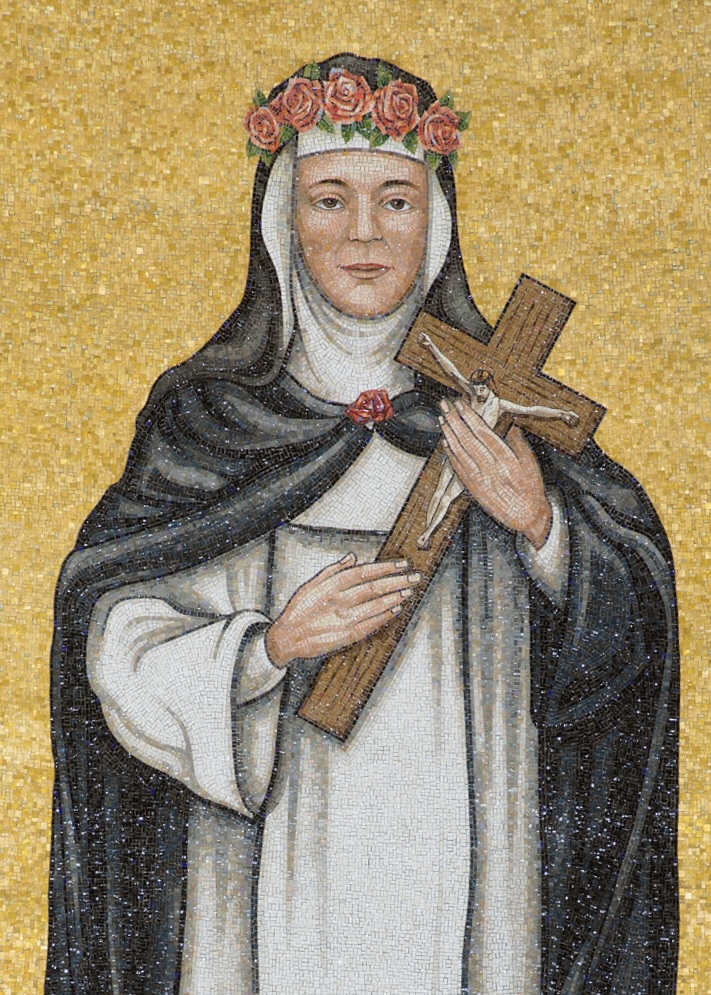
Did you know that Rose of Lima was the first person in the Western Hemisphere to be canonized a saint? Born as Isabel de Flores to Spanish parents in 1586, she was extraordinarily beautiful even as an infant, earning her the name “Rose.” As she grew older, she only became more and more lovely, which was a great source of pride for her parents. After losing much of their fortune in mining speculation, her parents were eager to have their beautiful daughter snatched up by a rich suitor. But while countless young men sought Rose’s affections, she eschewed them for spiritual pursuits.
Despite her parents’ wishes, Rose took a vow of virginity and joined the Third Order of St. Dominic. At one point, she decided to move into a garden hut, where she dedicated herself to prayer and provided for her family through needlework and gardening. She also used a room in her family’s house to care for the ill and elderly, and soon attracted many visitors for the peace and respite she offered. The faithful flocked to Rose for advice, prayer, and healing, and some even credited her with saving Lima from earthquakes in the surrounding region. In her final years, Rose grew ill and lived under the care of a local official for three years until her death in 1617 at age 31. Today, St. Rose of Lima is known as the patroness of South America.
2. Juana Inés de la Cruz
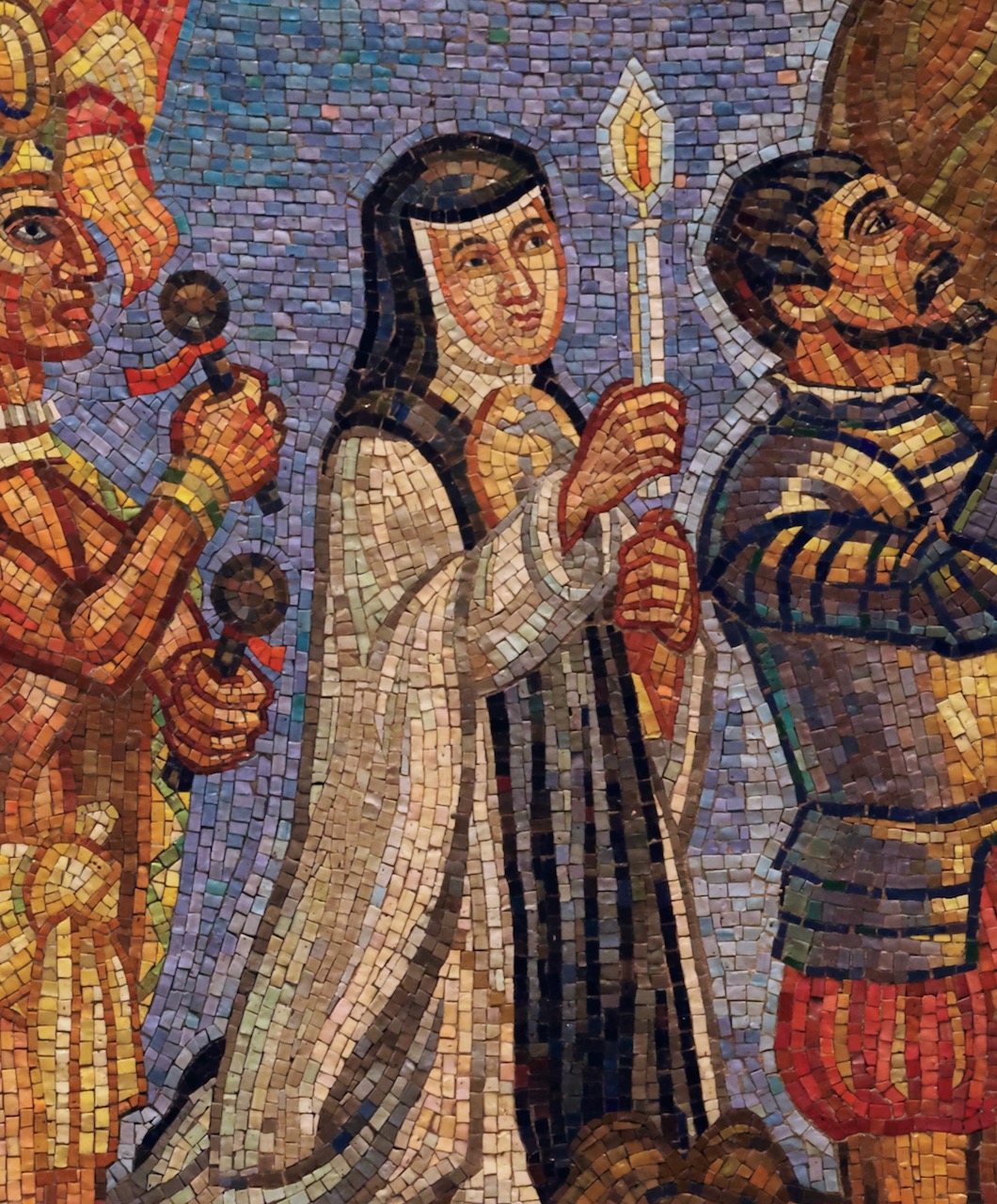
The illegitimate daughter of a Creole woman and a Spanish man, Juana Inés de la Cruz demonstrated extraordinary genius from an early age. Believed to be born around November 12, 1651, she was reading by age three, composed her own poetry at eight, and studied Latin at age nine. After spending some time at a marquis’ court, she eventually joined the Convent of Santa Paula of the Hieronymite order and assembled a collection of 4,000+ books, musical instruments, and scientific instruments with the viceroy’s support. With her diverse intellectual and creative interests, Juana demonstrated a remarkable versatility in style and form, composing everything from love sonnets to dramas, rivaling the masters of her era.
A turning point for Juana occurred in 1690, when she critiqued a sermon of a well-known Jesuit priest, Antonio Vieira, in a private letter to the Bishop of Puebla, Manuel Fernández de Santa Cruz. The letter was released to the public, stirring up controversy, but Juana wasn’t easily dismissed. She wrote a response which historians consider the first substantive defense of a woman’s right to study. Unfortunately, this only subjected her to greater attacks which eventually led her to lay aside her private collections and all commitments to writing and studying. Tragically, she died in 1695 at 44 years old – merely four years after the publication of her response.
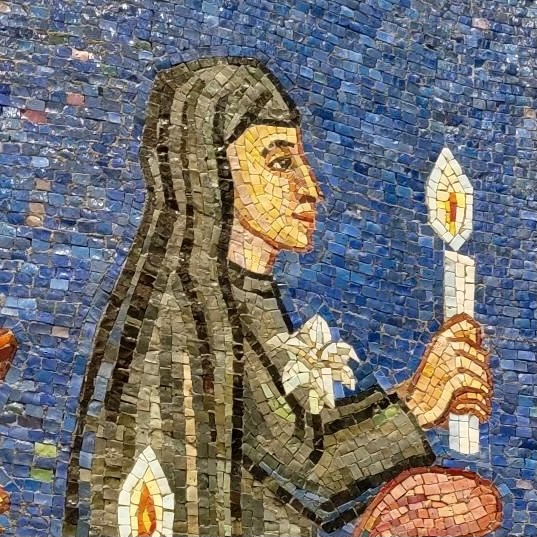
3. St. Mariana de Ecuador
Born in 1618, St. Mariana lost both parents at age four, and grew up under her sister’s care. Her grasp of spiritual truths was so remarkable that an exception was made to give her First Communion when she was eight. (This was prior to the lowering of the age requirements for First Communion). She bloomed into an accomplished young lady who was musical, a talented seamstress, and a lover of prayer and meditation. Today, she is known as the “Lily of Quito,” beloved for her dedication to piety and spiritual education. St. Mariana of Ecuador was the first Ecuadorian saint to be canonized.
Interested in learning more Latin American saint trivia? Try taking our quiz,
10 Facts About Latin American Saints and Catholics from History!
Sources:
Butler’s Lives of Saints, ed. Bernard Bangley.
“Santa Mariana de Jesús,” EWTN.
“Sor Juana Inés de la Cruz,” Britannica.
“Sor Juana Inés de la Cruz,” National Poetry Foundation.
“Sor Juana Inés de la Cruz: The First Great Latin American Poet,” National Endowment for the Humanities.
“The Life of Sor Juana Inés de la Cruz: Key Years and Events,” National Endowment for the Humanities.
The Way of Saints, by Tom Cowan.
Rohling, Geraldine M., PhD, MAEd. The Basilica of the National Shrine of the Immaculate Conception: Guide and Tour Book. Washington, D.C.: Basilica of the National Shrine of the Immaculate Conception, 2018.