
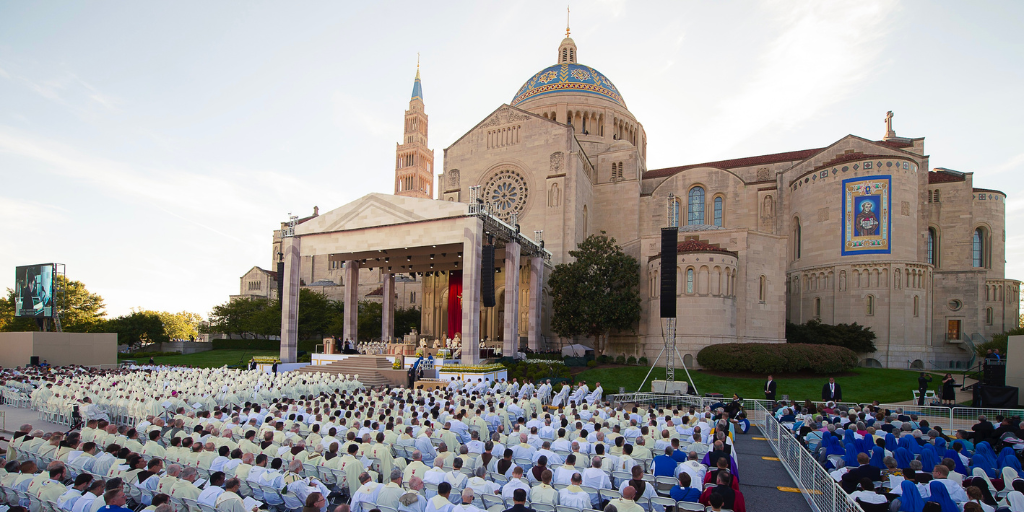
As America’s Catholic Church, the Basilica is proud to have a unique place in the history of Catholicism in America, serving as the patronal church and preeminent Marian shrine in the United States. Built over the course of a century by generations of faithful Catholics, it stands not only as a national sanctuary of prayer and pilgrimage, but a testament of devotion.
This year, as we celebrate the 250th birthday of the United States, we invite you to take a look back at five key moments in the history of the National Shrine – America’s Catholic Church.
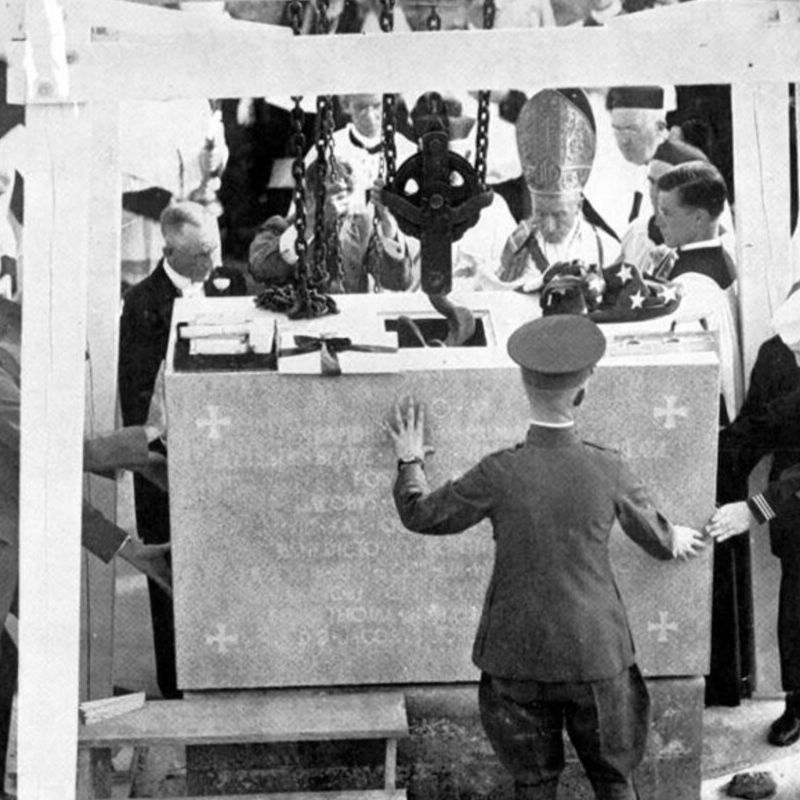 1. The foundation stone is placed.
Weighing four tons, the foundation stone was sandblasted out of New Hampshire granite and transported over 1,540 miles to Washington, D.C., by truck. According to granite supplier James Sexton, the trip proved very eventful. Not only did they stop along the way at over 40 churches and schools, but at one point during the trip, the brakes on the truck also went out!
As the stone was placed at the building site on September 23, 1920, over 1,000 people gathered to watch. Cardinal Gibbons put his right hand on the stone and prayed, “In the faith of Jesus Christ, we place this first stone in the foundation,” and blessed the stone three times as it was lowered onto its cement base. He then faced the direction of what would become the entrance to the National Shrine, invoking the divine blessing on the structure and reciting the Veni Creator Spiritus. The dedication service concluded with the singing of the Te Deum.
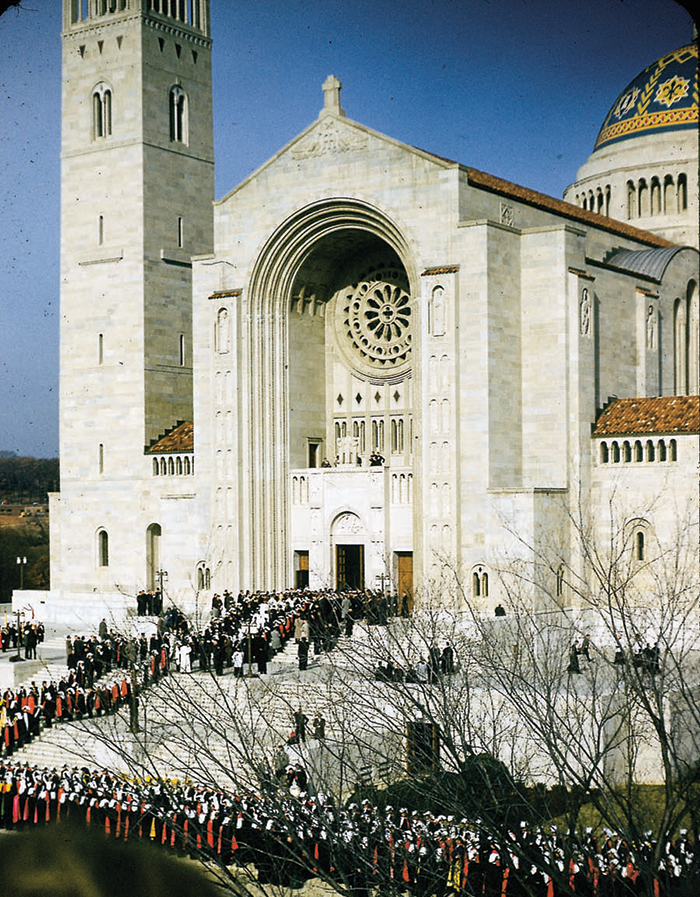 2. The National Shrine’s superstructure is dedicated.
Though 1931 marked the completion of the Crypt Level, construction for the rest of the National Shrine came to a halt due to the death of Bishop Shahan, the years of the Great Depression, and other factors. It wasn’t until the Marian Year of 1953-1954 that construction was renewed.
In February of 1956, workers began installing the 50-foot marble columns of the Great Upper Church apses – each segment of which weighed 12.5 tons! Throughout the next few years, the limestone walls slowly rose until the superstructure was complete.
Thousands gathered for the blessing and dedication of the National Shrine on November 20, 1959, nearly 40 years after the foundation stone was placed. At the time of the dedication, the only ornamentation in the Great Upper Church was the Christ in Majesty mosaic, which serves as the focal point of the space to this day.
3. Pope John Paul II becomes the first reigning pope to visit the National Shrine.
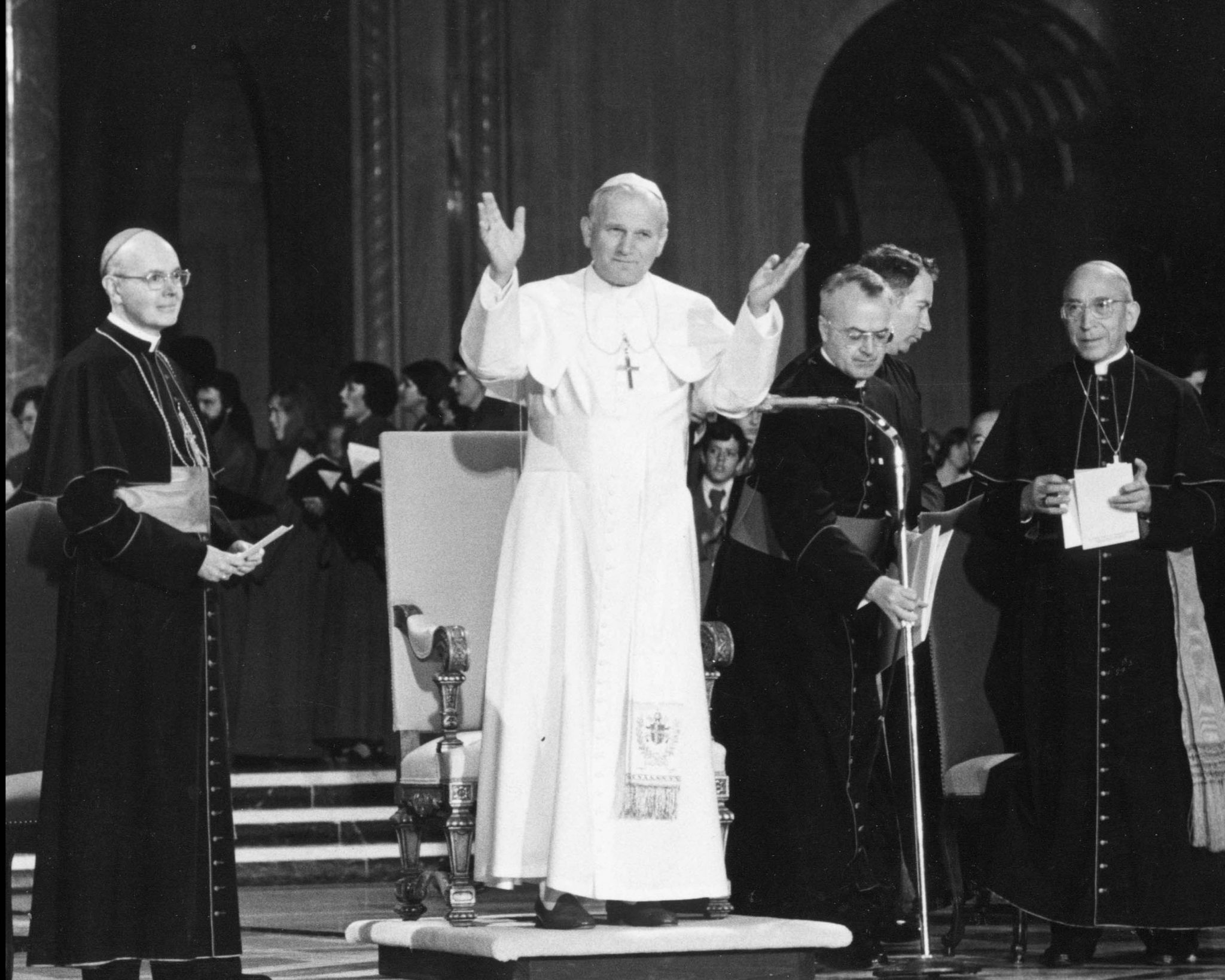
On October 7, 1979, Pope John Paul II made history by becoming the first reigning pope to visit America’s Catholic Church. While prior to his papacy, previous popes scarcely traveled outside the confines of the Vatican City State, he made it his mission to visit the faithful in all parts of the world. His work spreading the Gospel to millions of people in over 120 countries during his papacy earned him the moniker “the Pilgrim Pope.”
During his visit to the National Shrine, Saint John Paul II expressed the powerful impact and significance of this holy sanctuary:
“This Shrine speaks to us with the voice of all America, with the voice of all the sons and daughters of America, who have come here from the various countries of the Old World. When they came, they brought with them in their hearts the same love for the Mother of God that was characteristic of their ancestors and of themselves in their native lands.”
4. The National Shrine is granted the rank of a minor Basilica.
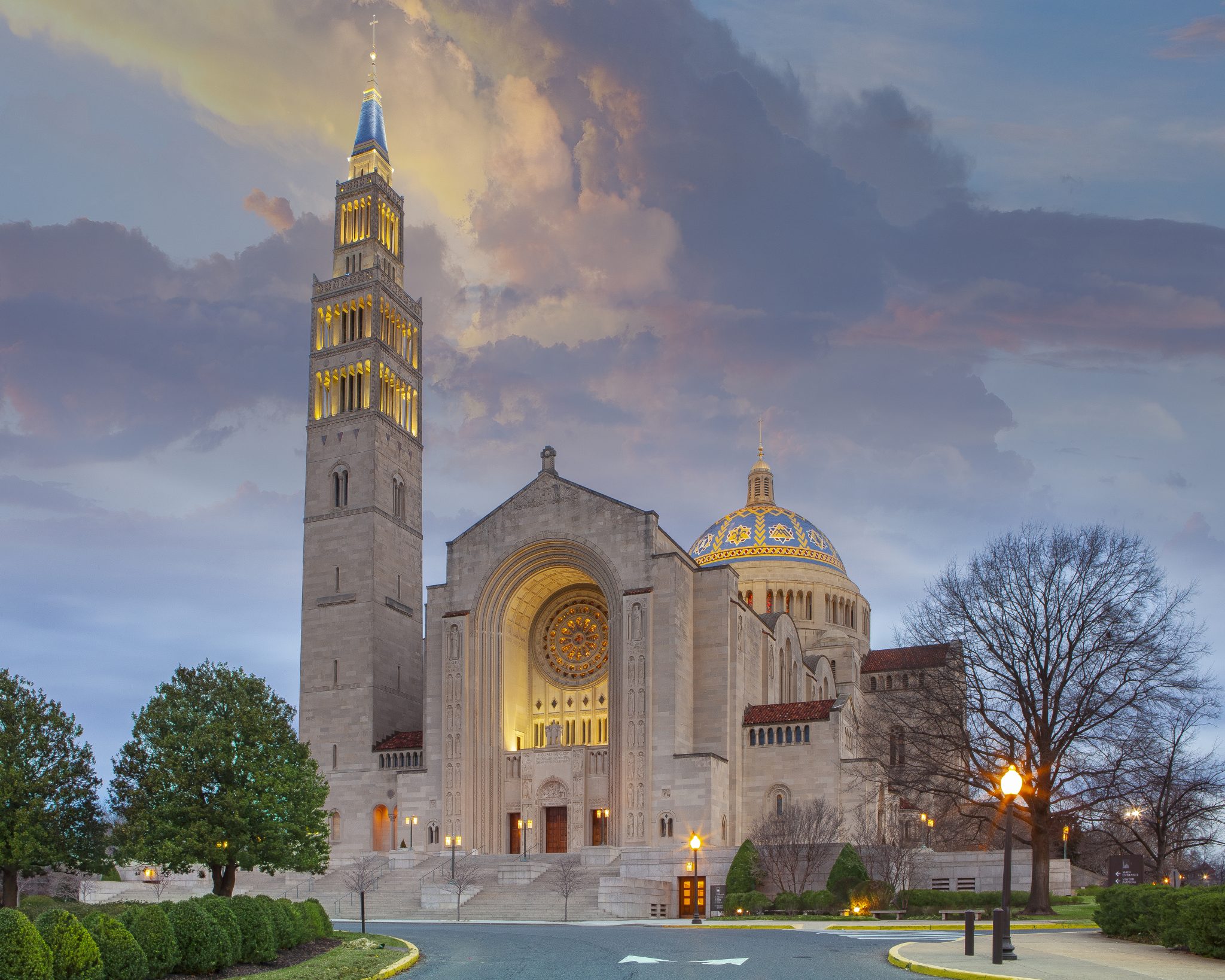
One of the most significant events in the life of the National Shrine was when it was elevated to the rank of a minor basilica on October 12, 1990, by Pope John Paul II. It was the 35th church in the United States to receive this designation, which recognizes its historical importance, dignity, and significance as a center of worship and devotion. As a minor basilica, the National Shrine is a place where visitors who participate in Mass and pray for the intentions of the Holy Father on specified days may receive a plenary indulgence.
5. Pope Francis presides over the canonization Mass of Junípero Serra.
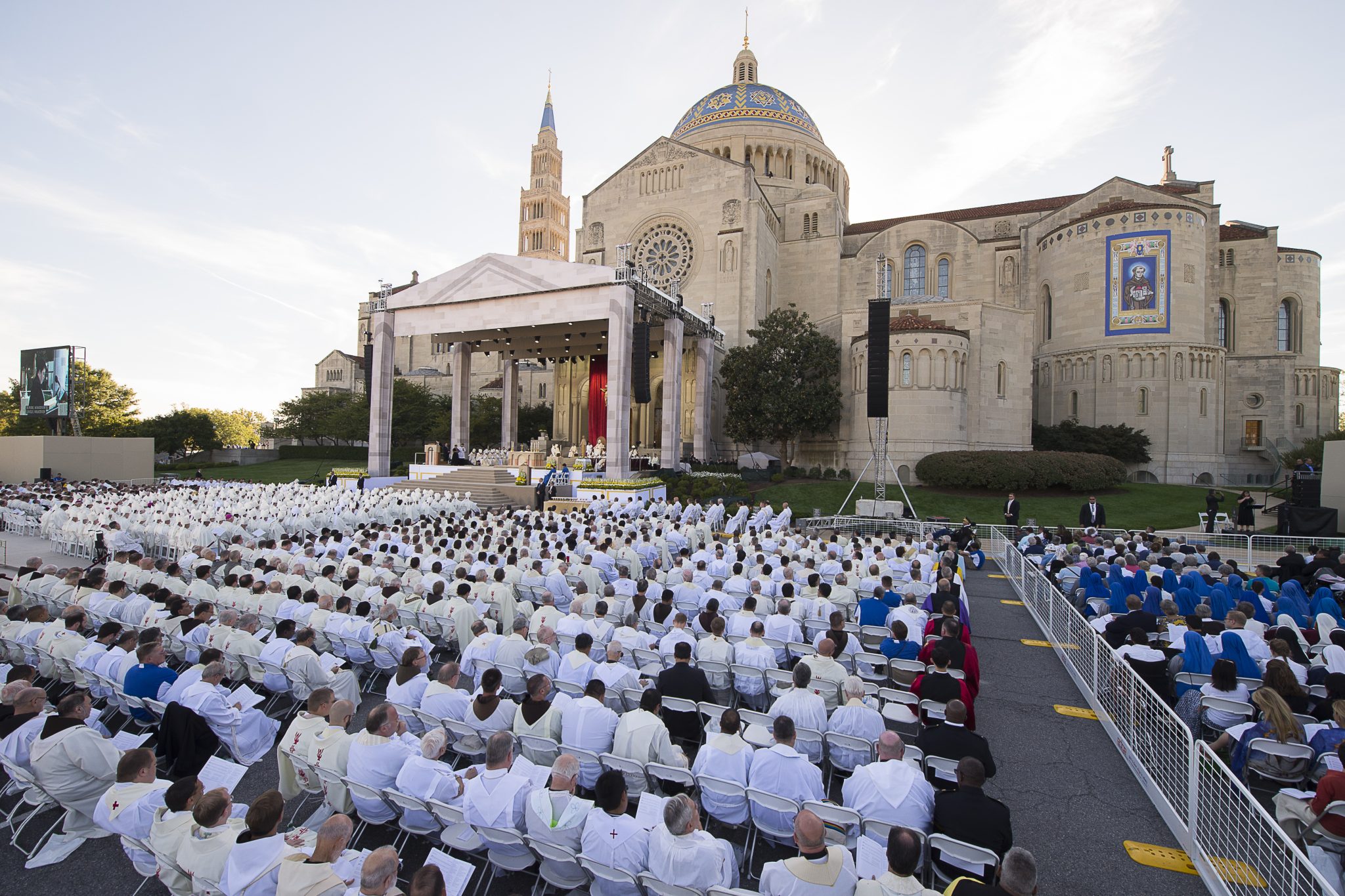 When Pope Francis arrived at the Basilica in the Popemobile on September 23, 2015, an estimated 25,000 people waited with bated breath to see him. As he rode through the crowds once, and then again, the triumphant sounds of the Knights Tower Carillon bells heralded his arrival.
The visit was historic for several reasons. Not only was it his first time at America’s Catholic Church as pope, but he was also presiding over the canonization Mass of Junípero Serra – the first canonization to ever take place on American soil. During this visit, Pope Francis also blessed the first segment of mosaic art that now adorns the Trinity Dome.