
What does faithful fatherhood look like?
As spiritual leaders in the home, fathers are called to guide their families in the way of the Lord – to protect them and imitate Christ’s example of sacrifice. While only God has given us the perfect example of fatherhood, there is still much to learn from the stories of fathers in Scripture.
This Father’s Day, we invite you to discover the stories of three fathers of the Bible and how they learned to trust God above all.
Abraham
For much of Abraham’s life, the prospect of fatherhood seemed far out of reach. Though God had promised him and his wife Sarah a child, as they grew old and Sarah remained barren, it seemed more and more impossible. At one point, they were so frustrated that Sarah brought her slave woman to Abraham so that she could bear a child for them. But God had not forgotten His promise. Years later, when Abraham was 99, Sarah conceived and bore a son named Isaac, which means “laughter” — because each of them laughed when they learned they would have a child in their old age. God promised Abraham that He would continue His covenant with Isaac, and that he would have many descendants through this son.
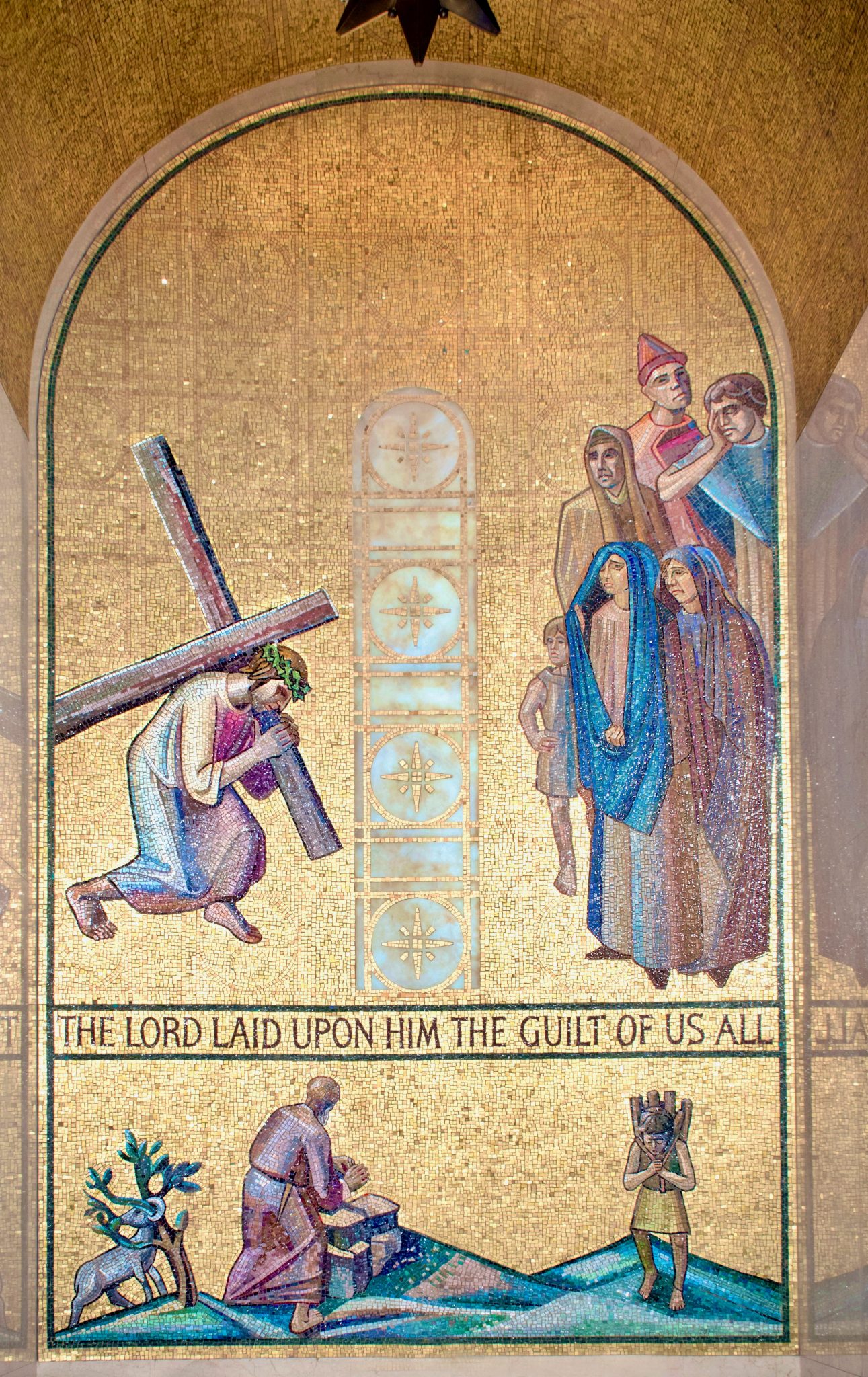
To us, the long wait that Abraham had to endure may seem like enough of a trial; but God had yet another test for him still. One day when Isaac was a boy, God told Abraham to sacrifice Isaac on Mt. Moriah. Though he loved his son dearly, he did not hesitate to obey the Lord. The very next day, Abraham made the journey, taking Isaac with him, and prepared for the sacrifice. But when he drew his knife, an angel stopped him. Genesis 22:11-12 describes:
“But the angel of the Lord called to him from heaven, ‘Abraham, Abraham!’ ‘Here I am,’ he answered. ‘Do not lay your hand on the boy,’ said the angel. ‘Do not do the least thing to him. For now I know that you fear God, since you did not withhold from me your son, your only one.’”
Abraham noticed a ram caught by his horns in the thicket nearby and offered it to the Lord instead. He called the place “Yahweh-yireh” meaning “the Lord will provide.” After the sacrifice, the angel spoke again to him, saying that he would be blessed for being willing to give all that he had to the Lord.
Abraham’s story is not just one of longing and waiting, but of learning to trust in God no matter the circumstance. In the past, Abraham had doubted God. He had tried to have children in his own way instead of waiting on God. By asking him to sacrifice Isaac, God was testing Abraham to see if he trusted Him. And he did: Abraham’s faith in God was so great that he was willing to give Him his only son, trusting that God could bring him back from the dead. Though we may not fully understand God’s plans, He, in His providence, supplies all our needs. All He asks is that we have a willing heart.
Noah
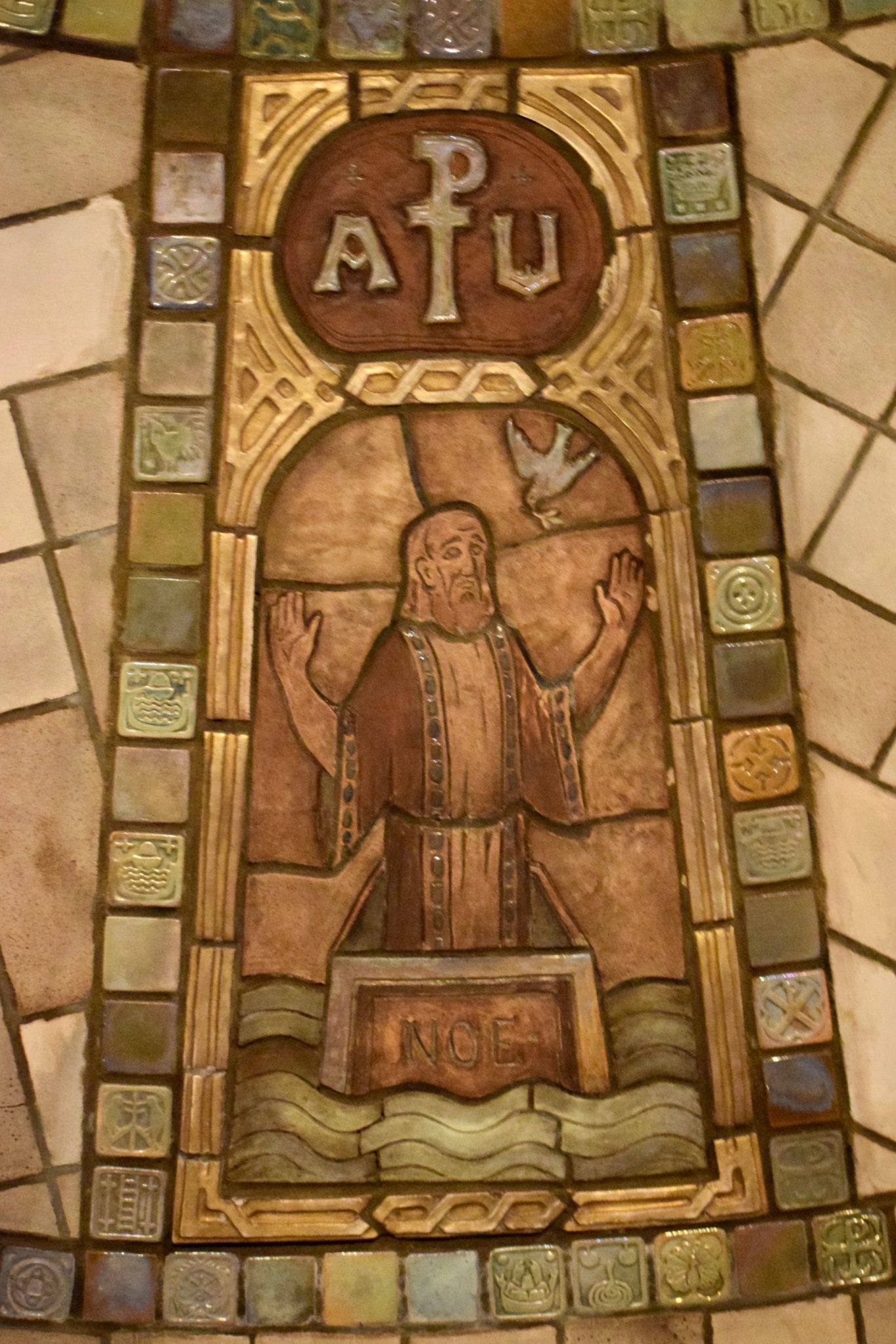
The story of Noah is another example of trusting and obeying God, even when we can’t see His plans.
Amongst the evil people of his time, Noah was a “righteous man and blameless in his generation,” (Genesis 6:9). When God decided to destroy the earth with a flood because of mankind’s wickedness, He gave Noah detailed instructions about the ark he was to build and all the creatures he was to take with him.
Perhaps anyone else would have balked at this assignment. What would everyone think of him building an ark for decades on end? But Noah did as God commanded, and when he was 600 years old, he completed the ark. He took his family into it, as well as pairs of all the different animals. Seven days later, the flood came upon the earth and the rain poured from the skies for 40 days. The waters rose higher and higher on the face of the earth, until even the tops of the highest mountains were covered, and every breathing creature perished (7:22).
150 days had passed when the waters subsided and the ark came to rest on top of Mt. Ararat. After bringing his family and the creatures out onto land, Noah built an altar to God and presented Him with an offering, giving thanks to Him for His provision. At that moment, God made a promise never to flood the earth again, setting a rainbow in the sky as a sign of this covenant with mankind.
The story of Noah and the Flood is one of judgement and salvation; of obedience and disobedience. In an era of overwhelming wickedness, Noah set himself apart by living righteously, leading his family according to God’s commands. Noah was likely mocked for building the ark when no flood was yet seen upon the earth – but he did not worry about what other people thought. He simply responded to God with a willing heart and hands. God rewarded him for his righteousness and obedience, saving both him and his family from destruction.
Joseph
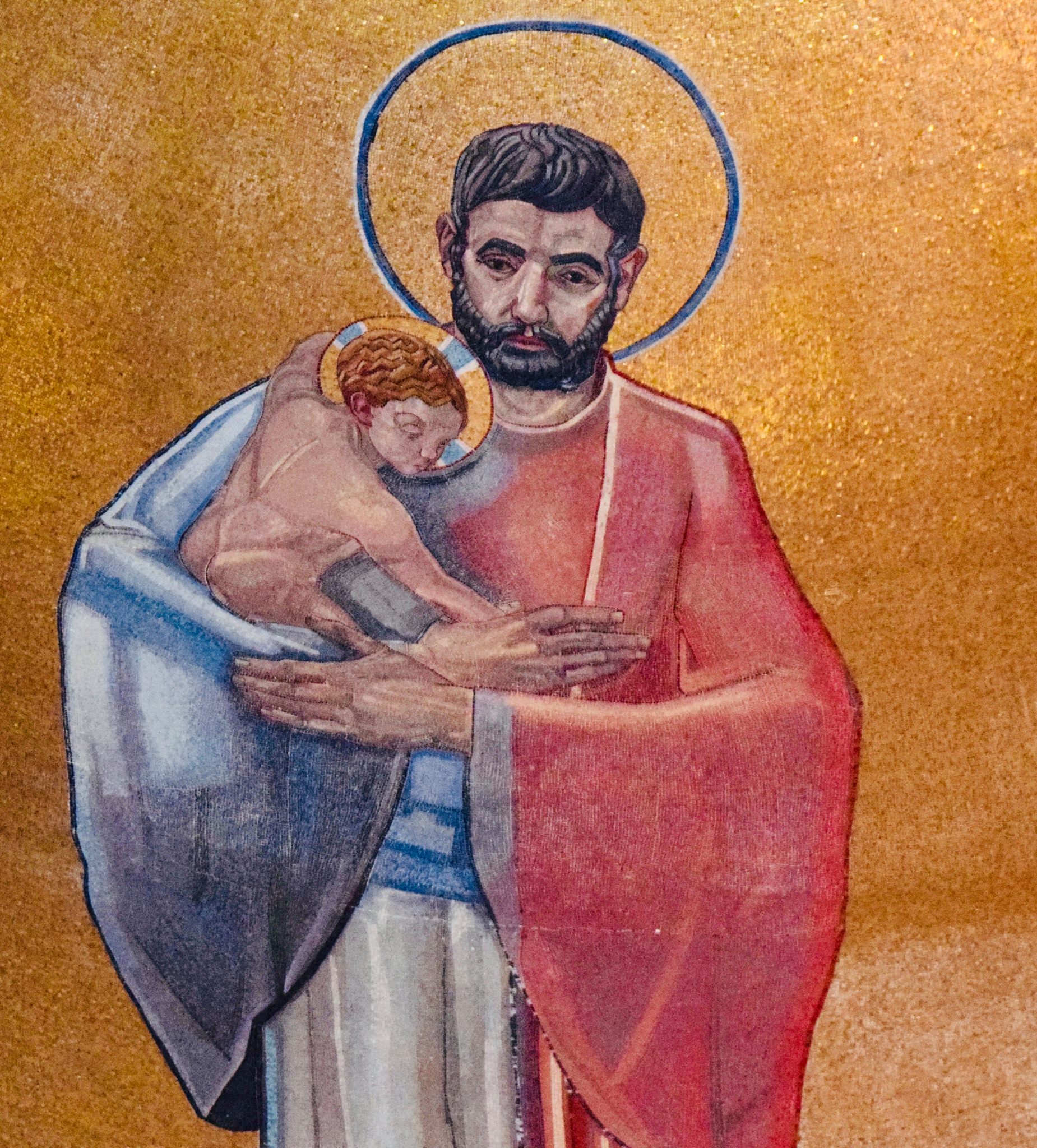
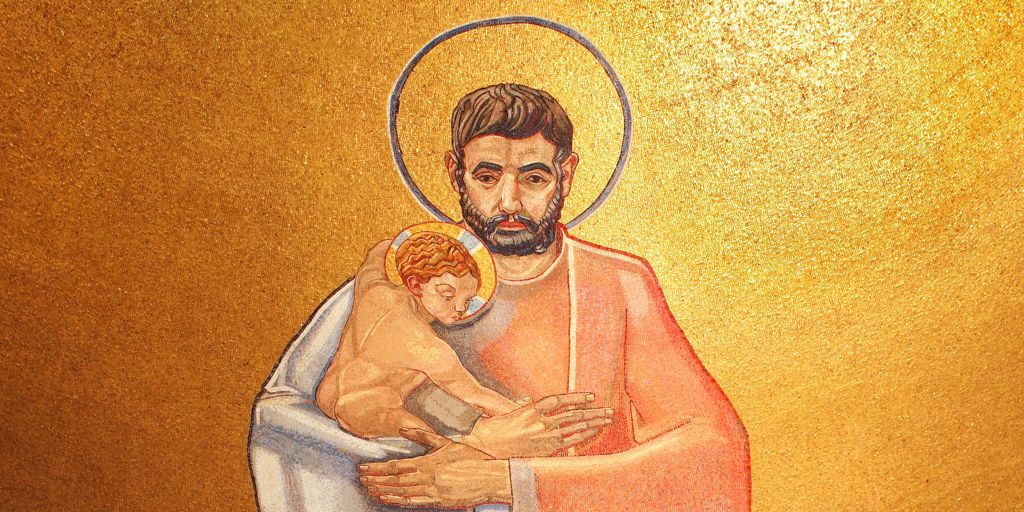
Known as the patron saint of fathers and the earthly father of Jesus, Joseph provides an example not only of unhesitating obedience to God, but of strong family leadership.
Though Joseph is only mentioned a few times in the Bible, the Gospel accounts demonstrate his upright character as the leader of his family, describing him as a “righteous man” who was betrothed to Mary (Matthew 1:19). When he learned she was pregnant, he was going to break off their engagement quietly. But after the Lord spoke to him through an angel, he immediately set aside his plan, and instead, married her as the Lord commanded. Together, they went to Bethlehem, where Mary gave birth to Jesus, the promised Messiah, in a stable.
Joseph played an important part in Jesus’ early life, serving as a strong earthly father and protecting Jesus and Mary. We see this care and protection demonstrated both in his work as a carpenter to provide for his family, and also in the account of the flight into Egypt.
Joseph is portrayed in eight places in the Basilica – most prominently, in the St. Joseph, Defender of the Faith mosaic in the East Apse of the Great Upper Church.