In this sixth post in our Doctors of the Church series, we invite you to learn about three Doctors of the Church and their contributions to the faith. From the patron saint of lost things to the “second founder” of the Franciscans, each of these men helped shape the doctrine of the Church and draw others closer to the truth of the Gospel.
Read Part I, Part II, Part III, Part IV, and Part V of the Doctors of the Church series.
St. Bernard of Clairvaux (1090-1153)
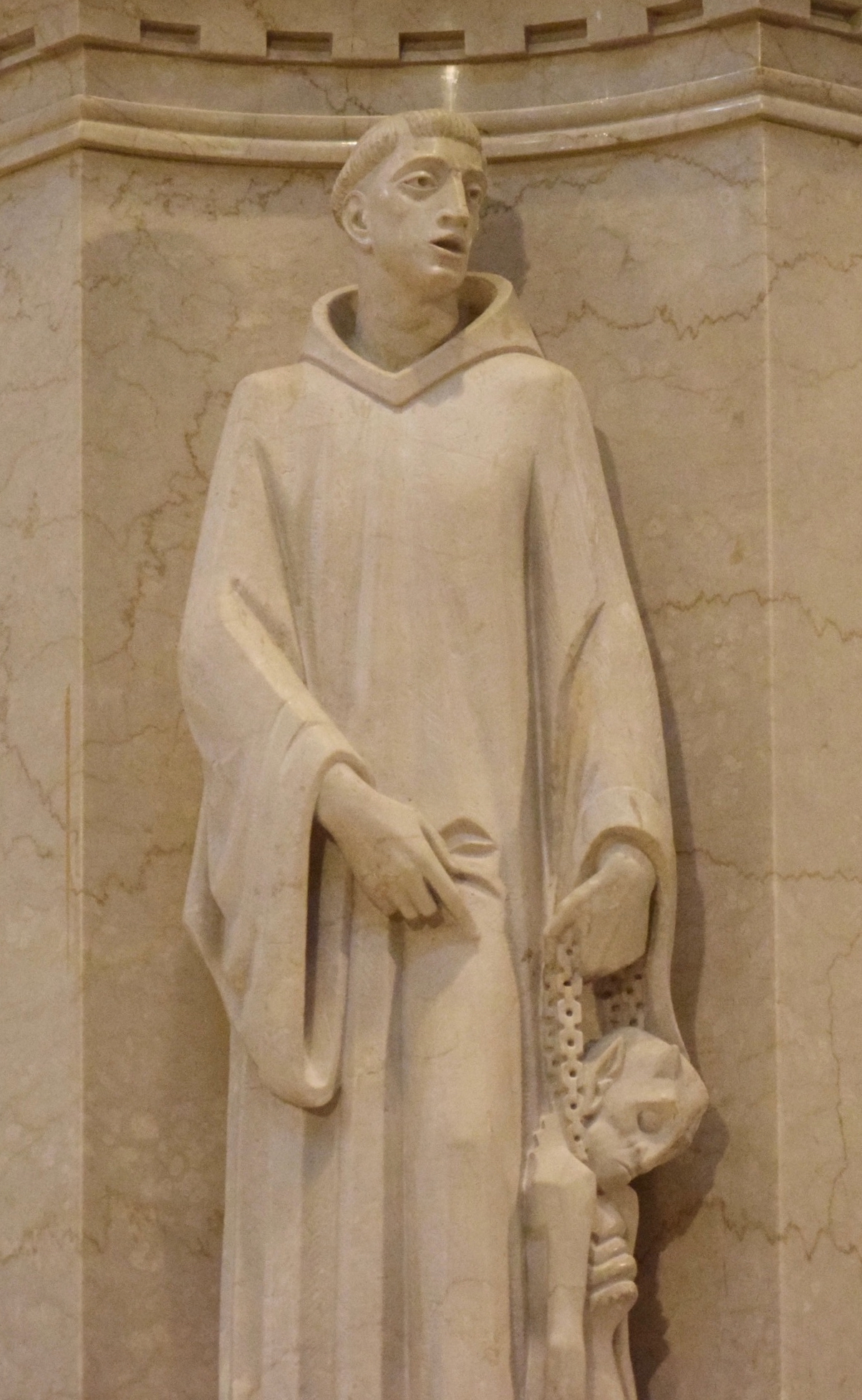
Bernard of Clairvaux was born into a noble family in Dijon, France in 1090. At age 22, he left home to join the Cistercian monastery, taking 31 companions with him — including four of his brothers and his uncle. Just a few years after becoming a monk, Bernard was appointed to establish a new monastery at Clairvaux in 1115. Within five years, the membership at the Clairvaux monastery had increased to 130! Thanks to Bernard’s leadership, the monks at Clairvaux created over 68 Cistercian monasteries during his lifetime.
In the decades that followed, Bernard won influence and notoriety throughout Western Europe. Not only did he campaign for Pope Innocent II, but he also preached to students in Paris, diving into the great religious and intellectual debates of his era. His exemplary oratory and writing skills, as well as his formidable knowledge of Scripture, no doubt contributed to his fame. Bernard decried prominent public leaders’ poor judgement with alacrity, and even helped avert a political crisis by writing a treaty which resolved a dispute between the Duke of Lorraine and the town of Metz.
In addition to his active public presence, Bernard’s interior life was filled with a deep mysticism, a subject on which he penned numerous works. Bernard’s writing is colored by a spectrum of moods, at times strict and forceful, at others compassionate and encouraging. Over the course of his prolific career he wrote over 300 sermons, a multitude of letters, and various reflections on Scripture. It is no wonder this man of God has been dubbed “one of the most influential individuals in his century” by historian Dr. Tom Cowan.
St. Anthony of Padua (1195-1231)

Born in 1195, St. Anthony studied in France and Italy and spent time with the Canons of St. Augustine before eventually joining the Franciscan Order. At the outset of his time there, he served in positions of obscurity. But one day, something happened that changed his life forever.
Anthony was attending the ordination ceremony of both the Franciscans and the Dominicans. By some communication error, each order thought the other would supply the speaker and consequently, neither had a speaker prepared. In desperation, they asked Anthony to fulfill the task. At first, he protested – he was, after all, only the dishwasher and janitor – but when he realized that no one else would rise to the task, he agreed and gave a speech on the spot.
All in attendance were amazed at Anthony’s eloquent preaching, including St. Francis, who immediately granted him permission to begin teaching in an official capacity. With St. Francis’ blessing, Anthony started a highly effective preaching mission, often speaking in outdoor settings, without using notes. His persuasive style convinced many people to turn away from their sin, to forgive their enemies, and live more pious lives. Those in government enacted measures against usury, drunks became sober, and criminals turned from lawlessness. Sadly, Anthony’s tendency to overwork and health problems ultimately took his life; he passed away in a Poor Clare convent at the young age of 36, while on his way home to Padua. Today, he is known as the patron saint of lost things.
St. Bonaventure (1217-74)

Born as Giovanni di Fidanza in the early 13th century, St. Bonaventure is said to have received his new name due to an incident with St. Francis of Assisi. Legend holds that when he was just a boy, he became gravely ill and was miraculously healed by St. Francis. Upon healing him, St. Francis remarked, “Buona ventura!” (good fortune) – inspiring the name by which he is known today.
After studying theology and philosophy at the University of Paris, at the age of 20, Bonaventure joined the Franciscan Order and quickly ascended to a leadership position. Following Francis’ death, disunity began to fester amongst the members of the Order, but Bonaventure was able to reunite them, a feat which earned him the designation as the “second founder” of the Franciscans.
Rather than being caught up in accomplishing “great” things for God, Bonaventure sought to glorify God in the faithful achievement of the ordinary. He lived by the motto: “Do common things well and be constantly faithful to small matters,” even when he was appointed cardinal-bishop of Albano by Pope Gregory X. Over the course of his life, Bonaventure composed countless essays and sermons, as well as a biography of St. Francis, leaving a profound mark on Christian thought and philosophy. He passed away at the Council of Lyons, on July 15, 1274.
Sources:
Butler’s Lives of Saints, ed. Bernard Bangley
Rohling, Geraldine M., PhD, MAEd. The Basilica of the National Shrine of the Immaculate Conception: Guide and Tour Book. Washington, D.C.: Basilica of the National Shrine of the Immaculate Conception, 2018.
The Way of Saints, Dr. Tom Cowan