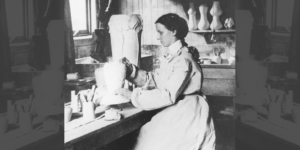
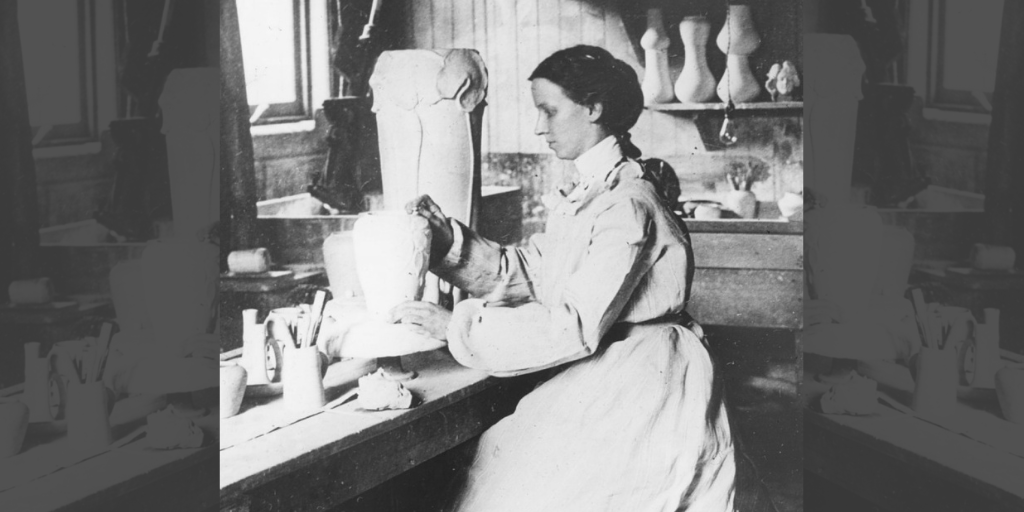
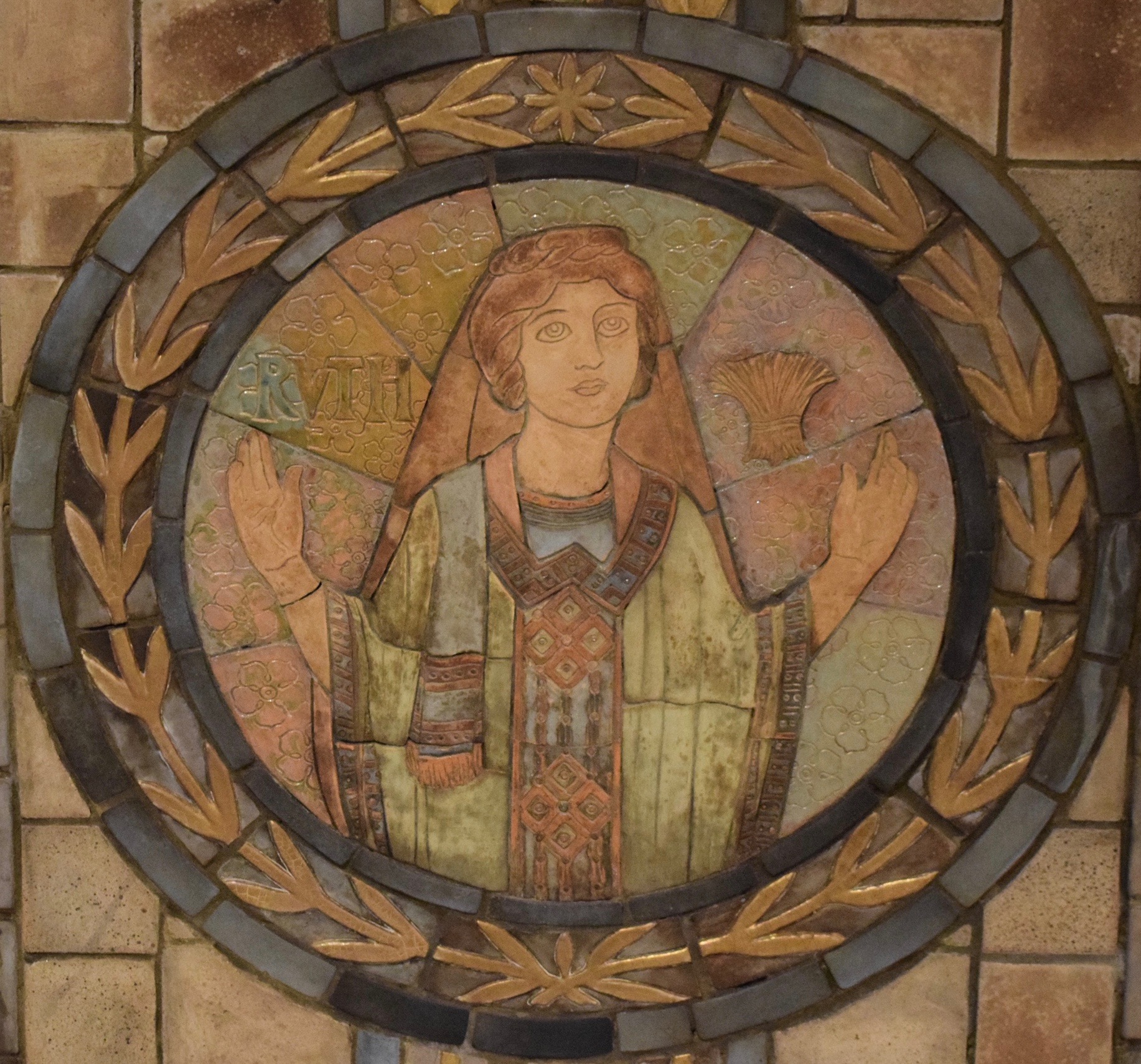
Known for her signature “Pewabic” pottery and iridescent glazes, Mary Chase Perry Stratton wasn’t simply an artist; she was an innovator. At the National Shrine, her mosaic tile installations can be found throughout the Crypt Church, bringing the stories of saints and Scripture to life in a style combining ancient elements and modern techniques.
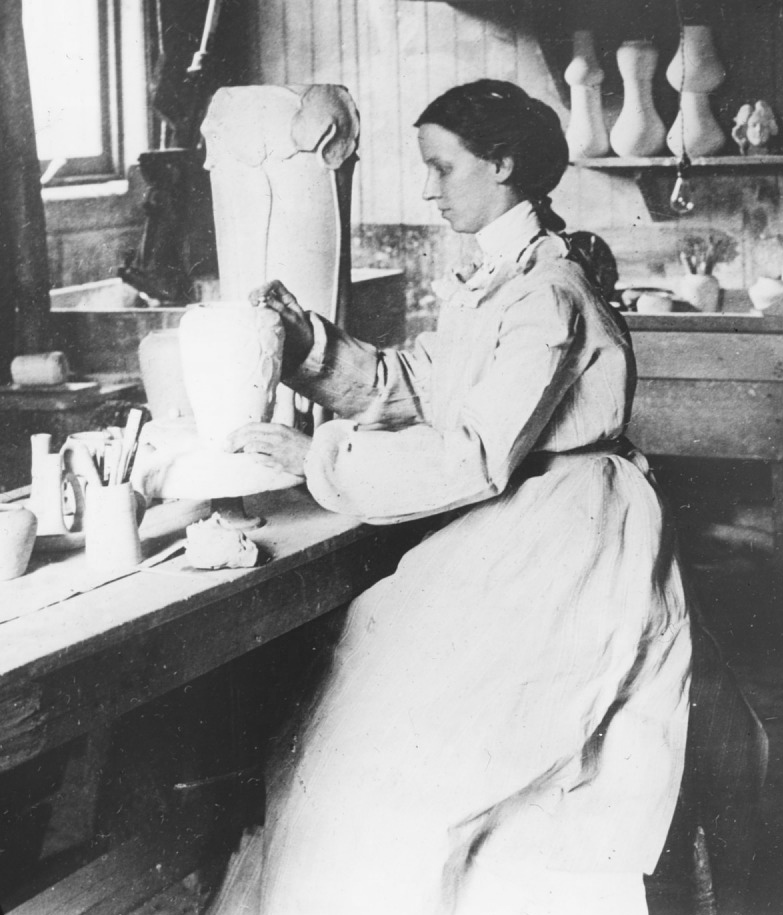
As we celebrate the 250th birthday of the United States this year, we invite you to discover the story of this extraordinary American artist and her contributions to America’s Catholic Church.
Mary Chase Perry Stratton’s Early Life
Born in Hancock, Michigan, in 1867, Mary Chase Perry Stratton first developed her artistic talents as a teenager. With the help of correspondence courses, local art lessons, and informal study, she began to cultivate skills in drawing and painting. However, it wasn’t until after she graduated high school that she received formal training at the Art Academy of Cincinnati, where she gained experience with clay work, china decorators, and commercial potteries.
With this skill and knowledge base, she started her own china painting business in Asheville, North Carolina, in 1891. Not only did she sell her own work, but she also taught classes and strove to hone her own craft as much as possible. Within two years, she had a Detroit studio, exhibited her work, and began to attract attention for her unique designs.
Horace J. Caulkins and the Birth of “Pewabic Pottery”
In 1896, something happened that would change the course of Mary’s professional life; she was enlisted by Horace J. Caulkins to help sell his new “Revelation” kilns. Her work for Caulkins vastly increased her visibility, enabling her to travel for demonstrations throughout America, expanding her professional network, and opening up new opportunities with china painting magazines and ceramic art organizations.
Always looking for a new challenge, Mary made a foray into studio pottery. After taking classes with leading pottery-makers, completing a program at the New York State School of Clay-Working and Ceramics, and continuing to use her sales work with Revelation Kilns to learn more about the processes, she had a firm foundation to open her own studio for pottery. Thanks to the support of Caulkins, she had the freedom to experiment with firing and glazing methods, which in turn allowed her to develop her signature style. As the years went by, she chose the name “Pewabic Pottery” for the studio, which gained a reputation for its exhibitions and orders.
Mary Chase Perry Marries William Stratton
Horace Caulkins wasn’t the only significant colleague of Mary’s; an architect named William Stratton would play a key role in Mary’s life, both professionally and personally. After meeting around the year 1890 at the Detroit Museum of Art, the two became friends, and in 1906, they joined the Detroit Society of Arts and Crafts as founding members, along with Horace. When Pewabic Pottery outgrew its initial small studio, it was William who designed the new building for the business, which was completed in 1907.
The three colleagues were such good friends that when William and Mary were married in 1918, the ceremony took place at Horace’s house!
Mary Stratton and the National Shrine
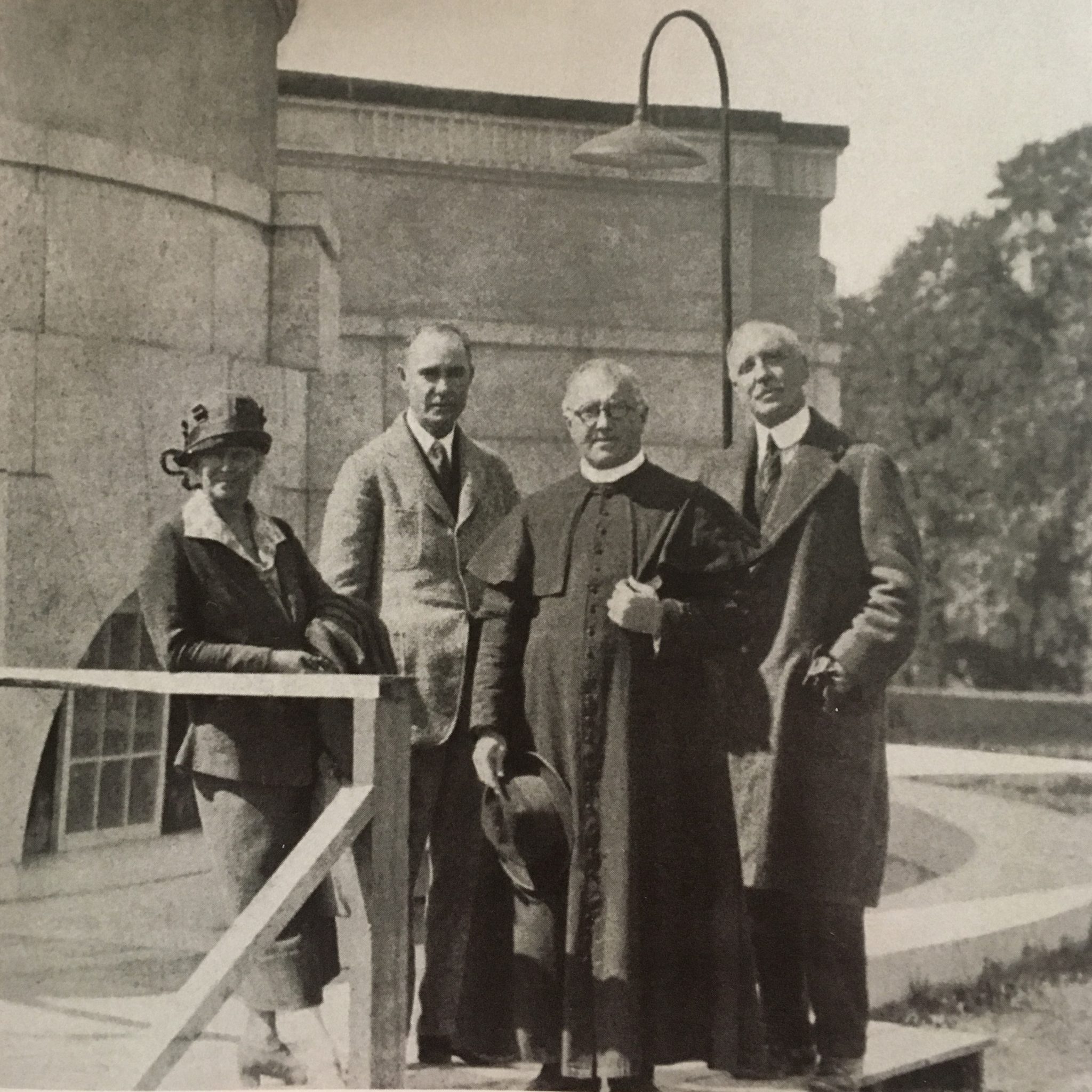
The largest installation completed by Mary’s Pewabic studio was for the National Shrine. For this, Mary and William embarked on a trip to Europe in 1924 to study the sacred art in churches and chapels there, carrying home much inspiration for America’s Catholic Church. Today, you can find her work interspersed throughout the Crypt Church, where her signature tiling and glazing techniques bring the depictions of saints and scriptural figures to life.
The Legacy of Mary Chase Perry Stratton
Mary Stratton oversaw the Pewabic Pottery studio’s operations until her passing in 1961. Best known for her development of iridescent glazes, she was a recipient of the Charles Fergus Binns Medal, “the highest award in the field of American ceramics.”
You can learn more about Mary Stratton’s art installations in the National Shrine in our Basilica Insider post.
Sources:
Historic Timeline from the William and Mary Stratton House.
“Mary Chase Perry and the Origins of Pewabic Pottery,” The Henry Ford Museum of American Innovation.
“Mary Chase Perry Stratton,” National Parks Service.
Rohling, Geraldine M., PhD, MAEd. The Basilica of the National Shrine of the Immaculate Conception: Guide and Tour Book. Washington, D.C.: Basilica of the National Shrine of the Immaculate Conception, 2018.
Rohling. Jubilee 2009: A Photographic History of the Basilica of the National Shrine of the Immaculate Conception.
Historic images accessed at Wikimedia Commons and the Basilica Archives.