
How much do you know about St. Pope Paul VI? Do you know what encyclical he is best known for, or what papal practice he instituted?
Whether he was ministering to factory workers, expanding the global stage of the papacy, or providing spiritual guidance, Pope Paul VI helped the Church navigate the tides of a rapidly changing world. As we celebrate his memorial on May 29, we invite you to discover six key facts about his life and legacy, and where you can find him portrayed in the Basilica.
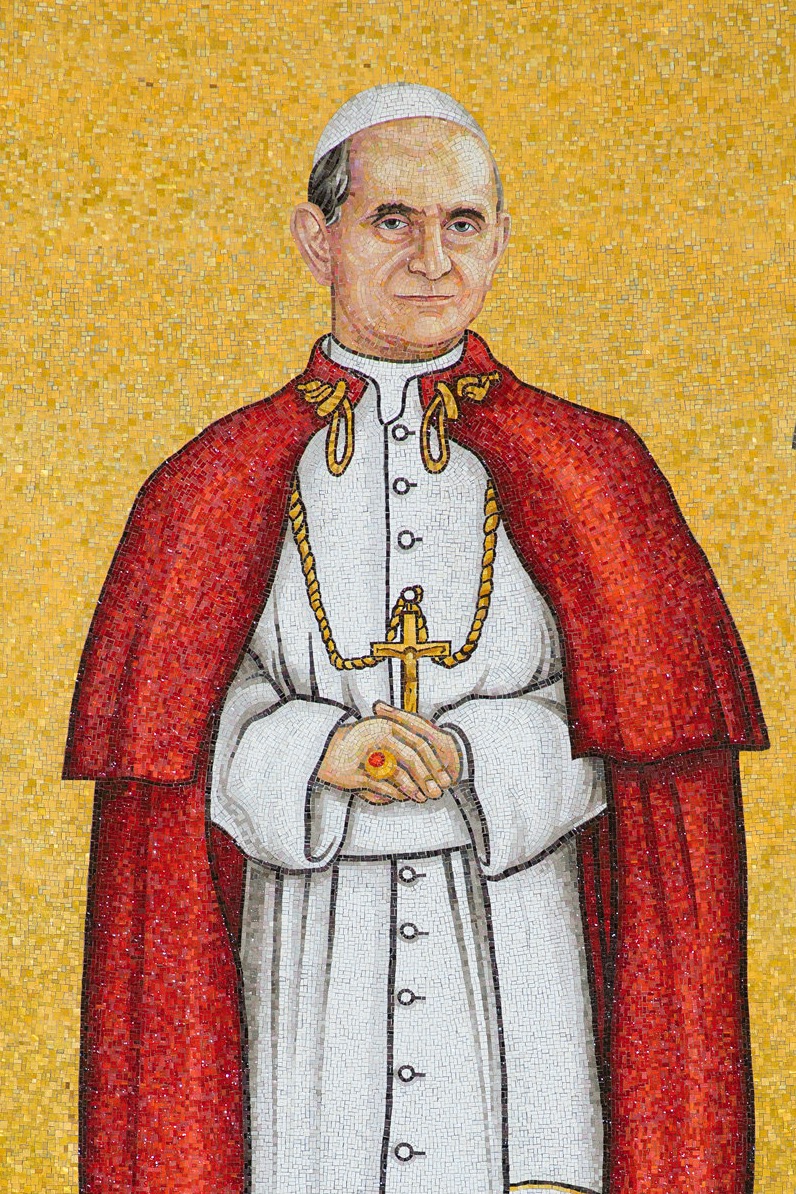
1. His given name was Giovanni Battista Montini.
Born on September 26, 1897, in Concescio, Italy, Giovanni Battista Montini was raised in a middle-class family of five. Although Giovanni’s father was a lawyer and journalist, Giovanni suffered from ill health growing up, and was educated at home for much of his youth. After completing his initial studies at a school in Brescia, he was ordained at the age of 23, and sent by the bishop of Brescia to Rome for further studies in literature, philosophy, and canon law.
Upon completion of his graduate studies, he became part of the Vatican Secretariat of State. Giovanni worked there for 30 years, using his position to support Jews and refugees during World War II, as well as serving as chaplain to the Federation of Italian Catholic University students. He worked as papal undersecretary of state and became acting secretary for ordinary (nondiplomatic) affairs in 1944, and 10 years later was appointed archbishop of Milan.
2. He called himself the “archbishop of workers.”
During his time as archbishop of Milan, Giovanni made it a personal mission to visit factories and reach out to laborers who had grown indifferent in their faith, calling himself the “archbishop of the workers.” Four years later, Pope John XXIII made him a cardinal, and he served in that role until he was elected pope on June 21, 1963, when he took the name Paul VI.
3. He wrote the encyclical “Humanae Vitae.”
Pope Paul VI guided the final three sessions of the Second Vatican Council and oversaw its implementation throughout the Church. During his pontificate, he wrote seven encyclicals, including his most well-known, Humanae Vitae (“Of Human Life”). Humanae Vitae affirmed the Church’s teaching on contraception and discussed the divine purpose of marriage.
4. He was the first pope to institute the practice of Apostolic Journeys.
On his historic 1964 trip to the Holy Land, Pope Paul VI also became the first reigning pope to travel by airplane. The three-day pilgrimage attracted so much international attention that a publication from France even chartered a plane to send a group of reporters after him. During the journey, Pope Paul VI met with the Israeli president, Zalman Shazar, and the Patriarch of Constantinople, Athenagoras; the latter was historically significant in leading to the “lifting of the reciprocal excommunications between Rome and Constantinople” which had been in place for over 900 years.
Over the course of his reign, Pope Paul VI took nine international trips and made the first papal trip to the continent of Asia.
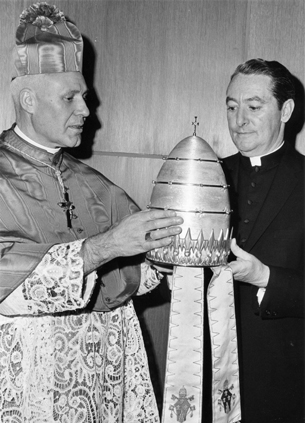
5. He was the first pope in modern history to give up the papal tiara.
With their iconic beehive shape, delicate gems, and intricately crafted crowns, papal tiaras were part of the ceremonial papal attire for centuries, ending with Pope Paul VI. A few months after his coronation ceremony in June of 1963, he chose to donate his coronation tiara to raise funds for charity. He never wore a tiara again, opting to wear a miter at all future ceremonial events. While all succeeding popes have been given their own papal tiaras, each of them has followed Pope Paul VI’s example, choosing to only wear miters during Church ceremonies.
Here at the National Shrine, we are honored to provide a home for Pope Paul VI’s coronation tiara – the only papal coronation tiara to be displayed outside of the Vatican, and the last one officially worn.
6. He founded the World Synod of Bishops.
While in office, Pope Paul VI instituted many changes to the Church offices, including founding the World Synod of Bishops on September 15, 1965. According to the Vatican:
“The Synod, generally speaking, can be defined as an assembly of bishops representing the Catholic episcopate, having the task of helping the Pope in the governing of the universal Church by rendering their counsel.”
Not only did Pope Paul VI give more bishops around the world a chance to collaborate on pastoral matters, but he also enabled more countries to have their own cardinals.
After just over 15 years as pope, he passed away at Castel Gandolfo on August 6, 1978. He was beatified on October 19, 2014, and canonized on October 14, 2018, leaving behind a legacy of ecumenism and care for workers and the poor.
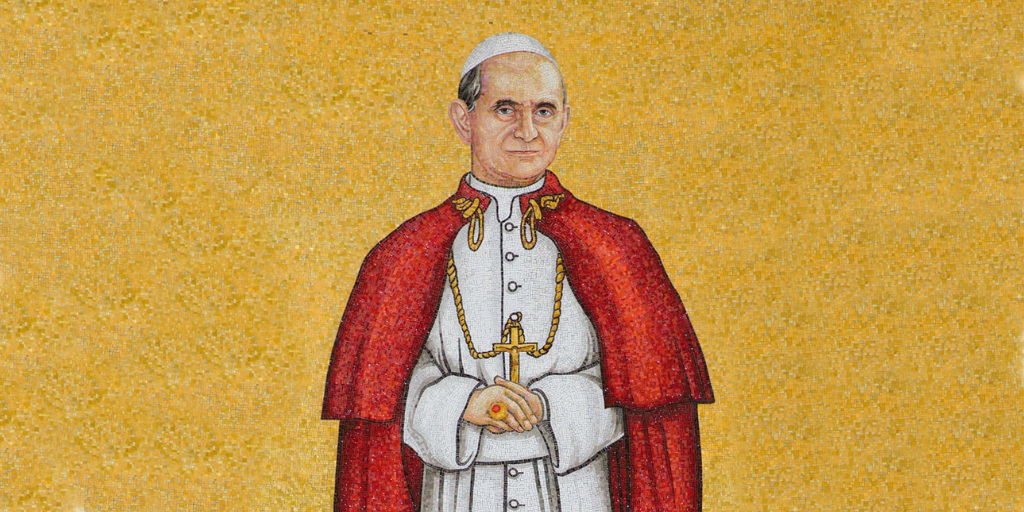
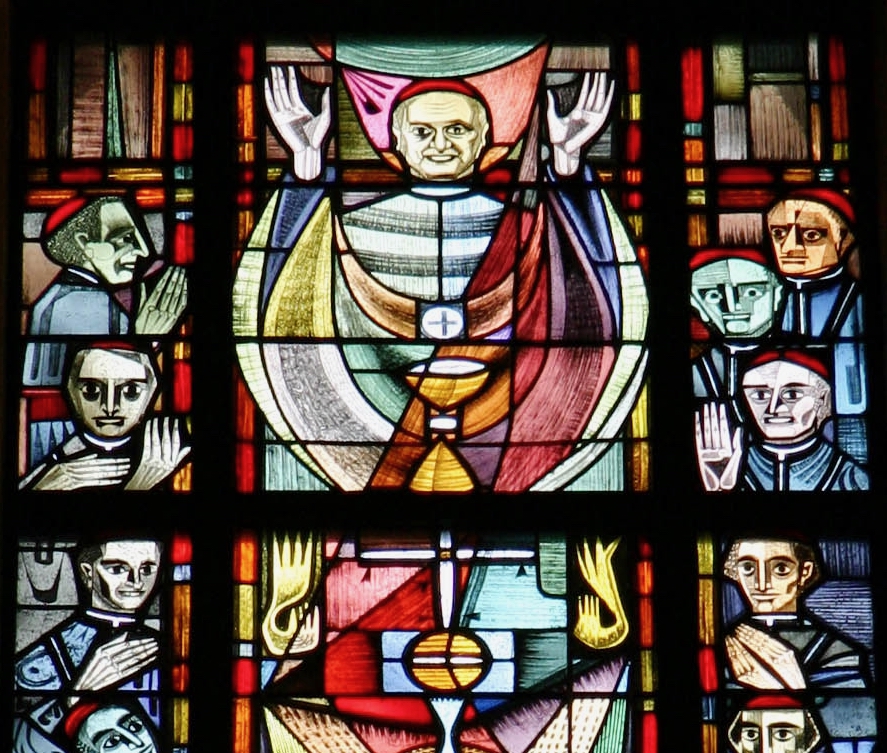
In the Basilica, you can find Pope Paul VI portrayed in the Trinity Dome, the Second Coming mosaic, and the North Apse Ambulatory Window.
Sources:
“Paul VI,” The Vatican.
Rohling, Geraldine M., PhD, MAEd. The Basilica of the National Shrine of the Immaculate Conception: Guide and Tour Book. Washington, D.C.: Basilica of the National Shrine of the Immaculate Conception, 2018.
“Saint Paul VI,” Franciscan Media.
“St. Paul VI,” Britannica.
“The Synod of Bishops: An Introduction,” The Vatican.
“Where popes have gone first: Destinations are meaningful,” Aleteia.