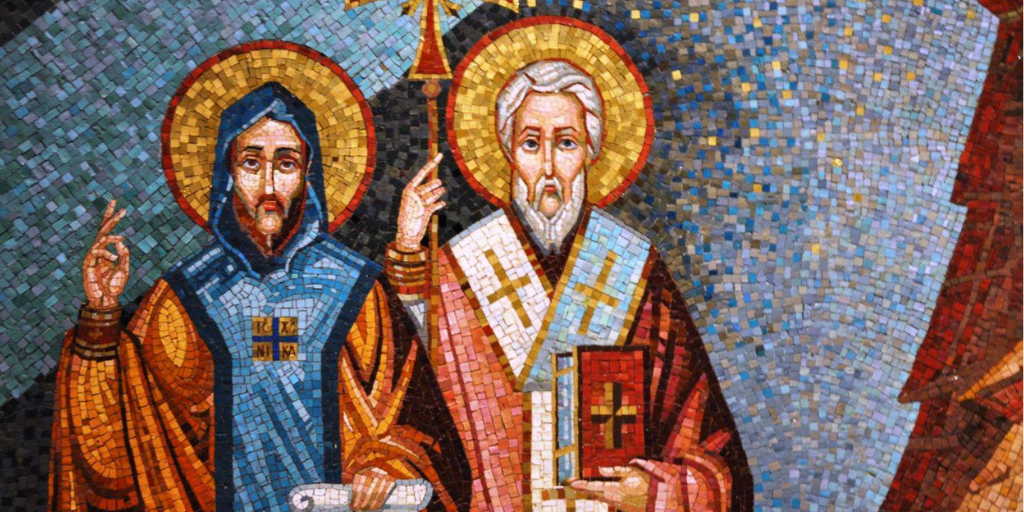
They were brothers. They were scholars. And they both used their exceptional talents for the glory of God.
Though Cyril and Methodius lived over a millennium ago, they laid linguistic foundations that made the Bible accessible to people for centuries afterwards. As we celebrate their Memorial on February 14, we invite you to learn five significant facts about their lives and legacies.
1. Cyril was given a special mission by an empress.
Cyril and Methodius were born in Thessalonica in the early 800s. At a young age, they pursued studies in the humanities at Constantinople, where they distinguished themselves with their sharp intellects. Methodius went on to join the monastery of Polychronius, and Cyril was given a special mission by the Empress Theodora to bring Christianity to the Khazer tribes of the land beyond the Chersonese. Cyril studied their language and evangelized to them, compelling them to abandon their superstitions for the saving grace of Christ.
2. Cyril invented the first written form for the Slavic language.
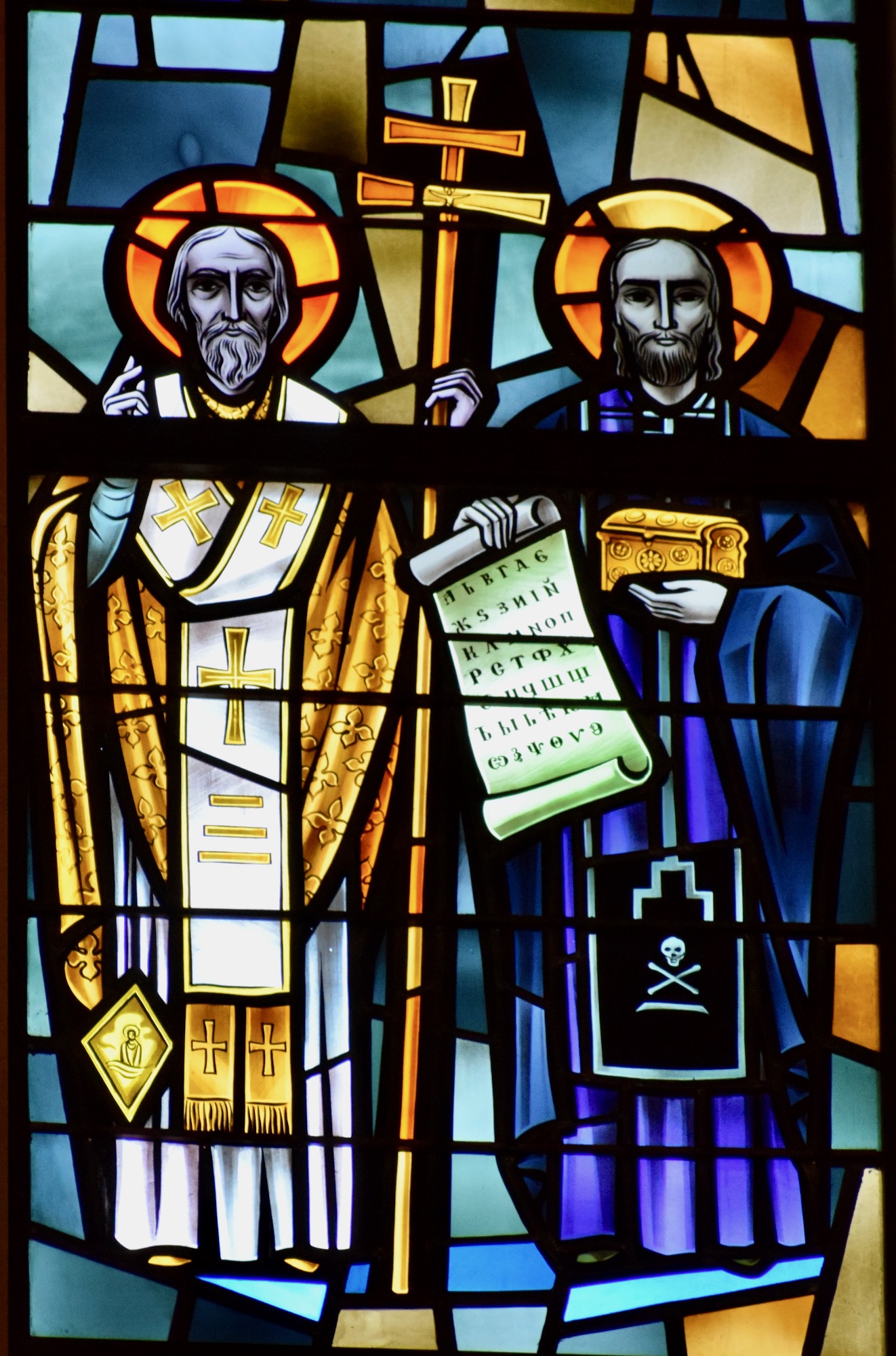
Following his mission to the Khazer tribes, Cyril returned to Constantinople, where he joined the same monastery as Methodius. But shortly after, the brothers were selected for a new mission to Moravia. To this end, Cyril invented an alphabet for the Slavic language (what would eventually become known as Cyrillic), which had never had a written form.
3. Cyril translated the Bible into the Slavic language.
Inventing an alphabet for the Slavic language enabled Cyril to translate the Bible into Slavic, making the Gospel more accessible to the people of Moravia. As a result of his efforts and evangelization, many of them turned to Christ.
4. Cyril and Methodius were summoned to Rome by Pope Nicholas I.
News of the brothers’ groundbreaking work spread throughout the provinces, and soon, Pope Nicholas I requested their presence in Rome. By the time they arrived, Pope Nicholas I had died, and his successor Adrian II met with them instead.
There, they were accused of flouting ancient customs and holy rites by preaching in the vernacular instead of the Latin liturgy. Fortunately, their strong defense convinced Adrian II and the clergy of their goodwill, and he made them bishops.
5. Methodius served as a teacher to a prince.
Following Cyril’s death in 869, Methodius returned to Moravia, where he served as a teacher to Prince Svatopluk. However, when the young prince neglected his duties despite repeated warnings, Methodius excommunicated him.
The move incited Svatopluk’s ire, and he cast Methodius into exile, but the exclusion didn’t last long; after a time, Methodius was recalled and Svatopluk came to see his error, dedicating himself to a fresh life. Methodius continued to spread the Gospel across the continent and established several episcopal Sees before his passing in 884.
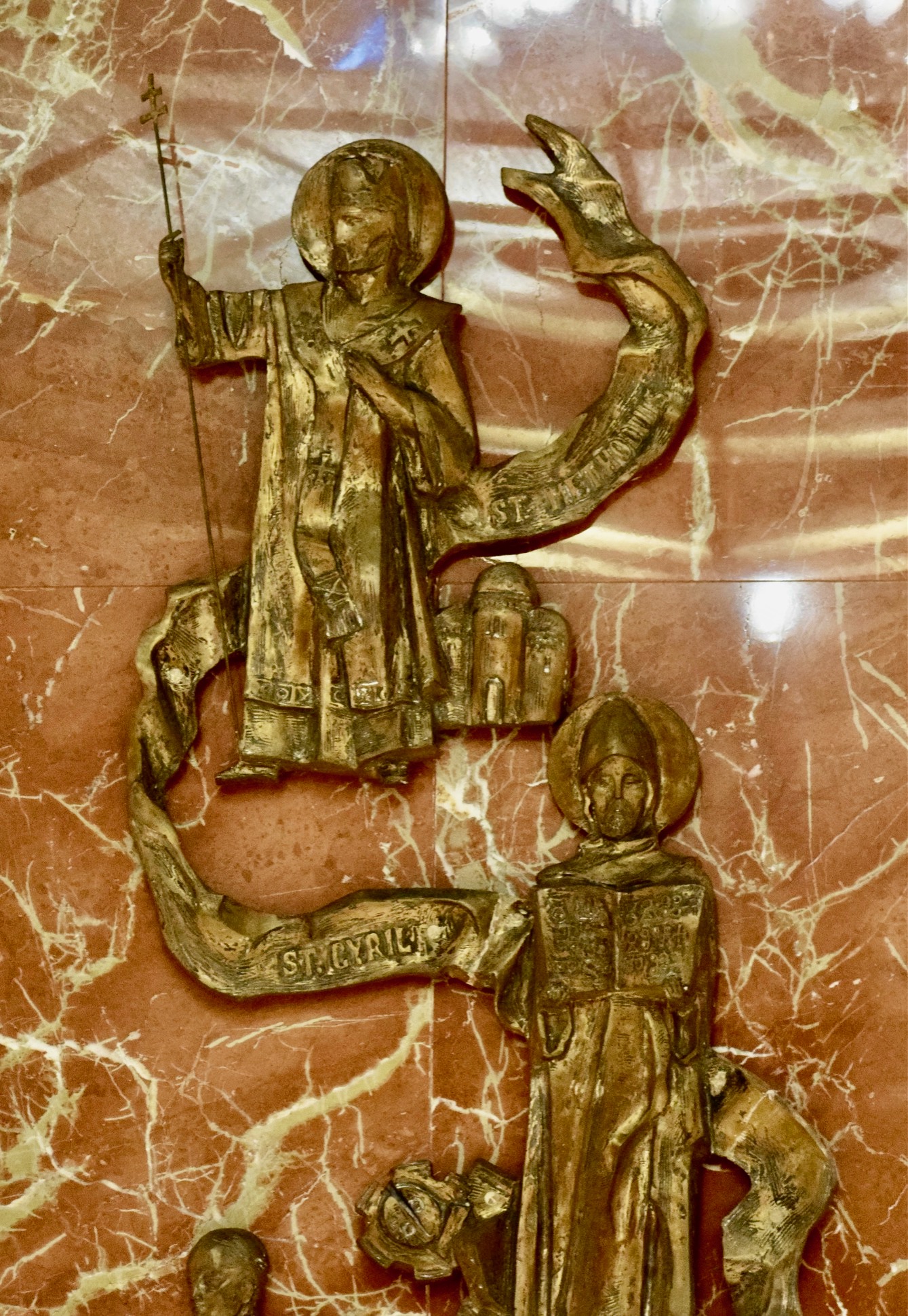
You can find Saints Cyril and Methodius portrayed in the Basilica in the north façade, the Our Lady of Holy Hostýn Chapel, the Byzantine-Ruthenian Chapel, and the west chancel clerestory window.
Source:
“Encyclical of Pope Leo XII on Sts. Cyril and Methodius,” The Vatican.