When your life plans fall through, it’s easy to feel like all is lost – whether your dream job got away, a special relationship ended, or unexpected obstacles have arisen. But sometimes, God uses our greatest disappointments to set us on paths more wonderful than we could have ever imagined. Oftentimes, it’s the moments we feel most hopeless that God uses to guide us to His own perfect purpose.
As we begin a new year, we invite you to explore the stories of three saints whose lives God took in far different directions than they had planned – bringing them from the depths of despair to glory.
Saint Ignatius of Loyola
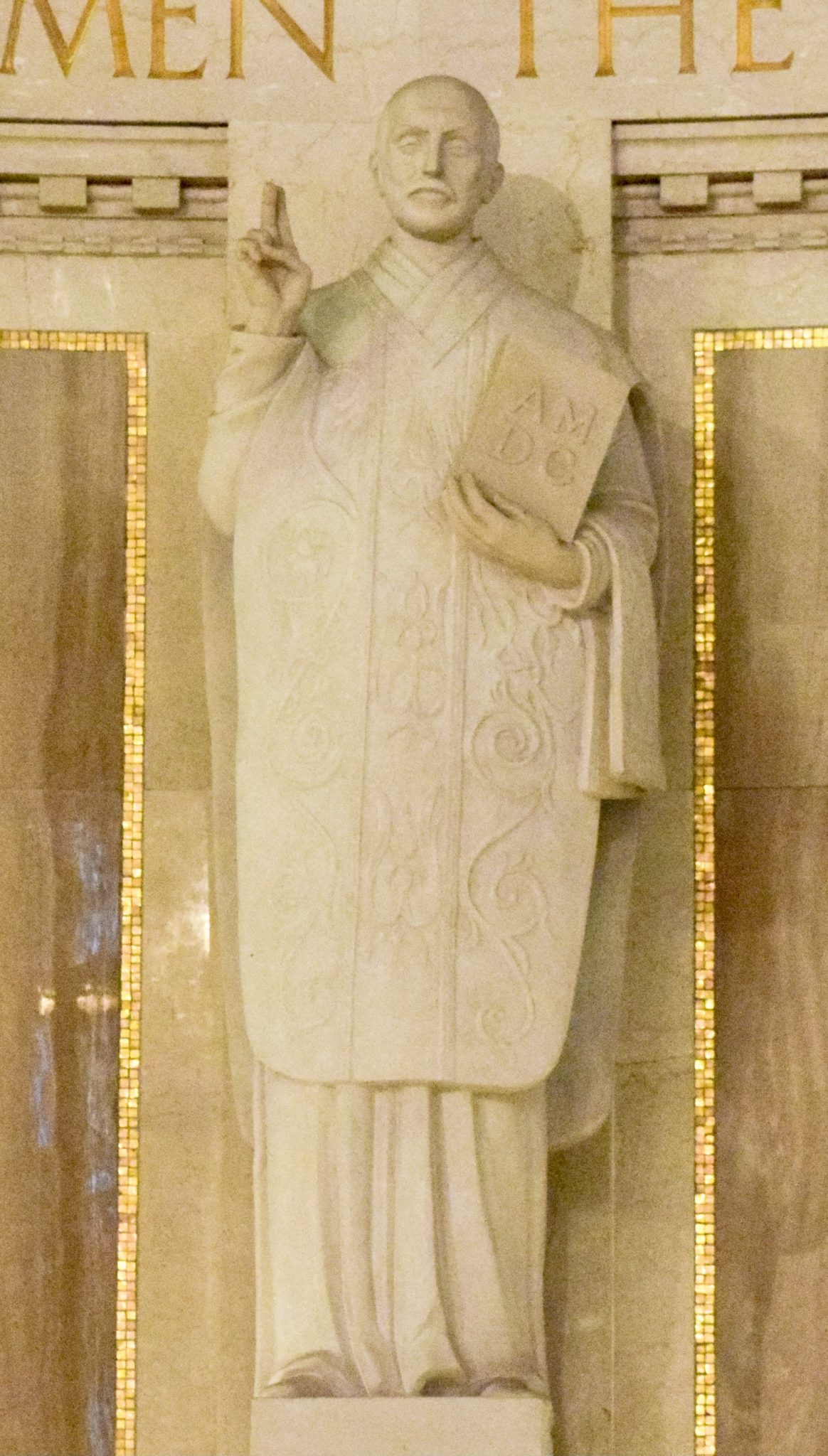
Saint Ignatius was born Inígo López de Loyola in 1491. The son of nobles, he spent his early life in a castle and became a knight in his twenties. Despite his diminutive stature – a mere five feet and two inches – he was a proud man driven to develop his prowess in battle. As he rose to prominence in the Spanish military, the renown he dreamt of seemed imminent.
But God had other plans. Ignatius suffered a debilitating injury at the battle of Pamplona, rendering him bedridden for an extended period of time. Following his injuries, Ignatius requested to read romances to fill the long hours of free time during his convalescence. However, he was informed that there were no romances available for him – only volumes on the lives of saints, which Ignatius soon found himself fascinated by. As he was a knight dedicated to a code of honor, the virtue of the saints likely inspired him. His reading sparked a journey that would lead him to an even higher code of honor: dedicating himself to be “a knight for the glory of God.”
Once Ignatius recovered sufficiently to walk, he decided to make a pilgrimage to the Catalonian shrine of Our Lady at Montserrat. There, he laid his sword and dagger on the altar after keeping an all-night vigil, searching for spiritual enlightenment. In the months that followed, Ignatius began to write the work that would eventually be known as his Spiritual Exercises – a practical guide for meditation. In 1534, he joined with six friends from the university to form what would become known as the Society of Jesus, and later, the Jesuit order. When Ignatius passed away in 1556, the presence of the Jesuits was scattered across nine countries and provinces in South America, Europe, and India. Today, the Jesuits have approximately 16,000 members around the world.
Saint Margaret of Cortona
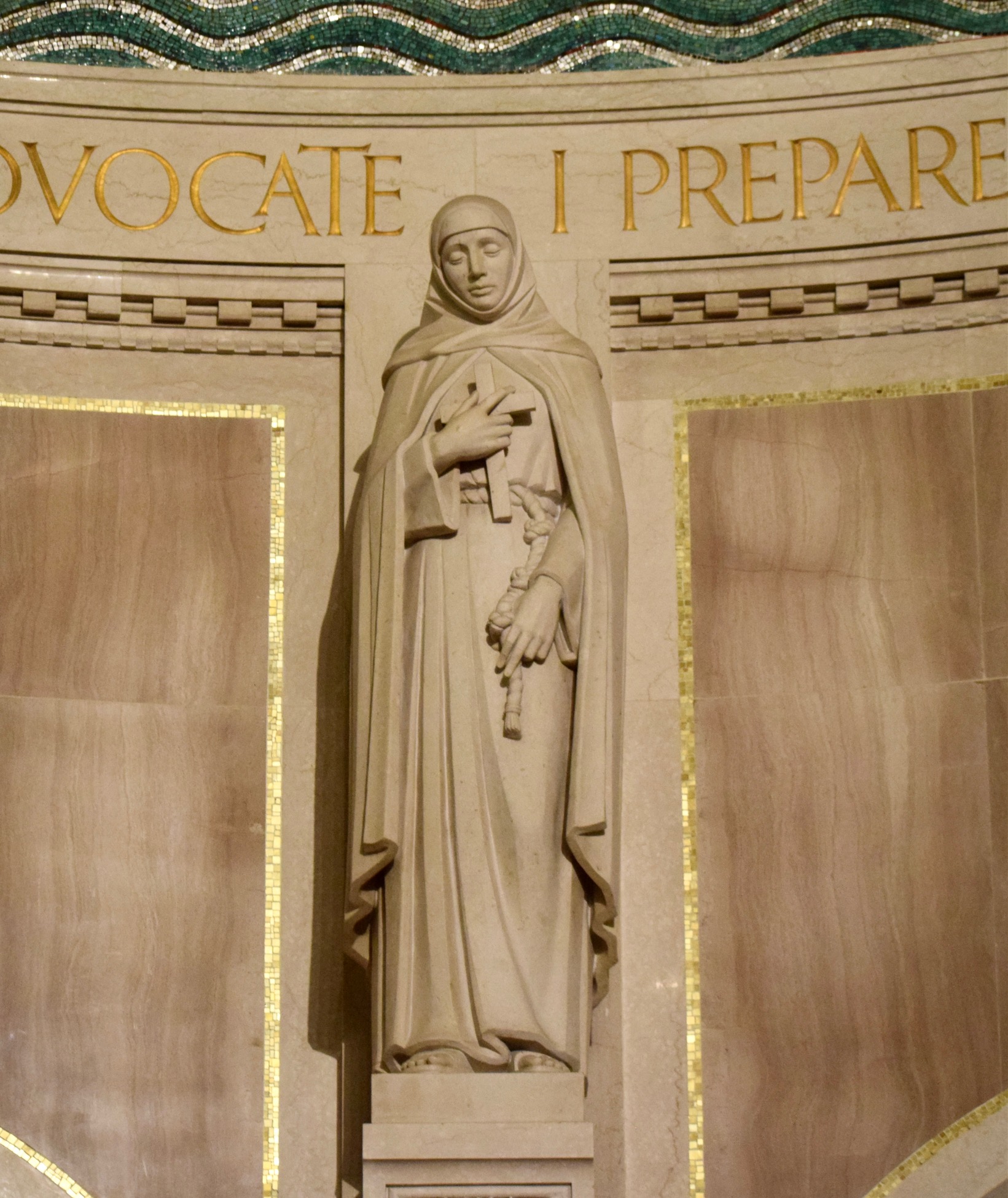
Born on a small farm in Tuscany in 1247, Saint Margaret of Cortona transformed her life from one of lust and desperation into one dedicated to the Lord. Raised by a neglectful and unkind stepmother, Margaret found her life unbearable by the time she was a young woman. When a debonair nobleman waltzed into her life with the promise of an escape, she fell madly in love and ran away with him to his castle. For nearly a decade, she lived as his mistress, basking in opulence, and the two even had a child together.
But her life of luxury was not meant to last; one day, the marred body of her lover was discovered beneath a pile of leaves. Left to raise her son all alone without any true wealth to her name, she fled with him to her father’s home, but was turned away by her vengeful stepmother. From there, she sought refuge in Cortona, where two kind women helped her as she endeavored to start anew. In the years that followed, she publicly repented of her sin, living on alms while giving away her own possessions to the poor. Margaret also worked as a nurse, and eventually founded a hospital and an order of Franciscan women, the Poverelles, which oversaw its operations. She served ever faithfully for the remainder of her life and passed away at the age of 50. Her patronage includes single mothers, stepchildren, and the homeless.
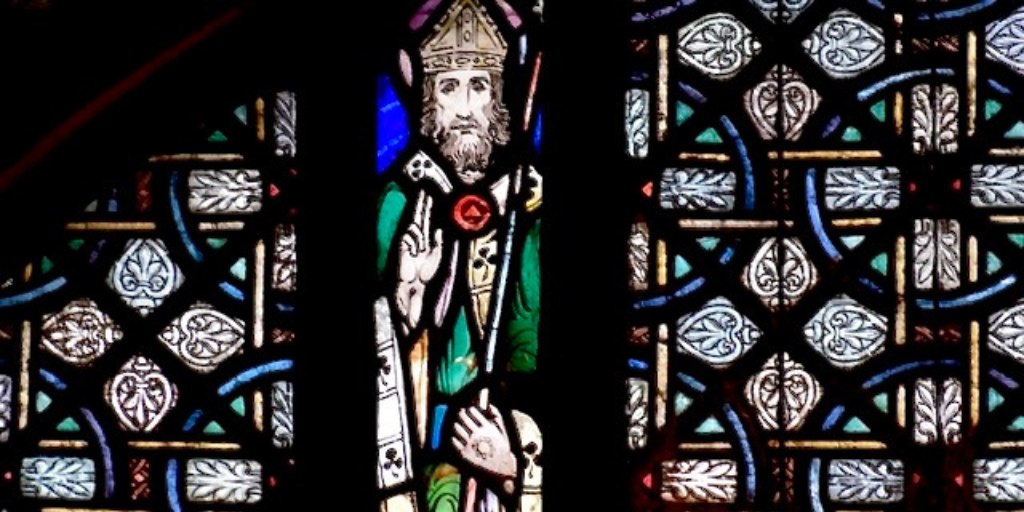
Saint Patrick
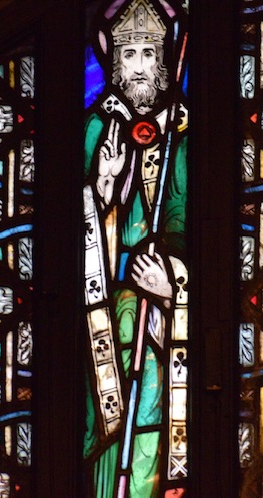
The son of a Roman civil servant living in Britain, Patrick is believed to have been born sometime around 390 A.D. At the age of 16, he was kidnapped by pirates and sold as a slave in Ireland. There, he was forced to work as an unpaid shepherd. As he wandered the hills with his flocks, he filled his hours with prayer and contemplation, developing a devout Christian faith.
After spending six years in captivity, Patrick managed to escape Ireland aboard a ship and travel back to his family. From there, he studied for the priesthood in Gaul, living in a monastery for 15 years. However, his business in Ireland was far from finished; he experienced repeated dreams that made it clear he needed to return to Ireland. In one such vision, the Irish people begged him, “Come back and walk with us once more.”
By 432, only a handful of individuals in Ireland were Christians. Saint Patrick and his fellow missionaries faced an uphill battle, as many pagan druids opposed their efforts. Patrick traveled to the most remote parts of the island, proclaiming the Gospel where it had never been heard before. In spite of the challenges he faced, Saint Patrick proved to be a formidable force for God, baptizing thousands of individuals, ordaining hundreds of clergy, and founding multiple monasteries. The framework of Christian churches put in place by Patrick helped Ireland eventually become one of the most Catholic countries in the world.
Sources:
Butler’s Lives of Saints, ed. Bernard Bangley.
“Global Community,” The Jesuits Global.
“St. Ignatius of Loyola,” Britannica.
The Way of Saints, Tom Cowan.