“What Jerome is ignorant of, no mortal has ever known.” – Saint Augustine
A dedicated scholar and unconventional priest, St. Jerome is recognized as one of the greatest intellectuals in Church history. Not only did he provide aid to refugees during the destruction of Rome, but he made profound contributions to theological scholarship, creating a Bible translation that would be the standard of the Church for centuries.
As we celebrate the Memorial of St. Jerome on September 30, we invite you to discover five facts about his life and where you can find him portrayed in the Basilica.
1. Jerome knew multiple languages.
Born in the 4th century, Jerome had the privilege of receiving a quality education starting from a young age. He was privately tutored until he was 12, when he was sent to Rome to further his studies in philosophy, rhetoric, and grammar. In his early twenties, he became interested in studying theology after a friend helped him grow closer to the Lord. When he reached his thirties, he relocated to Syria, living a reclusive life and learning Hebrew, Aramaic, and Greek.
2. He translated the Bible into the “Vulgate,” which would be the Church’s standard for a millennium.
With his extensive linguistic knowledge, Jerome was able create a translation of the Bible called the Vulgate. Using the “vulgar” (everyday) Latin, the translation made the Bible more accessible to common people. The Vulgate became the standard version of the Bible for the Catholic Church and was used until the 1970s. In addition to translating Christian texts, Jerome also wrote multiple commentaries on the work of other Church thinkers, remaining active in the theological debates of the day.
3. Jerome worked directly with Pope Damasus I.
Ordained a priest in 378, Jerome devoted himself to the study of Scripture and theology for the next three years. After completing this period of study, Jerome relocated to Rome to serve as a private secretary to Pope Damasus I, who commissioned him to produce the Vulgate.
While serving Damasus, Jerome also worked on other projects, including translating the sermons of Origen and providing Bible classes for women. It was in one of these classes where he met a widow named Paula, who became one of his closest friends in ministry. The two later journeyed to the Holy Land with a group of other believers, and eventually settled in Bethlehem, where they founded a monastery.* On one occasion, the monastery was stormed by a group of monks who were angered by Jerome’s polemics against Pelagius!
4. He helped refugees during the destruction of Rome.
When he learned of the destruction of Rome in 410, Jerome halted his beloved studies to oversee assistance to refugees who were fleeing to Palestine. As he provided lodgings for them, he wrote,
“I have put aside all my study to help them. Now we must translate the words of the Scriptures into deeds, and instead of speaking holy words, we must do them.”
5. At the time of his death, he was writing a commentary on Jeremiah.
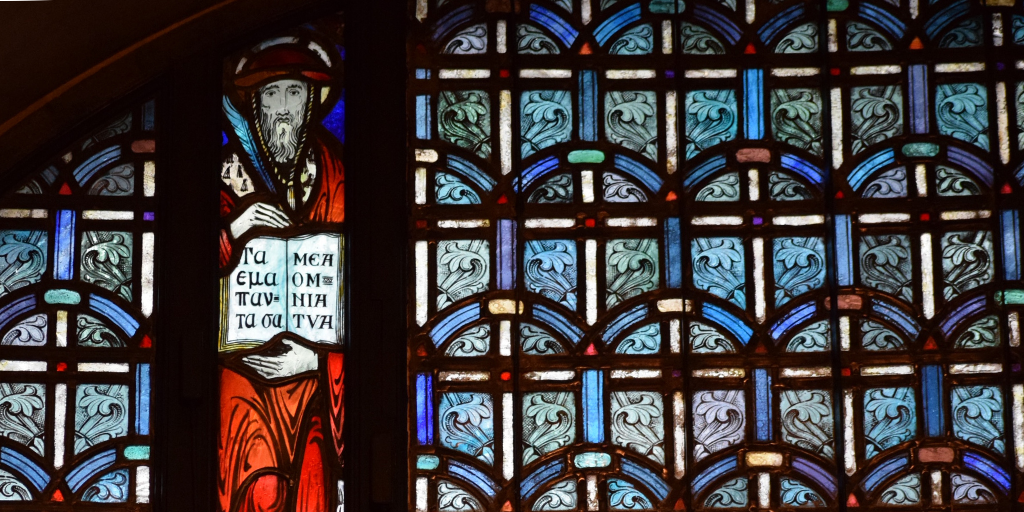
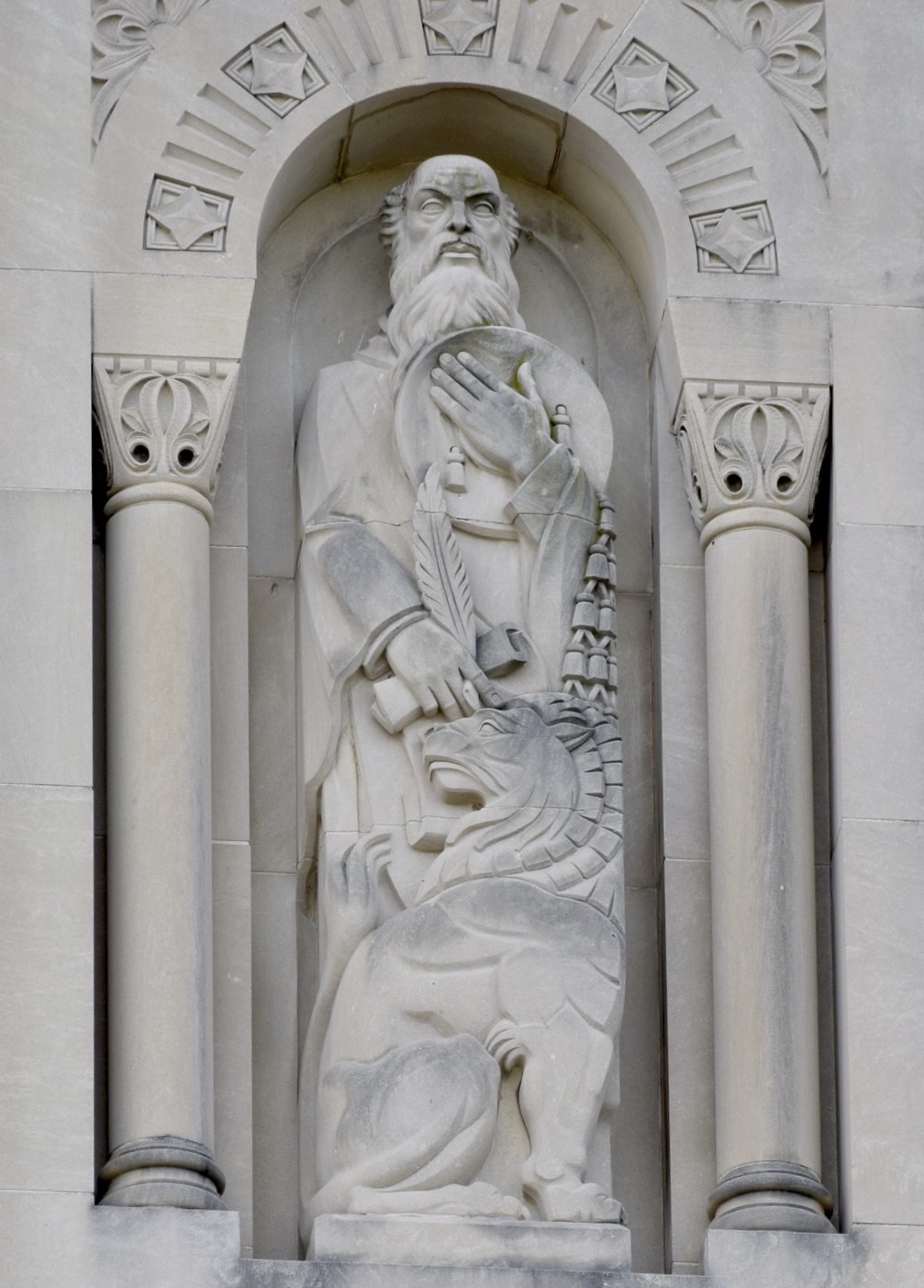
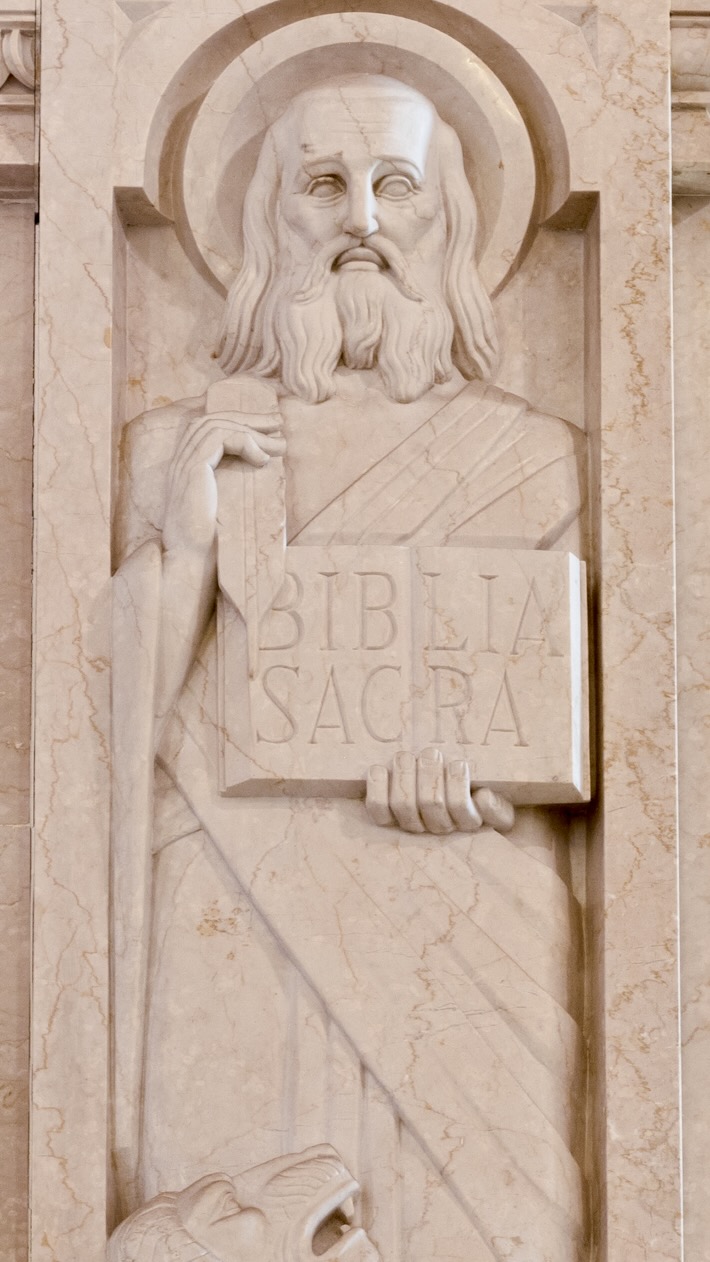
As the Roman empire continued to crumble, Jerome became troubled by the destruction and saddened by the capture of various monasteries. However, in spite of his distress, he continued to make valuable contributions to biblical scholarship. When he died in 420, he was writing a commentary on Jeremiah. Today, he is recognized as a Doctor of the Church, and you can find him portrayed at the Basilica in the east façade, the St. Margaret of Antioch Chapel, and the Baldachin of the Great Upper Church.
Sources:
Butler’s Lives of Saints, ed. Bernard Bangley.
“St. Jerome,” Britannica.
“St. Jerome,” Catholic Online.
“St. Jerome,” New Advent.
The Way of Saints, by Tom Cowan.
“Vulgate,” Britannica.
*Historical note: the extent of Jerome’s involvement in the founding of the monastery varies according to different sources; some hold that he founded the monastery himself; others say that he oversaw the building of it under Paula, or that he encouraged Paula to build it.