Perhaps most famous for his series The Chronicles of Narnia, C.S. Lewis is one of the most beloved and widely-recognized writers of the 20th century. An atheist-turned-theologian, he served as a professor at Oxford and Cambridge, won notoriety for his BBC broadcasts during World War II, and wrote 30 books over the course of his career. Profoundly gifted both as a scholar and storyteller, he explored some of the most critical moral questions of our time with clarity and incision, leaving behind a legacy that would continue to impact believers and unbelievers alike for generations to come.
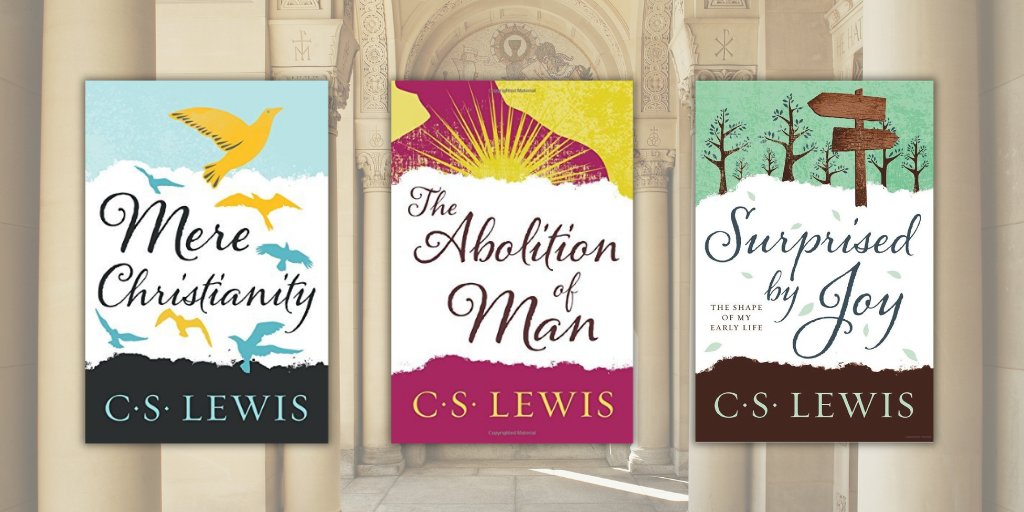
In today’s Basilica Book Club post, we invite you to explore these five classic works by C.S. Lewis, “the most reluctant convert.”
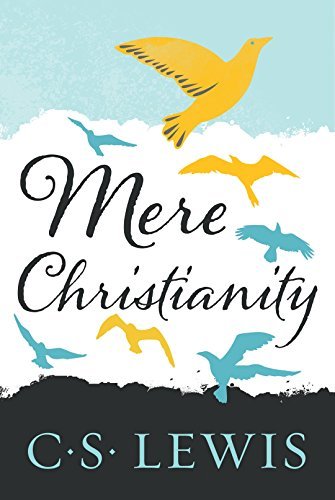 1. Mere Christianity
Mere Christianity makes available to both believers and nonbelievers C. S. Lewis’s powerful and rational argument for the Christian faith. Recognized as one of the most important Christian books of the 20th century, Mere Christianity brings together Lewis’ legendary broadcast talks during World War II, in which he explored the core beliefs of Christianity, covering the timeless topics of right and wrong, human nature, morality, marriage, sin, forgiveness, faith, hope, generosity, and kindness.
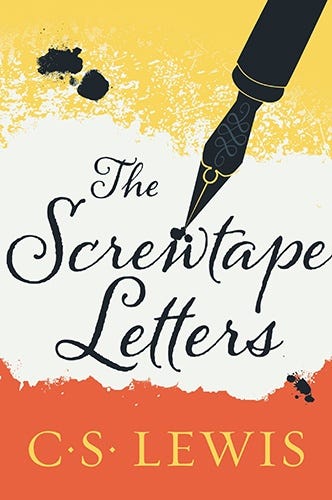 2. The Screwtape Letters
An iconic classic, The Screwtape Letters illuminates the realities of spiritual warfare and the dynamics of temptation.
In turns striking and profound, the narrative takes the form of a series of letters from Screwtape, a demon high in the Infernal Civil Service, to his nephew Wormwood. As a junior colleague engaged in his first mission on earth, Wormwood is trying to discourage and thwart a young man who has just become a Christian. Although the young man initially appears to be a willing victim, he changes his ways and is “lost” to the young demon.
Dedicated to Lewis’s friend and colleague J. R. R. Tolkien, The Screwtape Letters offers eye-opening insights into conflict and the psychology of temptation.
 3. The Weight of Glory
A collection of nine sermons delivered by Lewis during World War II, The Weight of Glory explores the concept of glory and how it relates to our spiritual journey. In this work, Lewis addresses:
- The respect we should give each other
- The need for constant learning
- The importance of forgiveness
- The need for collaboration amongst opposing sides
According to C.S. Lewis, our ultimate destiny is to partake in God’s glory because we’re created by God and for God. Whether you are a C.S. Lewis fan, or simply interested in learning more about heaven and church community, this volume will make an insightful addition to your library.
 4. Surprised by Joy
In Surprised by Joy, C. S. Lewis takes readers on a spiritual journey through his early life and eventual embrace of the Christian faith. He begins with his childhood in Belfast, surveys his boarding school years and his youthful atheism in England, reflects on his experience in World War I, and ends at Oxford, where he became “the most dejected and reluctant convert in all England.” As he recounts his lifelong search for joy, Lewis demonstrates its role in guiding him to God. Now available in this repackaged edition, this spiritual memoir is a must-read for anyone seeking insight into the life of one of the 20th-century’s most beloved authors and theologians.
 5. The Abolition of Man
Delivered at the University of Durham, these three lectures constitute one of C. S. Lewis’ most significant works. In them, he incisively identifies the ills at the heart of humanity’s supposed moral and spiritual progress, especially regarding the conquest of oneself and nature. Lewis analyzes the fallacies in modern pedagogical wisdom, putting forth a positive vision for the development of sentiment in youth, and the proper harmony between reason and feeling. He argues for teaching “the doctrine of objective value, the belief that certain attitudes are really true, and others really false…”
Selected as number seven in National Review’s selection of “The 100 Best Non-fiction Books of the Twentieth Century,” this timeless classic is both prophetic and thought-provoking.
Description adapted in part from the jacket copy of the 1946 Macmillan edition and the 2014 HarperOne edition.
*Book descriptions adapted in part from their respective publishers.
 Looking for more book recommendations?
From St. Augustine, who wrote the “first autobiography of the West,” to St. Ignatius of Loyola, whose Spiritual Exercises is now a foundational text for the largest Catholic religious order in the world, Catholic mystics offer a wealth of wisdom. In this Basilica Book Club post, you can explore five classic works of mystic literature that every Catholic should read.