
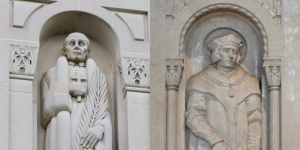
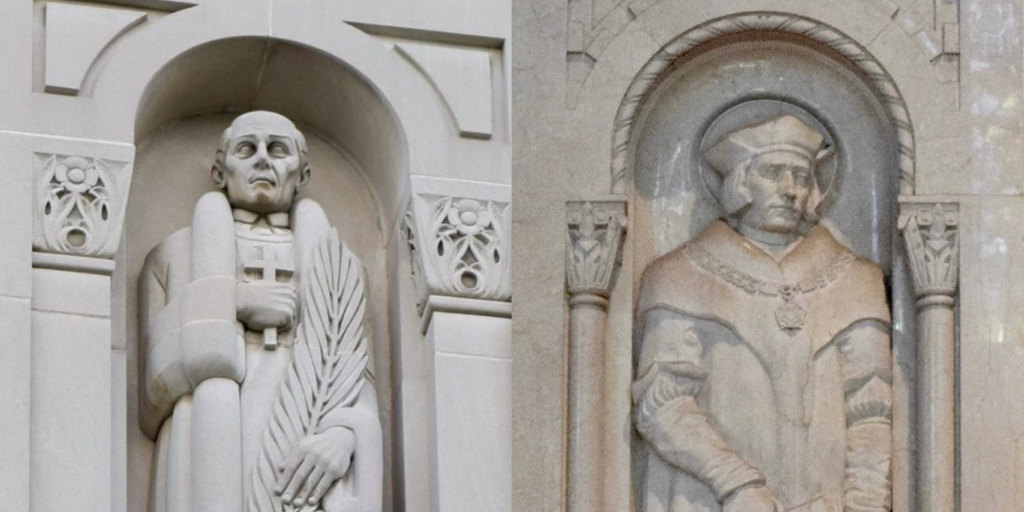
This year, on June 22, the Church is celebrating the Memorial of St. John Fisher and St. Thomas More. During an era when corruption polluted the highest levels of government, these men bravely defended the truth – and paid the ultimate price for their beliefs. In our latest post, learn more about their lives, martyrdom, and where you can find them portrayed in the Basilica.
St. John Fisher
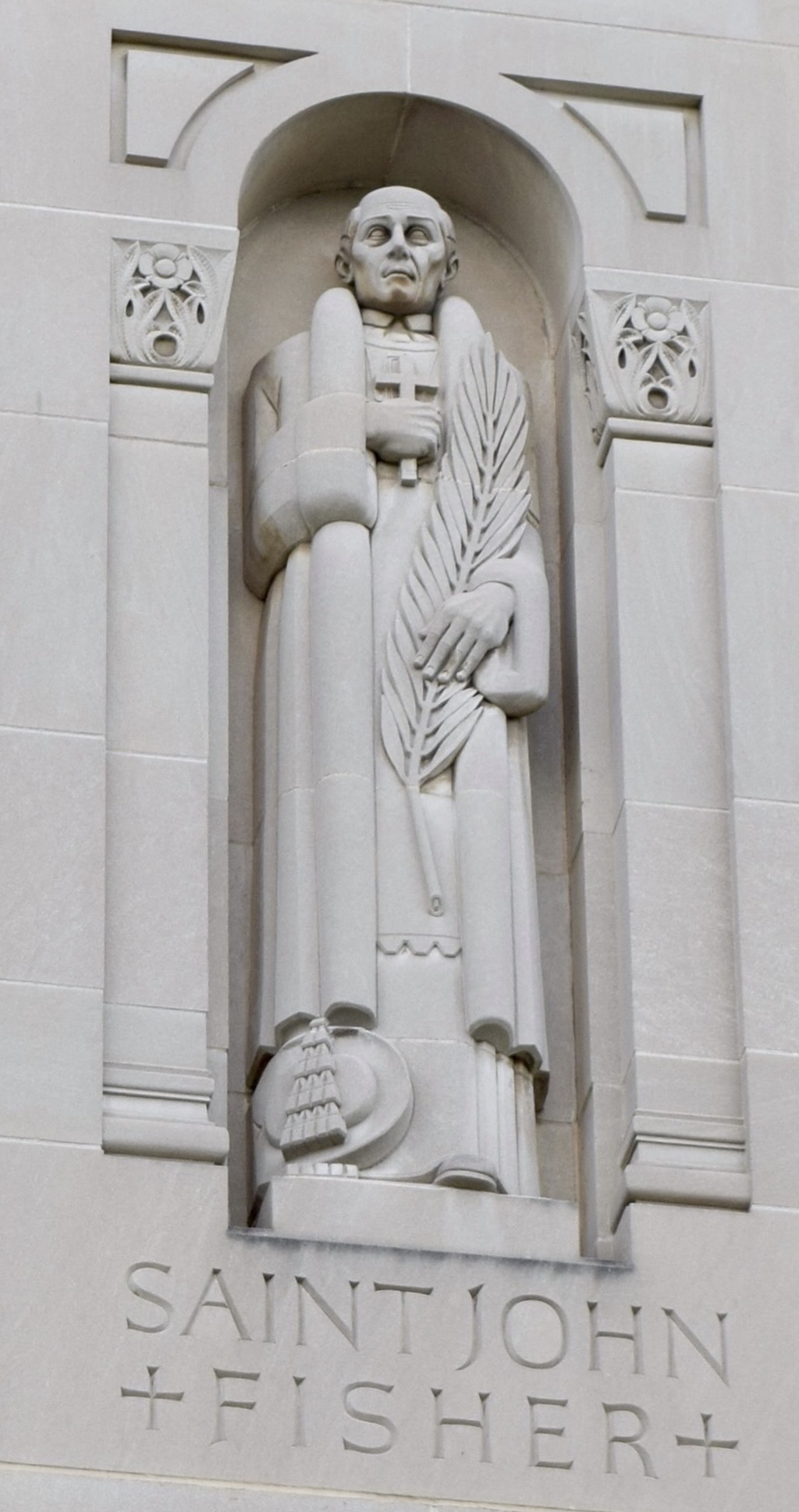
As a bishop serving during the Protestant Reformation, John Fisher worked tirelessly to foster theological dialogue while staying true to his convictions. After being appointed Chancellor of Cambridge University, John used his position to further the Church’s teachings and shape the theological debates of the time. Over the course of his career, he gained international renown for his writing – especially for his response to Martin Luther.
John’s life changed radically when he became an advisor to Queen Catherine of Aragon in 1529. After learning of the marital dispute between her and King Henry VIII, John took her side in the controversy. Infuriated by his opposition, the king sought to make life difficult for John from that time on. At one point, he imprisoned John and confiscated all his property. Though he was eventually released, by 1534 he was imprisoned again – this time, on charges of treason, along with his friend and fellow dissenter Thomas More.
When a trial was held the following year, John was convicted and sentenced to execution. On June 22, 1535, his head was chopped off and displayed on London Bridge for a fortnight. A zealous and righteous man, St. John Fisher provides the faithful with a powerful example of standing for truth, no matter the cost.
St. John Fisher was canonized in 1935 and is portrayed in the North Façade of the Basilica.
St. Thomas More
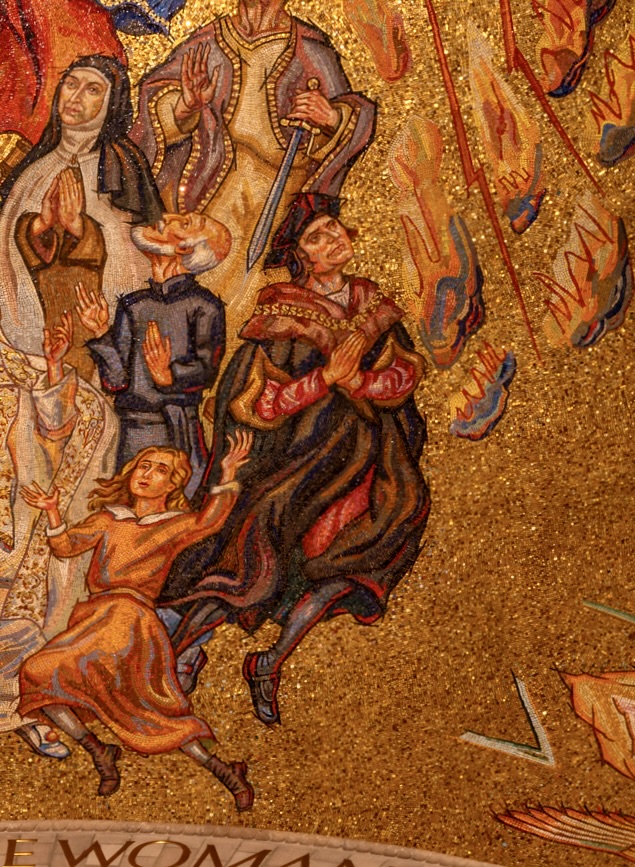
Another man who stood for truth amidst the corruption of the 16th century was Thomas More. A gifted lawyer, More served in Parliament for a few years before the king selected him to complete diplomatic missions across Europe.
In the years that followed, Thomas gained notoriety both for his diplomacy and for his scholarship. In 1516, he published his magnum opus, Utopia; in 1521, he was knighted; and by 1529, he had been appointed Lord Chancellor. But More faced difficulty in this position as he attempted to balance loyalty to the king and duty to conscience. Only a few years into his tenure there, England became sorely divided over King Henry VIII’s marital affairs. Thomas had strong moral objections to the annulment of Henry’s marriage to Catherine of Aragon and resigned from his position in 1532.
Thomas’s resignation was not enough; less than two years later, he was imprisoned following his refusal to sanction Henry’s Act of Succession. As he languished in prison for over a year, Thomas faced pressure to alter his stance on the Act, but he still did not betray his conscience. Incensed that the illustrious Thomas More refused to support him, Henry VIII sentenced him to death. Yet even in the final moments before his execution, More remained a steadfast example of Christ, reciting Psalm 51 to the spectators and requesting their prayers for the Church and the king.
St. Thomas More is honored at the Basilica in the northwest nave bay of the Great Upper Church and in the Second Coming Mosaic.
Sources:
Apostolic Letter of Pope John Paul II, The Vatican.
Butler’s Lives of Saints, ed. Bernard Bangley
“Saint John Fisher,” Franciscan Media.
“St. John Fisher,” New Advent.
The Way of Saints, by Tom Cowan.