St. Stephen is known as the first martyr for Christ. As a deacon in the early Church, he boldly proclaimed the truth of the Gospel and challenged the teachers at the synagogue. Even when he faced unjust execution, Stephen demonstrated an attitude of forgiveness, begging God to have mercy on those stoning him.
As we celebrate the Feast of St. Stephen on December 26, we invite you to explore the places where he is portrayed at the National Shrine in shimmering mosaics, vivid stained glass, and more.
 1. The St. John Chapel Lunette Window
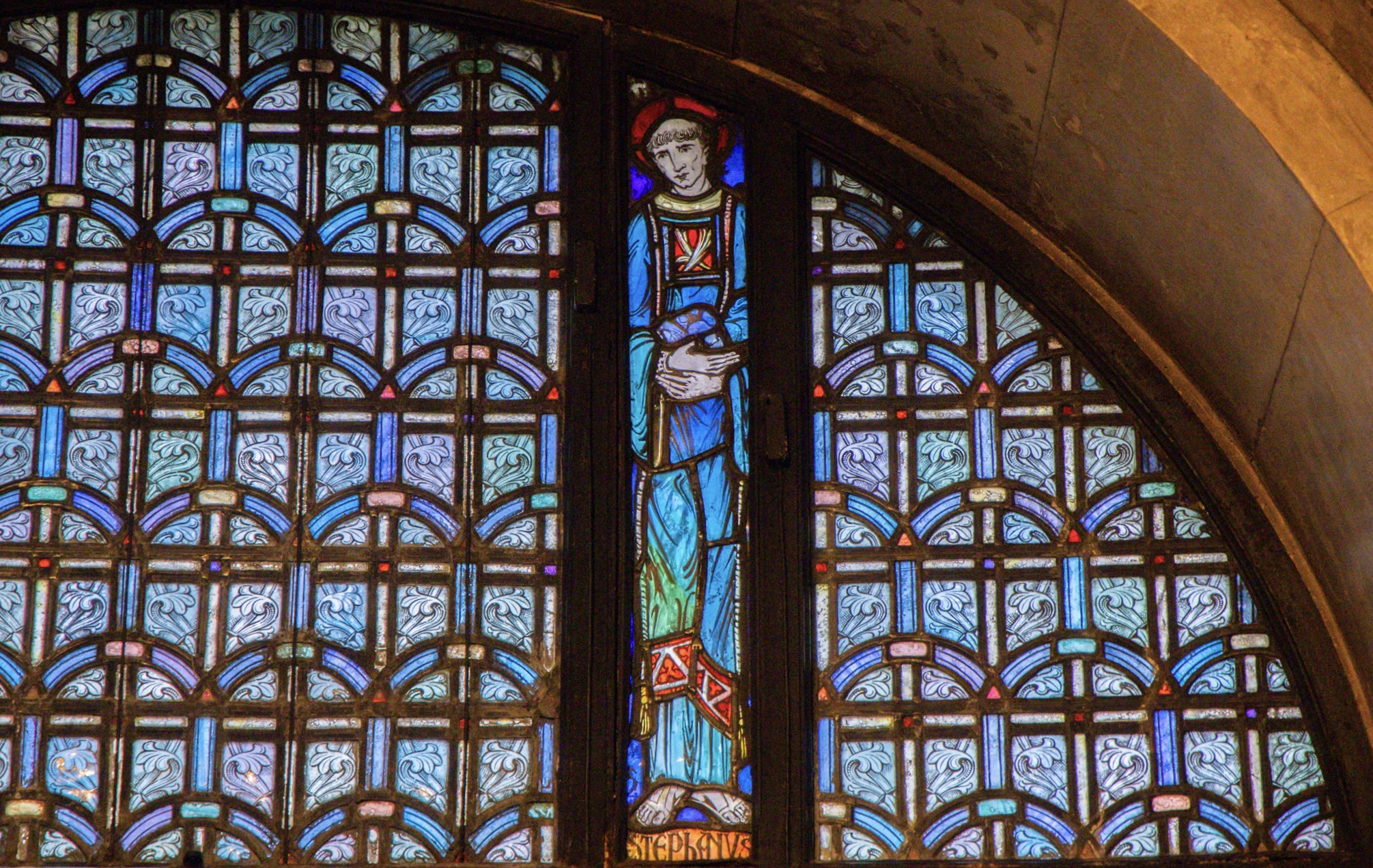
At the Basilica, sunlight softly filters down into the chapels of the Crypt Church through 15 intricate stained-glass windows. Known as lunette windows, they are centered around three primary themes: the Prophecy; the Promise; and the Fulfillment; and feature various saints and biblical figures. St. Stephen can be found in one of the five Promise windows located in the North Apse, above the mosaic in the the St. John Chapel. Designed by artist Charles J. Connick of Boston, the window portrays St. Stephen with his head bowed, carrying stones and wearing a robe of red and blue.
2. The Byzantine-Ruthenian Chapel
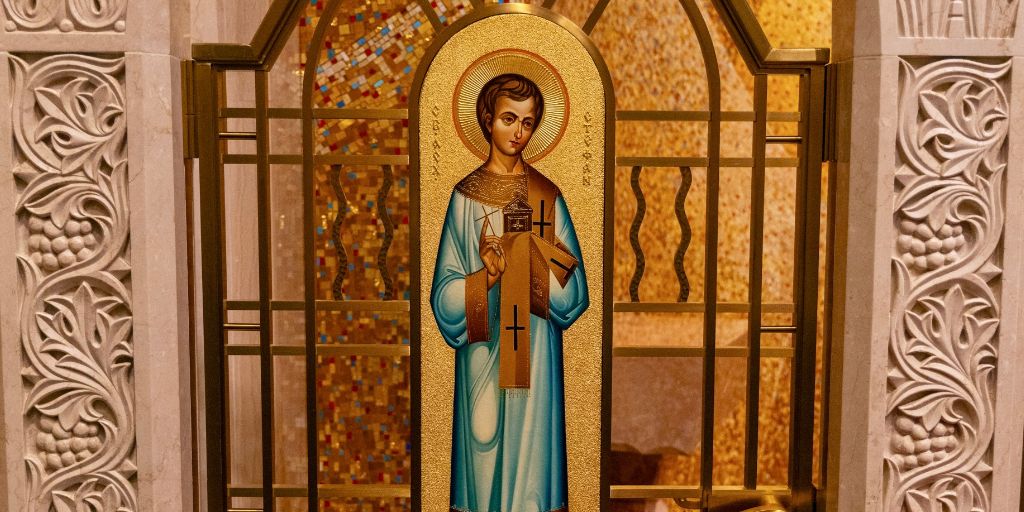
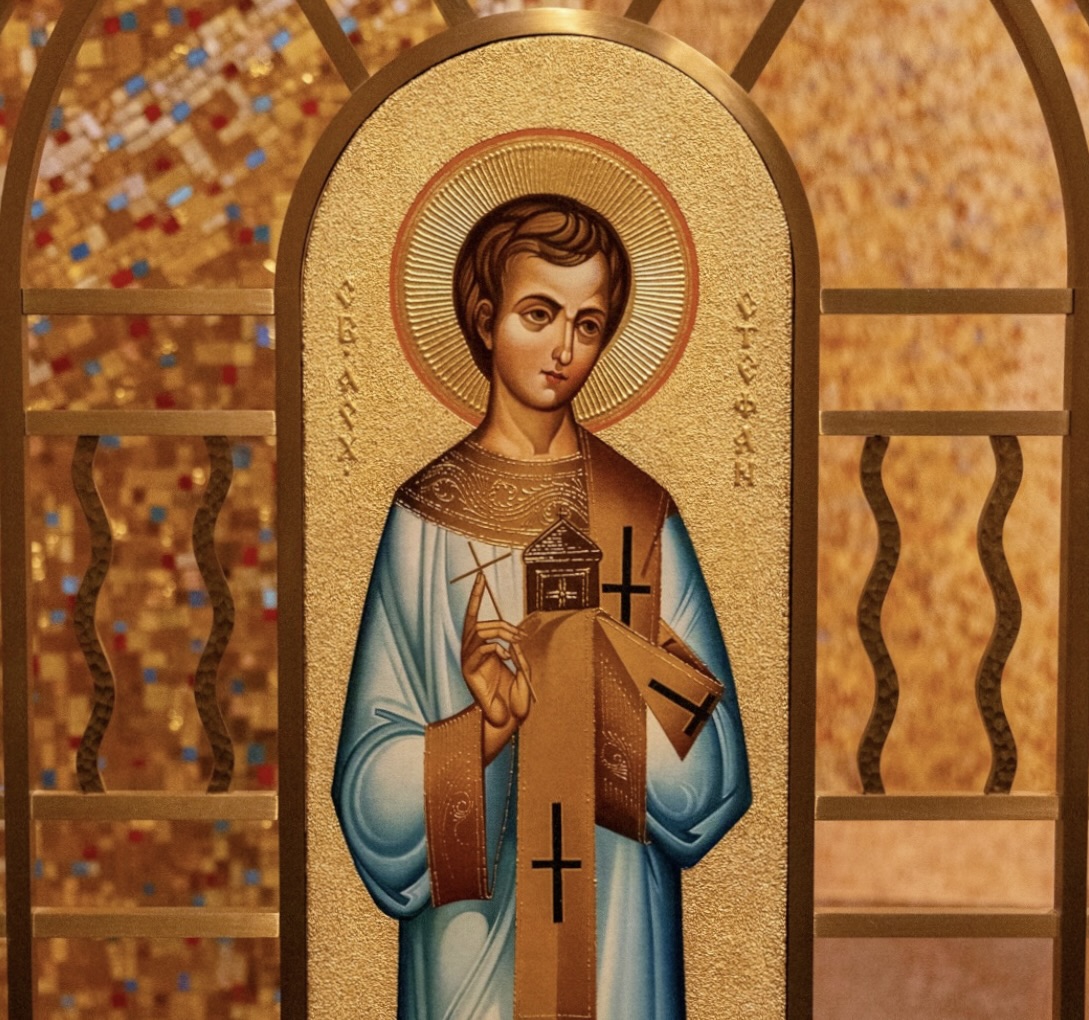
In the Byzantine-Ruthenian Chapel, St. Stephen is featured on one of the two Deacon doors of the iconostasis (icon screen) – a fitting place for one of the Deacons of the early Church. A distinctive feature of any Eastern Rite Church, the iconostasis is a wall that separates the sanctuary from the rest of the chapel and is made up of many different icons and religious symbols. Here, St. Stephen is portrayed wearing a blue tunic and a golden stole, with a small cross in one hand and a miniature church building in the other, and his head encircled by a halo. This icon was designed by artist Christine Dochwat.
3. The Second Coming Mosaic
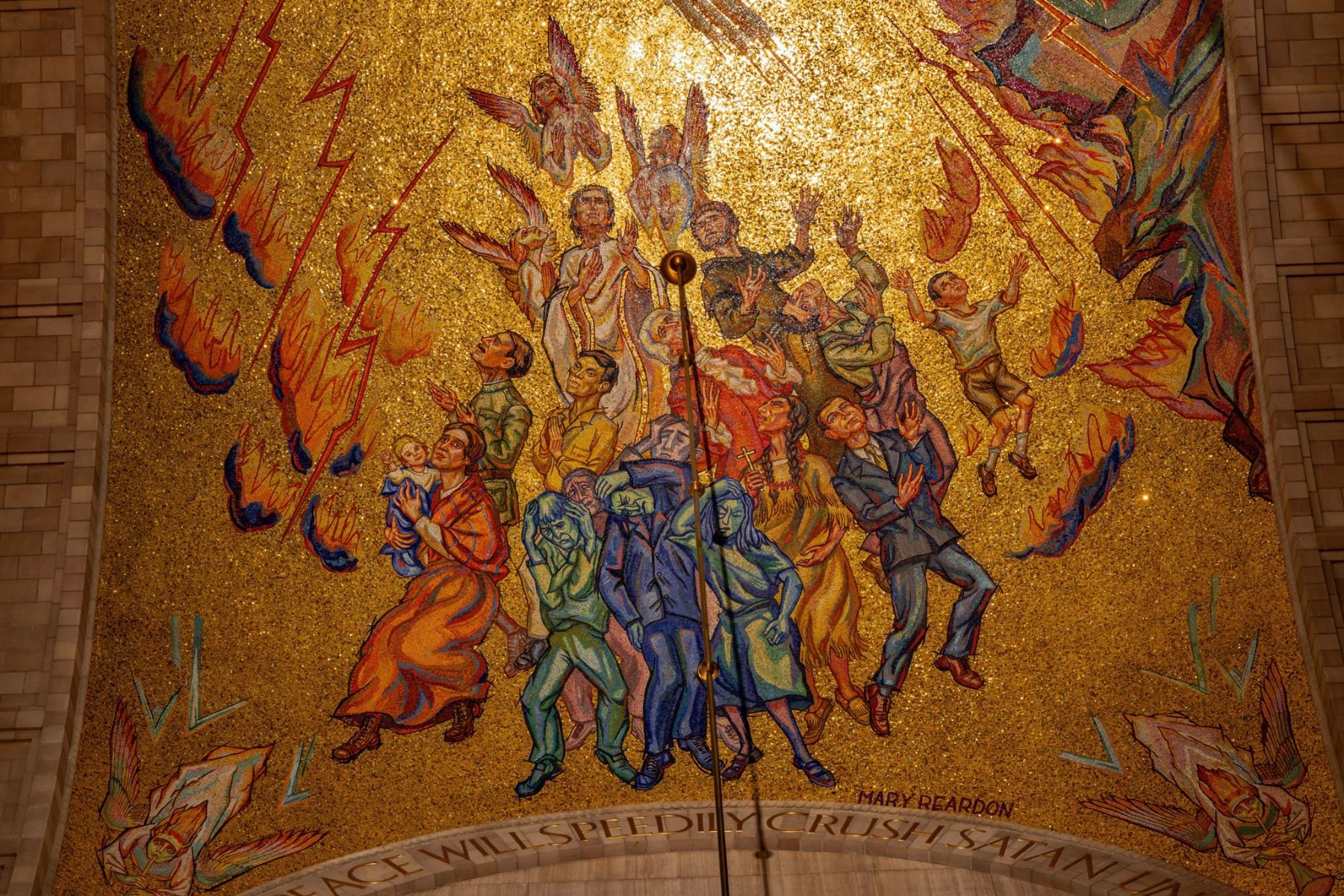 The final place you can find St. Stephen portrayed in the Basilica is in The Second Coming mosaic in the Great Upper Church. Designed by artist Mary Reardon and installed by Ravenna Mosaic Company, it features a powerful depiction of Christ’s return. At the center, an 18-foot figure of Christ stands with outstretched arms. On the right, Mary leads a group of prominent saints, and on the left, St. Stephen leads the unknown saints, represented by various figures. In this portrayal, St. Stephen wears a white robe edged in gold, his head and hands lifted towards Christ, while three angels hover around him. This majestic mosaic serves as a reminder of the hope that we have in Christ, who has conquered death and will one day return to establish the new heaven and earth.
Continually open to the movement of the Holy Spirit, St. Stephen made himself an instrument for God’s purposes – even unto death. May we, too, be filled with the Holy Spirit and walk in God’s will for our lives.