How much do you know about St. Rose Philippine Duchesne? Do you know what nickname she was given by the Indians, or what historic event interrupted her time as a novice?
Known as the patroness of perseverance amidst adversity, St. Rose Philippine Duchesne spent years serving in France before she was able to realize her dream of missions work. As a pioneer in the Midwest, she braved the dangers of the frontier and worked to establish a variety of schools in the Mississippi Valley.
This week, as we celebrate her memorial on November 18, we invite you to discover five facts about her life and legacy, and learn where you can find her portrayed in the Basilica.
1. Her time as a novice was interrupted by the French Revolution.
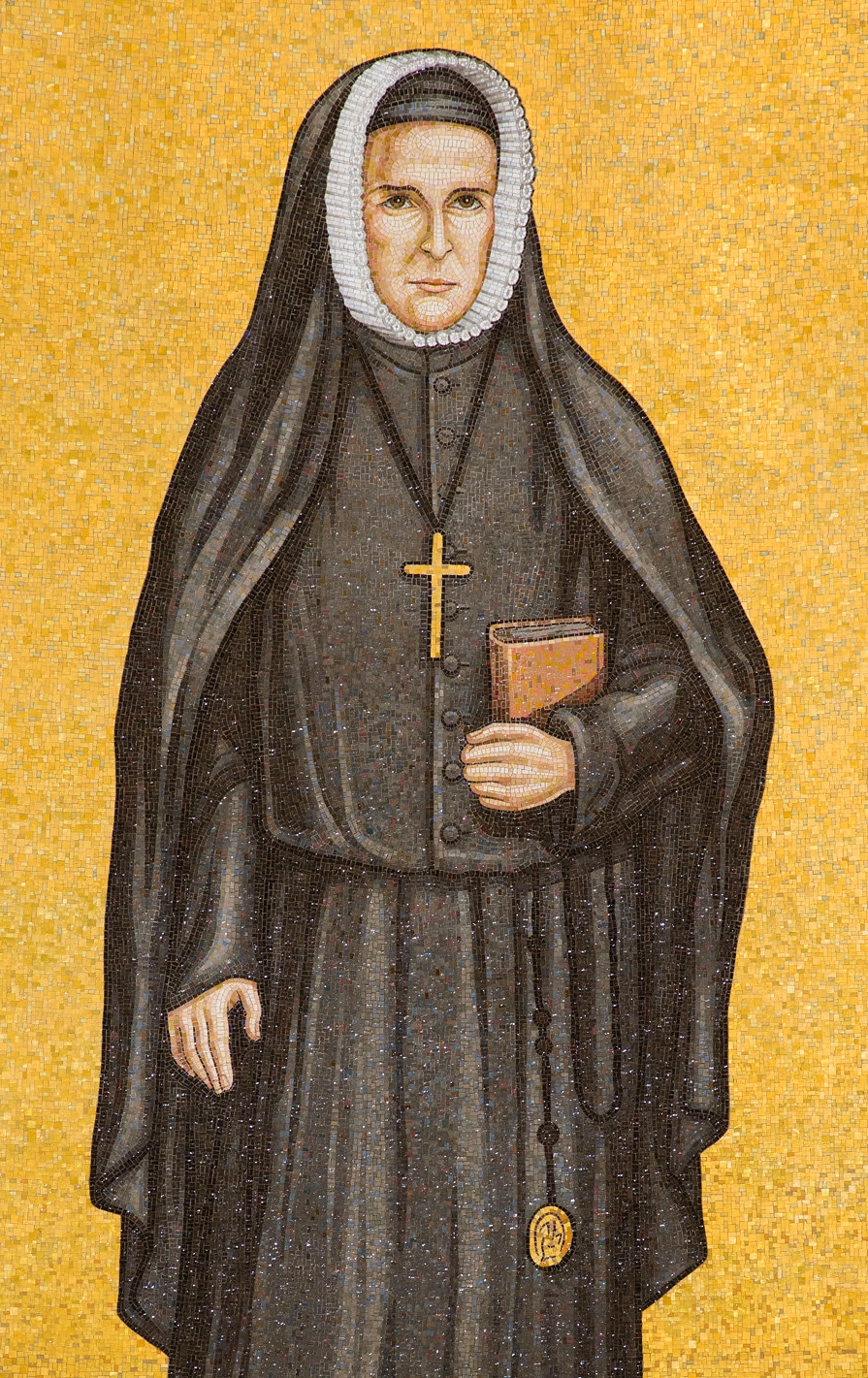
On August 29, 1769, Saint Rose Philippine Duchesne was born in Grenoble, France. When she was 18, she joined the Convent of the Visitation of Saint Marie d’en Haut as a novice. However, after the Reign of Terror upended religious life in the region, Rose couldn’t return to a convent until 1804, when she joined the Society of the Sacred Heart of Jesus.
2. Rose Philippine Duchesne founded the first house of the Society of the Sacred Heart outside of France.
During her time at the Society of the Sacred Heart of Jesus in France, Rose felt a deep calling to pursue missions; in a letter to the order’s founder, Mother Barat, she once wrote:
“I spent the entire night in the new World … carrying the Blessed Sacrament to all parts of the land … I had all my sacrifices to offer: a mother, sisters, family, my mountain! When you say to me ‘now I send you.’ I will respond quickly ‘I go.’”
Despite the sense of urgency she felt, Rose was unable to pursue foreign missions until 12 years later, when Bishop Duborg of Louisiana requested help to start a school along the Missouri River. In 1818, she traveled to a small cabin in St. Charles, Missouri, with five other women to found the first house of the Society of the Sacred Heart outside of France.
3. She opened the first free school west of the Mississippi.
Rose’s new mission in Missouri was not without challenges: she had trouble learning English and interacting with the Native Americans, and also faced financial difficulties. But that year, she also founded the first free school west of the Mississippi, and within the decade, founded six houses in the Mississippi Valley.
4. She was called “the Woman-Who-Prays-Always” by the Potawatomi.

In 1841, Rose went to work directly with the Native American community in Sugar Creek, Kansas, where she founded a girls’ school. Yet as a 71-year-old woman, she was unable to do much physical labor, and instead spent much time in prayer – inspiring the Potawatomi to call her “the Woman-Who-Prays-Always.” Experiencing poor health and difficulties learning the language, she returned to Missouri to oversee operations at the houses.
5. In 1988, Rose Philippine Duchesne became the fourth citizen of the United States to be canonized.
Before her, the first three U.S. citizens to be canonized were Frances Xavier Cabrini (1946), Elizabeth Ann Seton (1975), and John Neumann (1977).
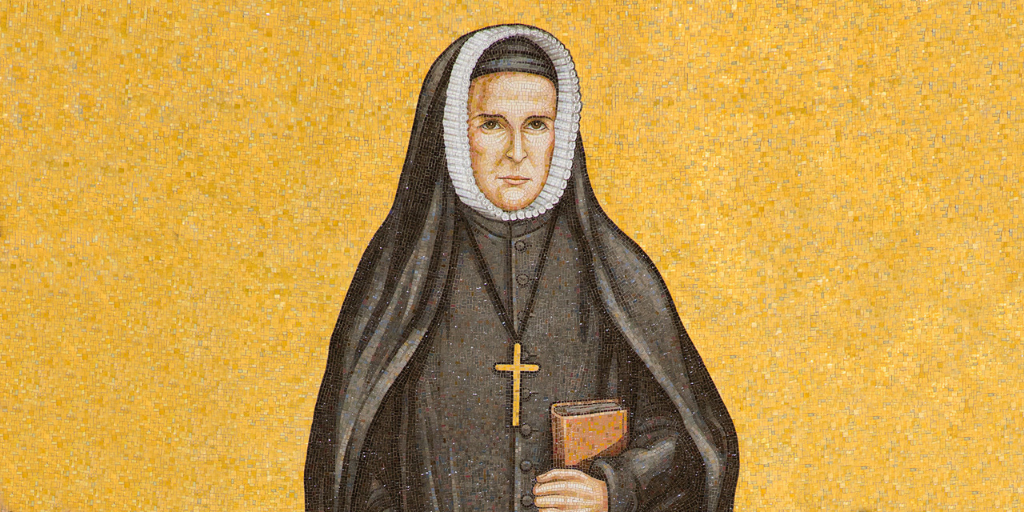
In 1852, Rose passed away at age 83. The patroness of perseverance amid adversity, she is honored in the Basilica in a statue in Memorial Hall and in the Trinity Dome mosaic.
Sources:
Biography of Rose-Philippine Duchesne, The Vatican.
The Way of the Saints, Dr. Tom Cowan
Rohling, Geraldine M., PhD, MAEd. The Basilica of the National Shrine of the Immaculate Conception: Guide and Tour Book. Washington, D.C.: Basilica of the National Shrine of the Immaculate Conception, 2018.