
How much do you know about St. Anselm of Canterbury? Do you know what century he was born in, or what foundational theological work he is known for?
As we celebrate the Memorial of St. Anselm of Canterbury on April 21, we invite you to discover five facts about his life and where you can find him portrayed in the Basilica.
1. He was born in the 11th century.
In 1033, Anselm was born in a town called Aosta on the border of Burgundy and Lombardy. His clear thinking made him a stellar student, and at age 15, he decided to pursue monastic life. However, his father’s staunch opposition prevented him from becoming a monk. Years later, Anselm was finally able to realize his dream at the Benedictine Abbey of Bec in Normandy.
At age 59, he was appointed to be the archbishop of Canterbury by the ailing King Rufus, who created the office while at death’s door. When King Rufus unexpectedly recovered, he thought better of the move, and decided to take the office’s revenues for himself, limiting Anselm’s ability to operate. “I saw in England many evils whose correction belonged to me and which I could neither remedy nor, without personal guilt, allow to exist,” related Anselm.
In 1097, Anselm felt called to leave England to minister in religious communities in France. As he crossed the English Channel, Rufus passed away, leaving a more accommodating successor in his stead: King Henry I. King Henry I returned the church property to Anselm, and gave him greater freedom in managing church affairs.
2. He lived in exile for about three years.
As the years went by, King Henry I became more hostile to Anselm, and sent him into exile from 1103 to 1106. During that time, Anselm made strides in winning public support and making political changes. Wherever he was placed, he continually practiced his duties with a willing obedience, remarking: “When I professed myself a monk, I surrendered myself in such a way that thereafter I could not live according to my own will, but only in accordance with obedience either to God or to the Church of God.”
3. He became one of the first high-ranking individuals in Europe to denounce slavery.
Perhaps the most significant achievement of Anselm’s lifetime was the resolution to renounce the slave trade that emerged from the Westminster Council. Anselm had called the council to resolve political and ecclesiastical conflict, but its result had a far more enduring impact, affirming the dignity and freedom of the human person.
4. Anselm penned 11 lengthy treatises during his lifetime.
Throughout his work, he was committed to the harmony between faith and reason, writing that “faith seeking understanding” was the task of the theologian. His magnum opus, Why God Became a Man, offers a theory of divine atonement and resurrection that was monumental in shaping centuries of Christian doctrine.
5. His work Proslogion is believed to be the first theological work to make an ontological argument for the existence of God.
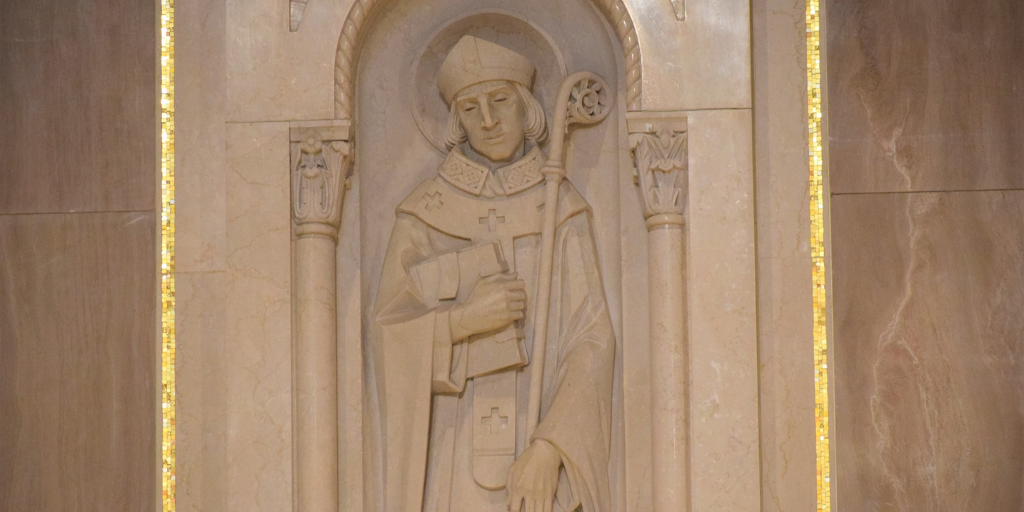
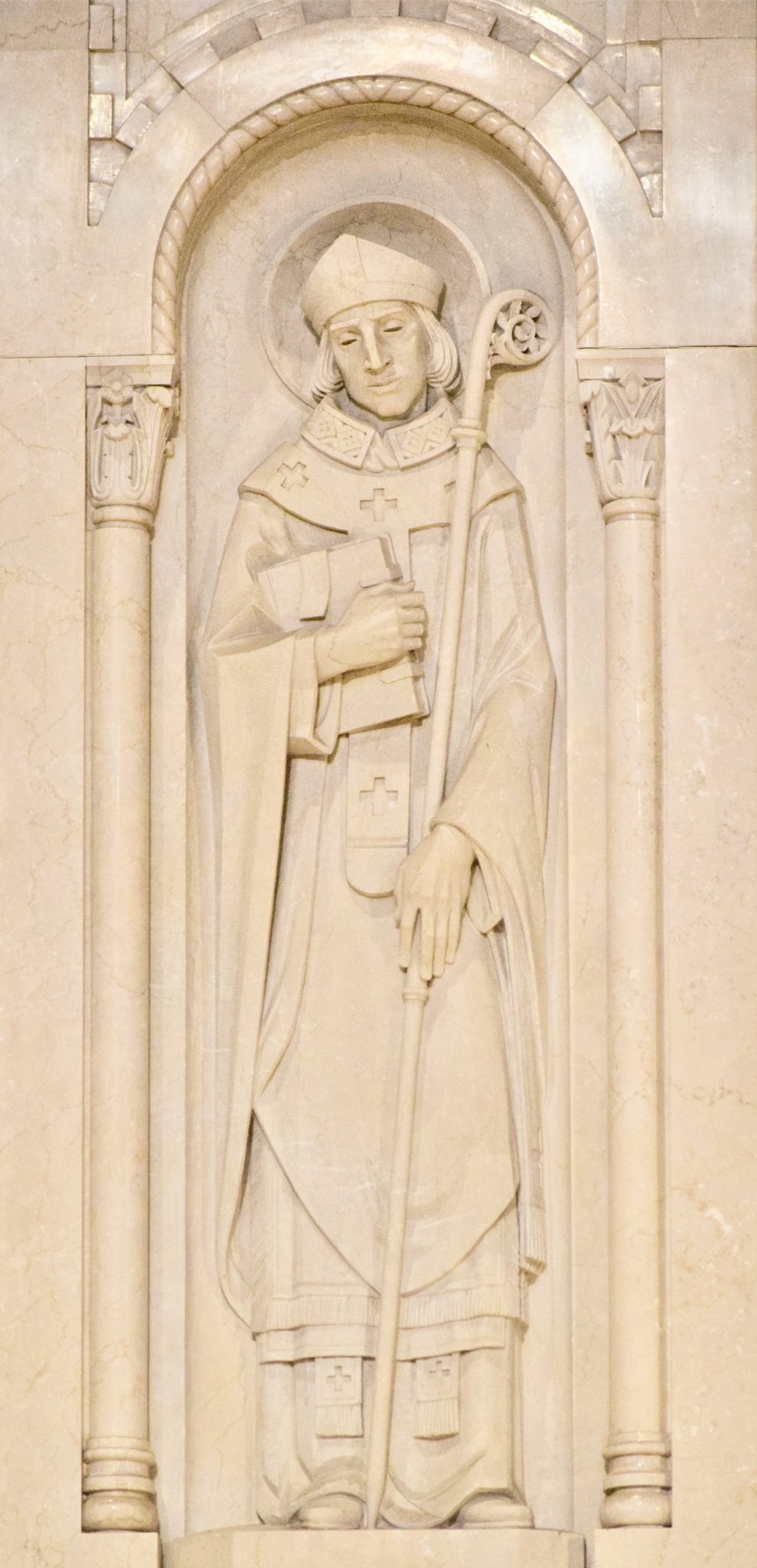
For his significant theological contributions, he was named a Doctor of the Church in 1720, and is also regarded as the “father of Scholasticism.” You can find St. Anselm portrayed in the east chancel bay of the Basilica.
Sources:
Butler’s Lives of Saints, edited by Bernard Bangley.
“St. Anselm of Canterbury,” Britannica.
The Way of Saints, Dr. Tom Cowan.