
From a young age, Katharine Drexel was taught the importance of caring for others. Though her family was wealthy, they didn’t live in wanton luxury. Every week, they’d give out clothing, food, and alms to the poor, and by the time Katharine came into her own money, managing its charitable ends occupied much of her time. Today, she is known not only as a philanthropist, but as a woman who dedicated herself to ministry, working tirelessly to expand educational opportunities for minorities in America.
As we celebrate her memorial on March 3, we invite you to discover five key facts about her life and legacy, and where you can find her portrayed in the Basilica.
1. Katharine Drexel was born into an affluent Philadelphia banking family.
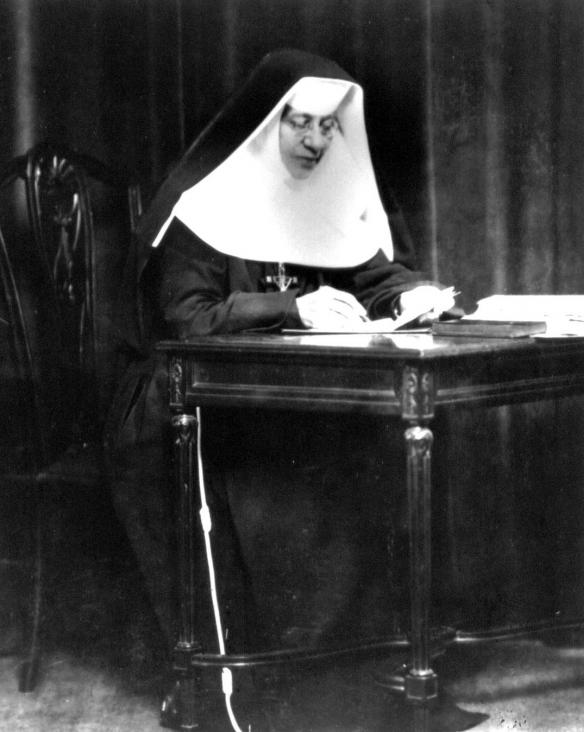

Katharine was born into an affluent Philadelphia banking family in 1858. Tragically, her mother died one month after giving birth. Two years later, Katharine’s father married Emma Bouvier, who raised Katharine and her sister as her own, teaching them from an early age to use their wealth to benefit others.
During her family’s travels across the western United States, Katharine was struck by the poor living conditions endured by Native Americans on reservations. She felt strongly that something needed to be done. Later, when she visited Pope Leo XIII to discuss missions she was funding for Native Americans, she urged him to send more missionaries to Wyoming. But he turned the question back on her, asking her why she didn’t become a missionary herself.
2. She established the Sisters of the Blessed Sacrament with her inheritance.
After returning home, Katharine established the Sisters of the Blessed Sacrament in 1913 with her inheritance. She was an unflagging advocate for minorities, crusading for better educational opportunities, and standing against racial discrimination and injustice. In an era where travel could be difficult and perilous, she frequently put her own safety in jeopardy traversing across the United States for her educational projects.
3. She opened New Mexico’s first mission school for Native Americans.
In 1894, she opened the first mission school for Native Americans in New Mexico. It was the first of a variety of schools for Native Americans and African Americans that Mother Drexel would found and support throughout her lifetime.
4. By the start of World War II, Katharine had founded schools for African Americans in 13 states, and 50 mission schools for Native Americans in 16 states.
Among her many other philanthropic contributions, she was also the founder of Xavier University, an institution of higher learning for African Americans in New Orleans. Unfortunately, her efforts were not always welcome: she faced opposition from segregationists, who burned down one of the schools she founded in Pennsylvania.
5. Over the course of her lifetime, she gave over $12 million to charitable and apostolic missions.
At age 76, Katharine retired from her management roles after suffering a cerebral hemorrhage. She continued to lead a life of adoration and contemplation until the age of 97, and became the second U.S.-born person to be canonized in 2000. Today, she is known as the patroness of racial justice and philanthropists.
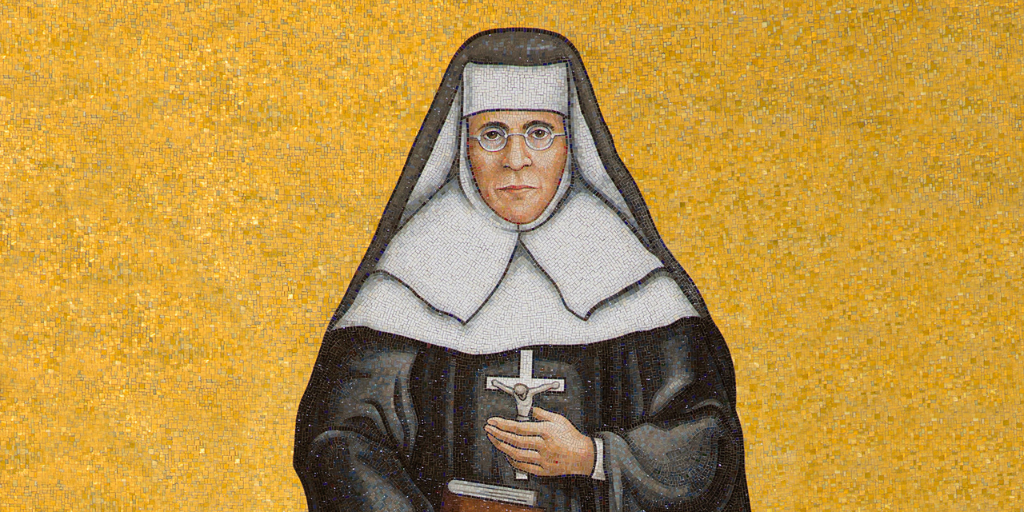
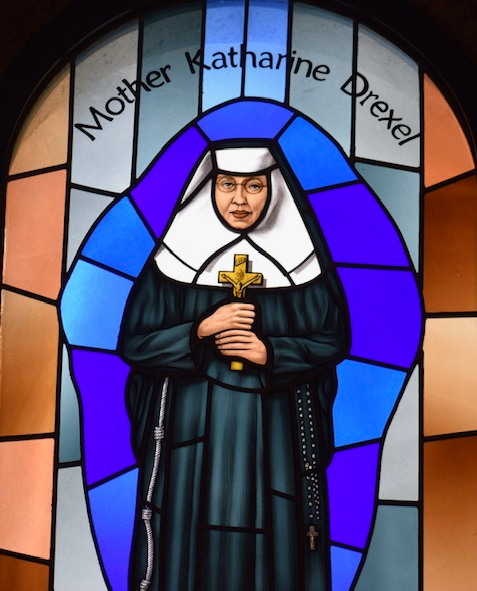
You can find her portrayed in the Basilica in the Hall of American Saints, the Trinity dome mosaic, and in a window in the lower level of the Sacristy.
Sources:
Butler’s Lives of Saints, ed. Bernard Bangley
“Saint Katharine Drexel,” Britannica.
Additional image accessed at Wikimedia Commons.